
Night Silence: Bukhara Deer captured on a Camera Trap
2025-09-03 12:00:00 / News
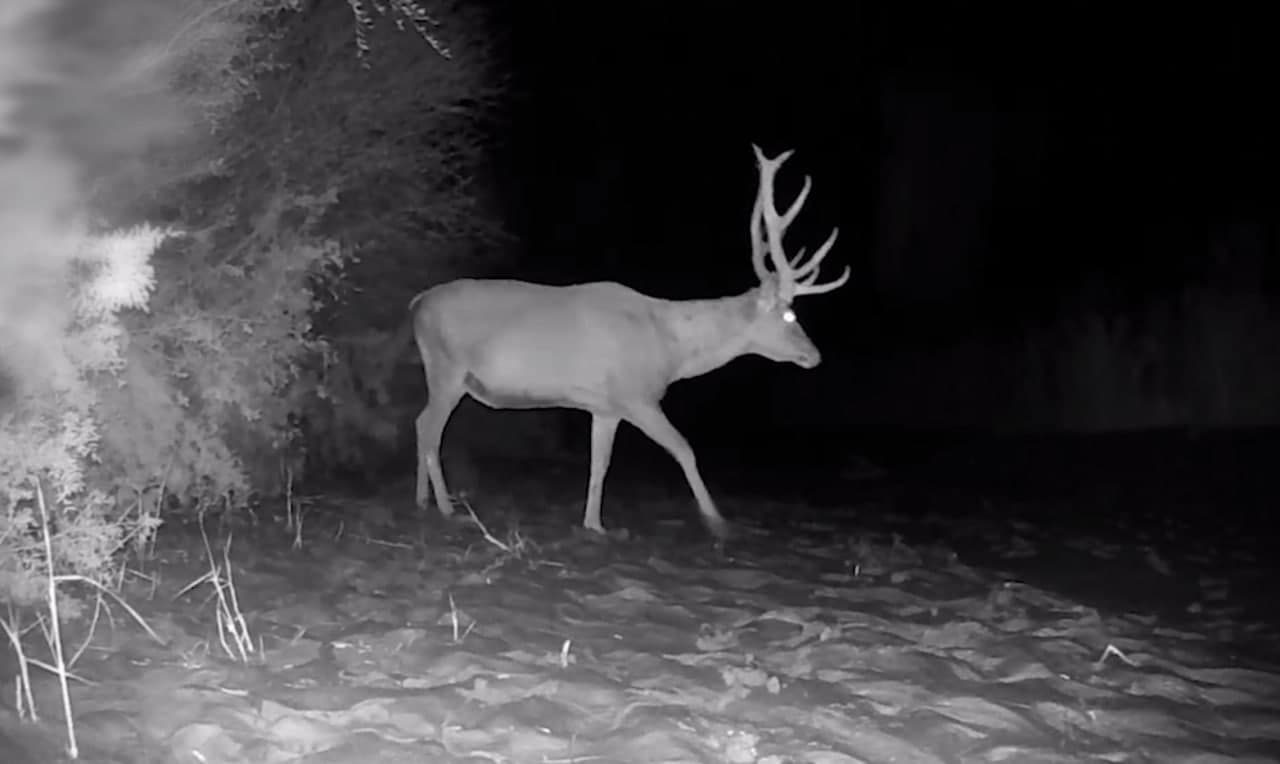
The Bukhara deer is an endangered, locally distributed subspecies listed in the Red Book of Uzbekistan and in Appendix II of CITES. As a transboundary migratory species, it is also included in the Bonn Convention. An interstate program and action plan have been adopted for its conservation.
In the past, hanguls were widely distributed across all tugai forests of the Syrdarya and Amudarya river basins. Today, they are found in the upper reaches of the Amudarya (Surkhandarya region), the middle reaches (Kyzylkum Reserve in Bukhara region), the Zarafshan National Nature Park, the Lower Amudarya Biosphere Reserve, and in the upper Zarafshan River basin in the border area between Uzbekistan and Tajikistan. There are both native populations and artificially established groups created through introduction and reintroduction efforts.
These animals inhabit riparian tugai forests and, at times, the adjacent sandy deserts. They are active mainly at night in summer and during both day and night in winter. The mating season occurs in September–October, with fawns born in May–June. They reach maturity at the age of 2–3 years and feed on woody, shrubby and herbaceous plants.
Background: The Kyzylkum State Nature Reserve was established on 23 June 1971 in the Bukhara region. Its territory is home to more than 350 animal species, including 50 listed in the Red Book of Uzbekistan.