
100 Days to CITES CoP20: Uzbekistan Unveils the Official Conference Slogan
2025-08-21 17:00:00 / News
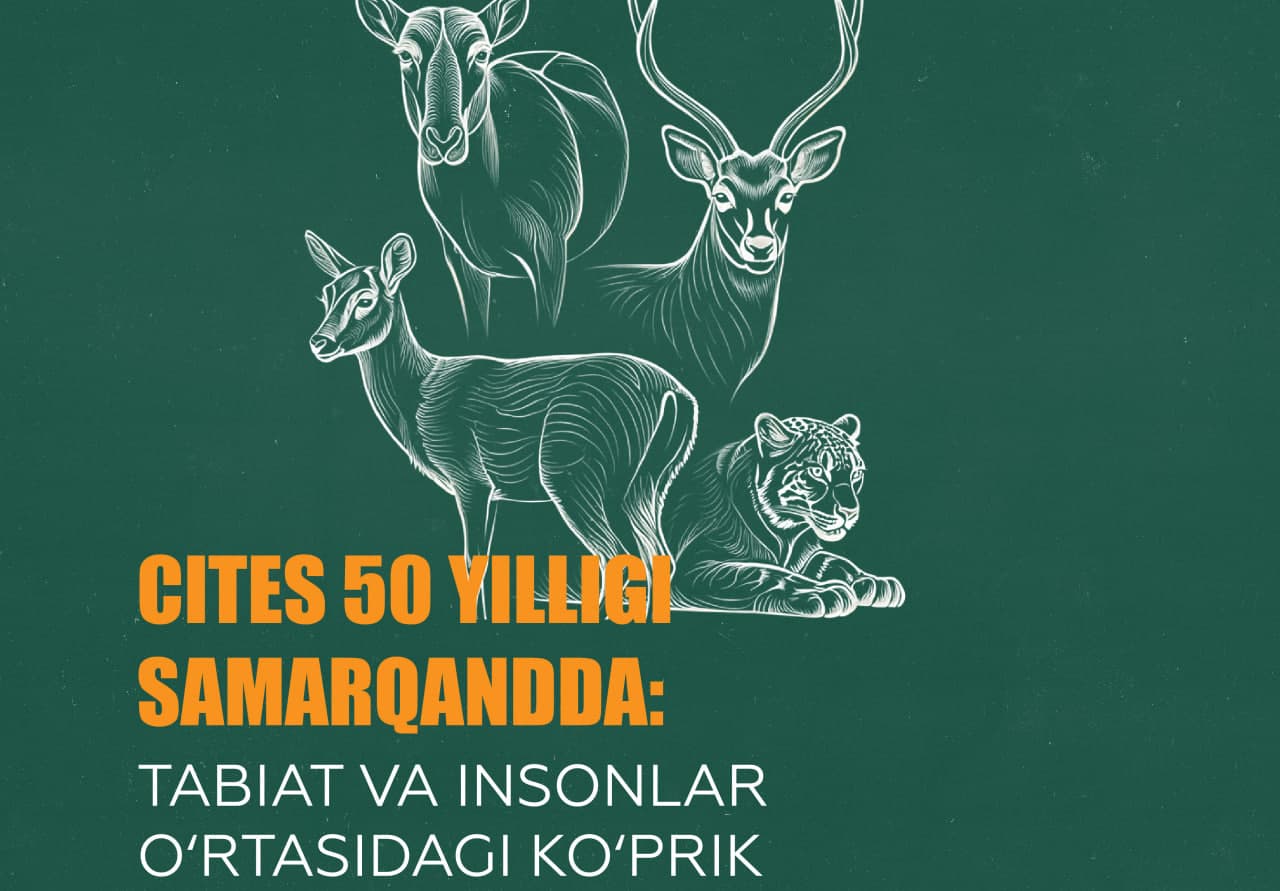
The slogan reflects a dual symbolism — the 50th anniversary of the Convention and the unique role of Samarkand as a crossroads of civilizations, cultures, and conservation efforts.
CITES CoP20 will take place from 24 November to 5 December 2025 in Samarkand, bringing together thousands of experts in science, law, environmental protection, and international trade, as well as representatives of governments, intergovernmental and non-governmental organizations, the private sector, and youth networks from around the globe.
Minister of Ecology, Environmental Protection and Climate Change of the Republic of Uzbekistan Aziz Abdukhakimov emphasized the deeper meaning behind the chosen slogan:
“This is more than just a motto. It embodies our vision for the future — where conservation is not seen as separate from people, but as a shared path forward. Samarkand, with its centuries-old tradition of connecting East and West, will serve as a fitting venue to reflect on CITES’ 50-year journey and shape its future agenda.”
CITES Secretary-General Ivonne Higuero noted:
“As we mark half a century of international collaboration through CITES, this slogan captures the spirit of CITES and the role it plays in bringing 184 countries and the European Union to promote co-existence between people and wildlife interlinking science and policy and conserving these species of animals and plants for future generations.”
Uzbekistan, as the host of CITES CoP20, has reaffirmed its commitment to contributing to the global biodiversity agenda. The conference logo, unveiled earlier, has been widely praised for harmoniously combining natural symbols — the Argali and Rhodiola semenovii — with Samarkand’s architectural heritage.
Hosting CITES CoP20 in Samarkand will enhance Uzbekistan’s international standing in environmental protection, strengthen scientific and institutional cooperation, and draw global attention to the unique flora and fauna of Central Asia.