
Waste Management Issues Were Discussed
2025-08-20 11:00:00 / News
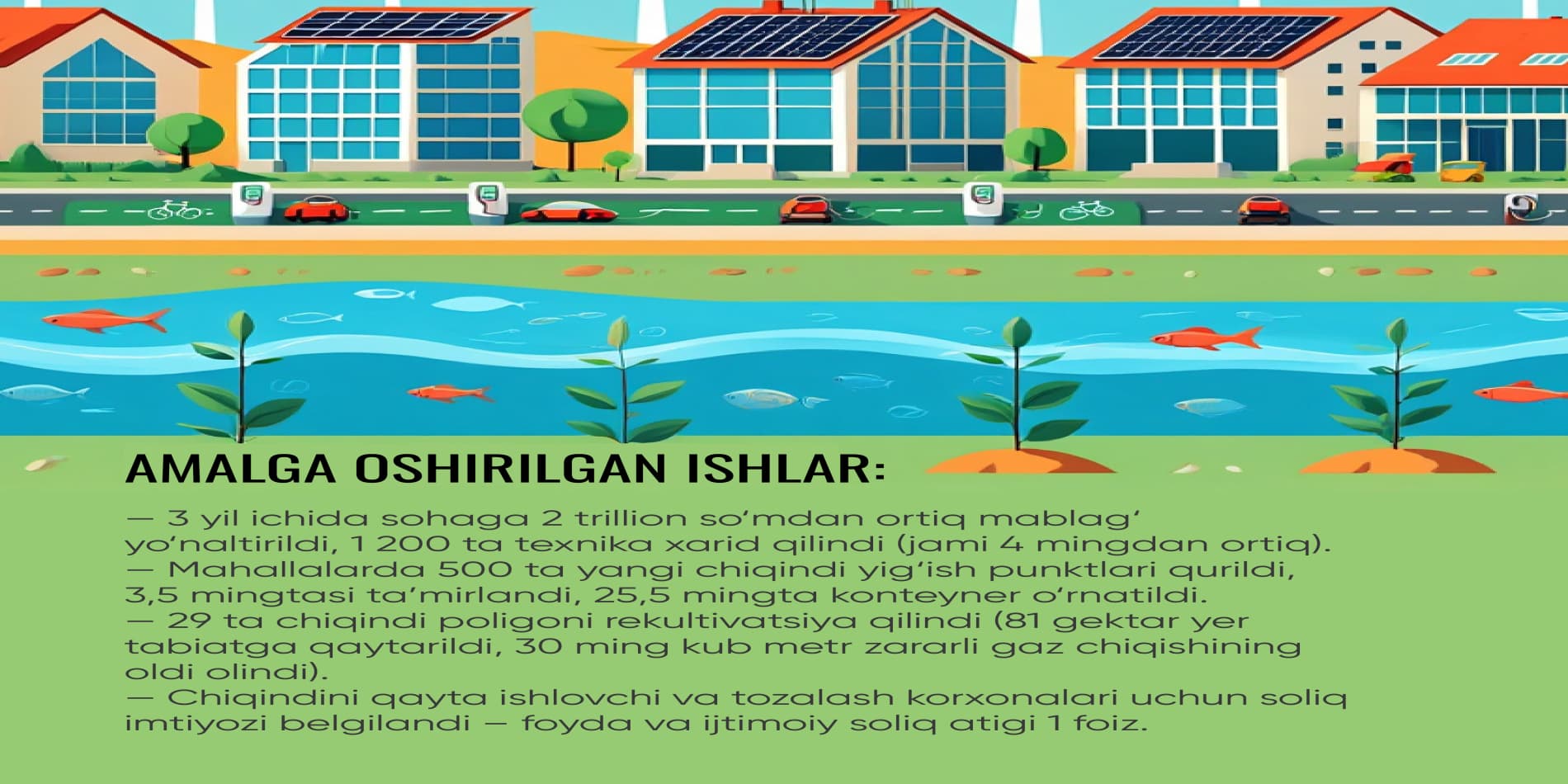
In recent years, on the initiative of the Head of State, modern approaches have been introduced into waste management, transforming the sector into a source of secondary raw materials. Over the past three years, more than 2 trillion sums have been directed into the sector. To strengthen the material and technical base of enterprises, 1,200 new units of modern equipment have been procured, bringing the total to more than 4,000. As a result, around 500 new waste collection points have been built in mahallas, 3,500 upgraded and 25,500 containers installed. Out of 185 household waste landfills, 29 have been remediated, returning 81 hectares of land to nature and preventing the release of 30,000 cubic meters of harmful substances into the atmosphere.
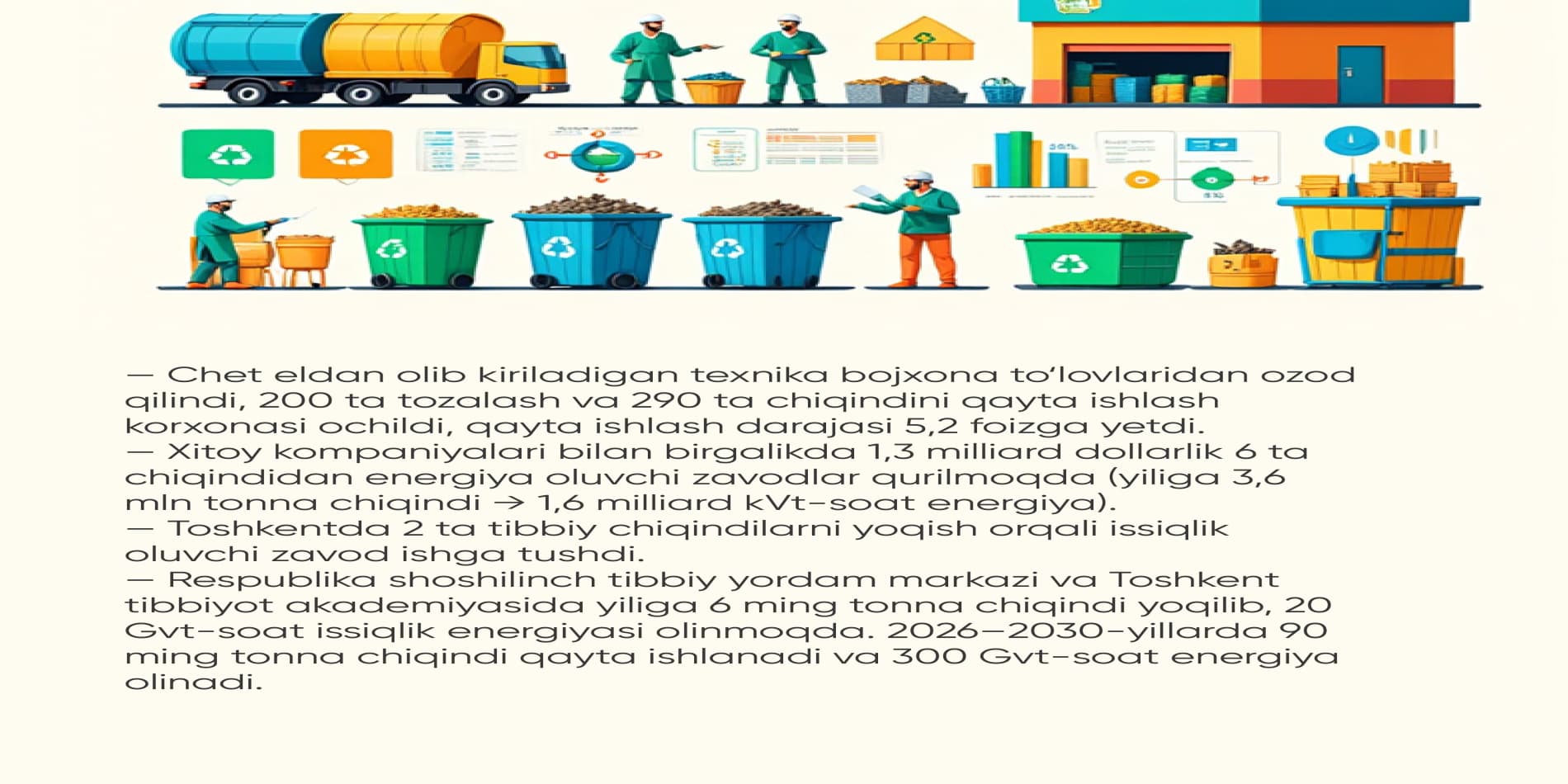
The sector has been opened to the private sector, and a favorable investment and business environment created. In particular, profit and social tax rates have been reduced to 1% for sanitation and recycling enterprises, while imported equipment and machinery have been exempted from customs duties. As a result, about 200 sanitation enterprises and 290 recycling companies have been established. The recycling rate, raised virtually from “zero”, has reached 5.2% in just 3–4 years. Conditions have been created for investors to generate energy from waste. In cooperation with major Chinese companies, six plants worth $1.3 billion are under construction, designed to process 3.6 million tons of waste and produce 1.6 billion kWh of electricity annually.
In addition, in cooperation with the American company Sayar, two medical waste incineration plants have been built and commissioned in Tashkent to generate thermal energy. In the future, two such plants will be built in Samarkand region and one in each of the other regions, enabling the processing of up to 90,000 tons of medical waste per year.
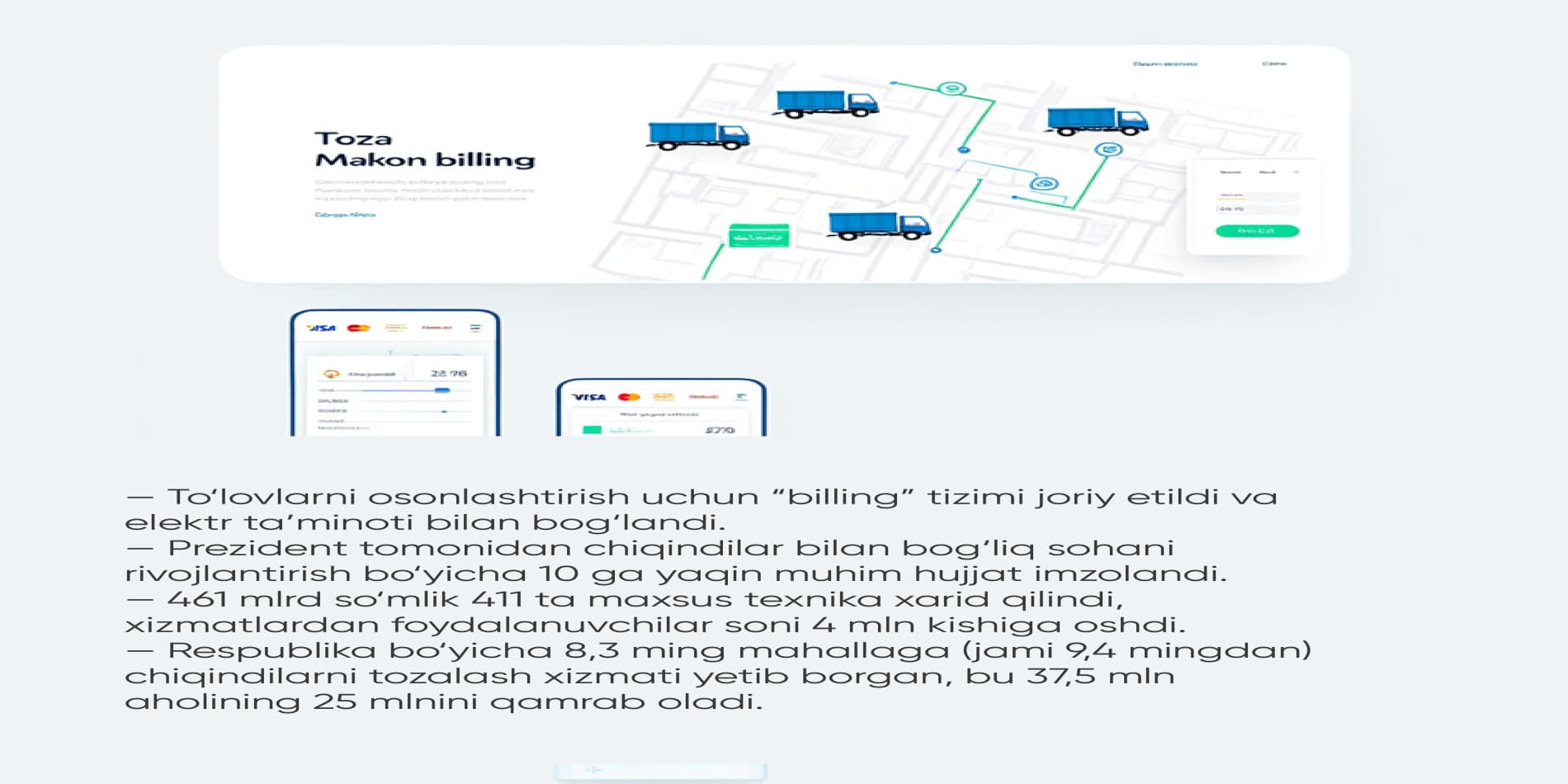
To improve service quality and payment discipline, a “billing” system has been introduced, linking debt collection to electricity supply.
During the presentation it was noted that much remains to be done. In particular, by raising household waste recycling to 10%, it would be possible to produce secondary raw materials (paper, plastic, rubber, glass, textiles) worth 1 trillion sums.
Minister of Ecology Aziz Abdukhakimov and Director of the Agency for Waste Management and Circular Economy Development under the Ministry Sharifbek Khasanov presented information on the 2025–2030 action programme.
It should be noted that thanks to the signing of about 10 regulatory documents by the President, the quality of household waste management services is steadily improving. Over the past period, 411 units of specialized equipment worth 461 billion sums were procured and transferred to sanitation enterprises under preferential leasing terms, enabling services to reach an additional 4 million people.
Aziz Abdukhakimov noted that as part of the “Zero Waste” principle, construction has begun on six plants that will generate energy by incinerating household waste. He also reported that negotiations are underway with Chinese partners on similar projects in five other regions—Jizzakh, Syrdarya, Surkhandarya, Bukhara, and Navoi.
In addition, entrepreneurs have begun leasing land at eco-industrial zones and construction waste landfills through auctions. Recycling construction debris has already enabled the production of 15 types of products. Together with the American company Sayar, a $115 million project is being implemented to process 96,000 tons of medical waste annually, generating 320 GWh of thermal energy. As part of the project, a system has already been introduced to recycle 6,000 tons of medical waste annually from the Republican Emergency Medical Center and Tashkent Medical Academy, producing 20 GWh of thermal energy each year. Construction is currently underway at the Bukhara and Samarkand regional emergency hospitals. At the second stage, from 2026 to 2030, up to 90,000 tons of medical waste will be processed in other regions, generating 300 GWh of thermal energy annually.
It was noted that in a number of countries enterprises are required to recycle and dispose of waste generated in production. In Uzbekistan, such a regulation is not yet in place, which exacerbates the environmental situation and creates additional costs for the state budget. International conventions and agreements also call for the introduction of such a system. In this context, the Minister emphasized that recycling certain products (batteries, accumulators, used technical and food oils, tires, vehicles, packaging and glass) requires advanced technologies and is low-margin, leaving this area underdeveloped.
For example, 144,000 tons of electronic waste are generated annually, of which 30,000–35,000 tons consist of batteries and accumulators. By 2035, the volume of e-waste is expected to increase by another 10,000 tons due to the growth of electric vehicles. Plastic waste amounts to 1.8 million tons, glass waste to 647,000 tons, used technical oils to 250,000 tons and rubber-containing waste to 217,000 tons.
Therefore, at the first stage, an environmental fee will be introduced for six categories of waste: batteries and accumulators, used technical and food oils, tires, vehicles, packaging, and glass. A special fund with public participation will be established under the Agency for Waste Management and Circular Economy Development. Enterprises engaged in recycling will receive “green subsidies” from the fund. This will increase the sector’s investment appeal, foster healthy competition, and raise GDP by $12.7 billion.
At present, 3.3 billion tons of waste are accumulated at 75 industrial landfills with a total area of 9,500 hectares, most of it from the mining and chemical industries. Within the framework of a $40 million project, more than 100,000 tons of used car tires will be recycled, producing rubber crumb, steel wire, rubber granules, textile fiber and pyrolysis products, returning them to economic circulation.
The presentation also proposed leasing land at landfills for waste sorting in order to combat the shadow economy. This would create conditions for the official employment of 7,000 workers and legalize 600 billion sums of shadow income.
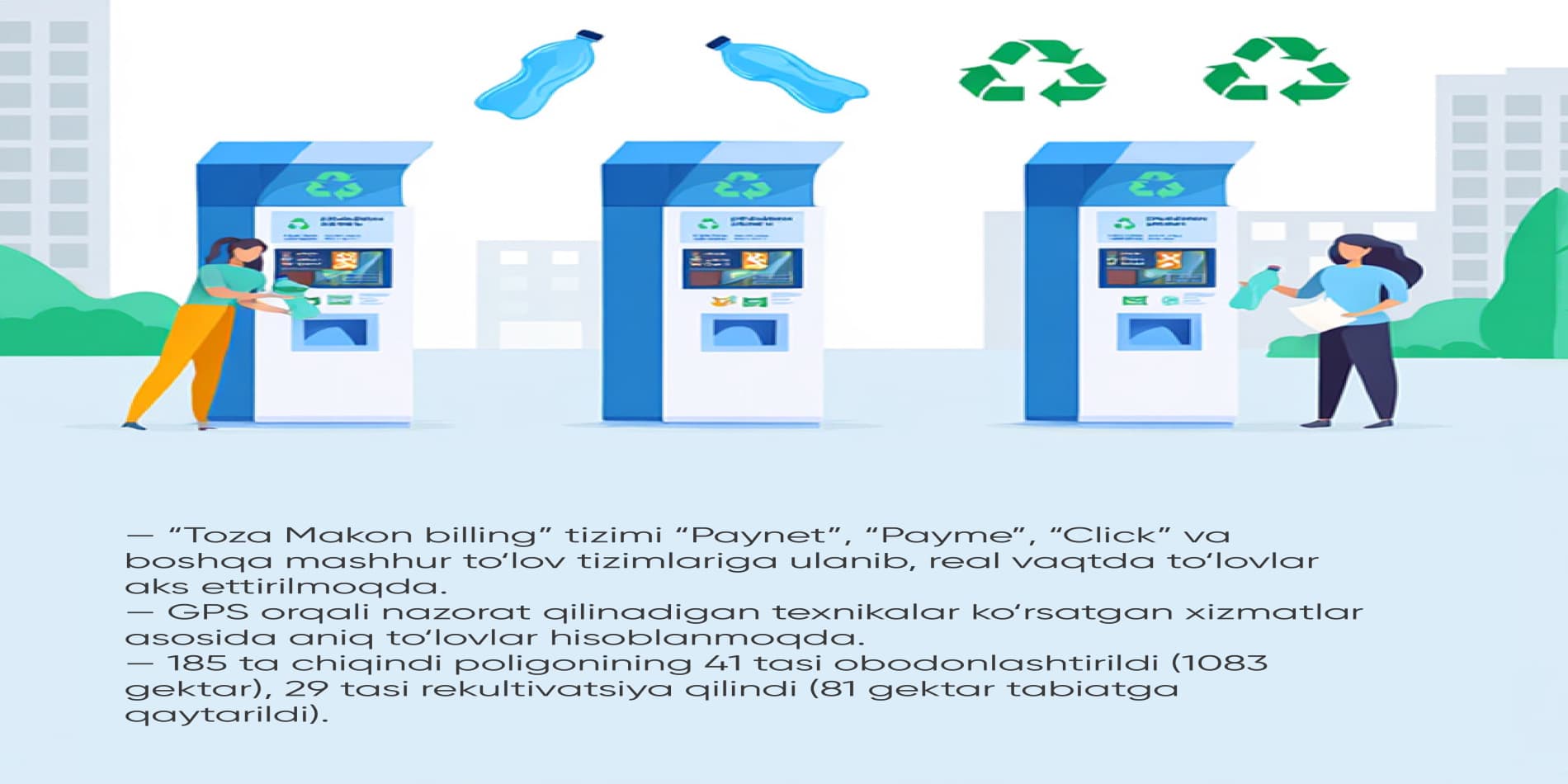
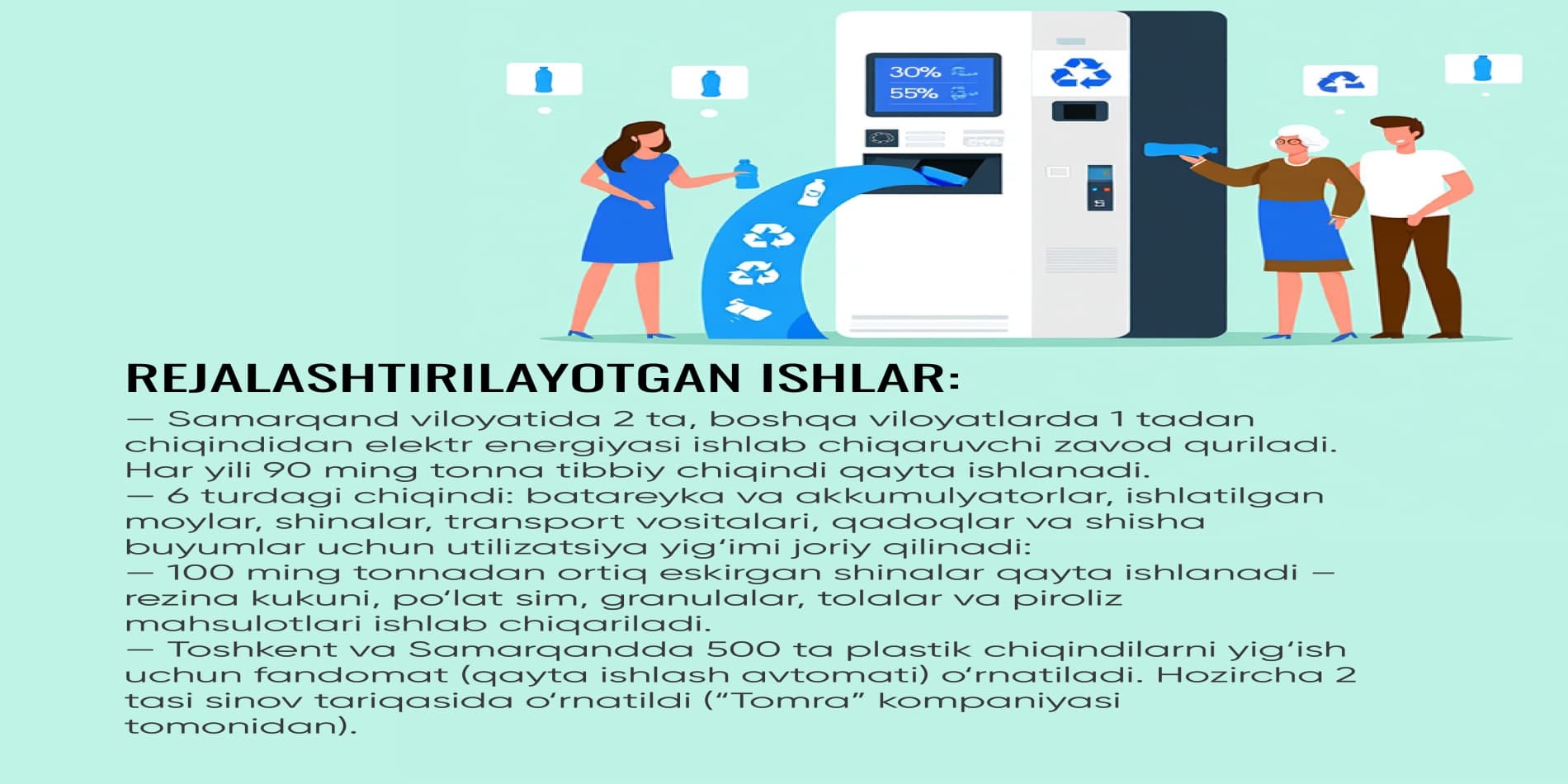
To tackle plastic pollution, plans call for the collection of 1.8 million tons of plastic waste. In Tashkent and Samarkand, 500 reverse vending machines will be installed. As a pilot project, the Norwegian company Tomra has already installed two machines in public spaces in Tashkent.
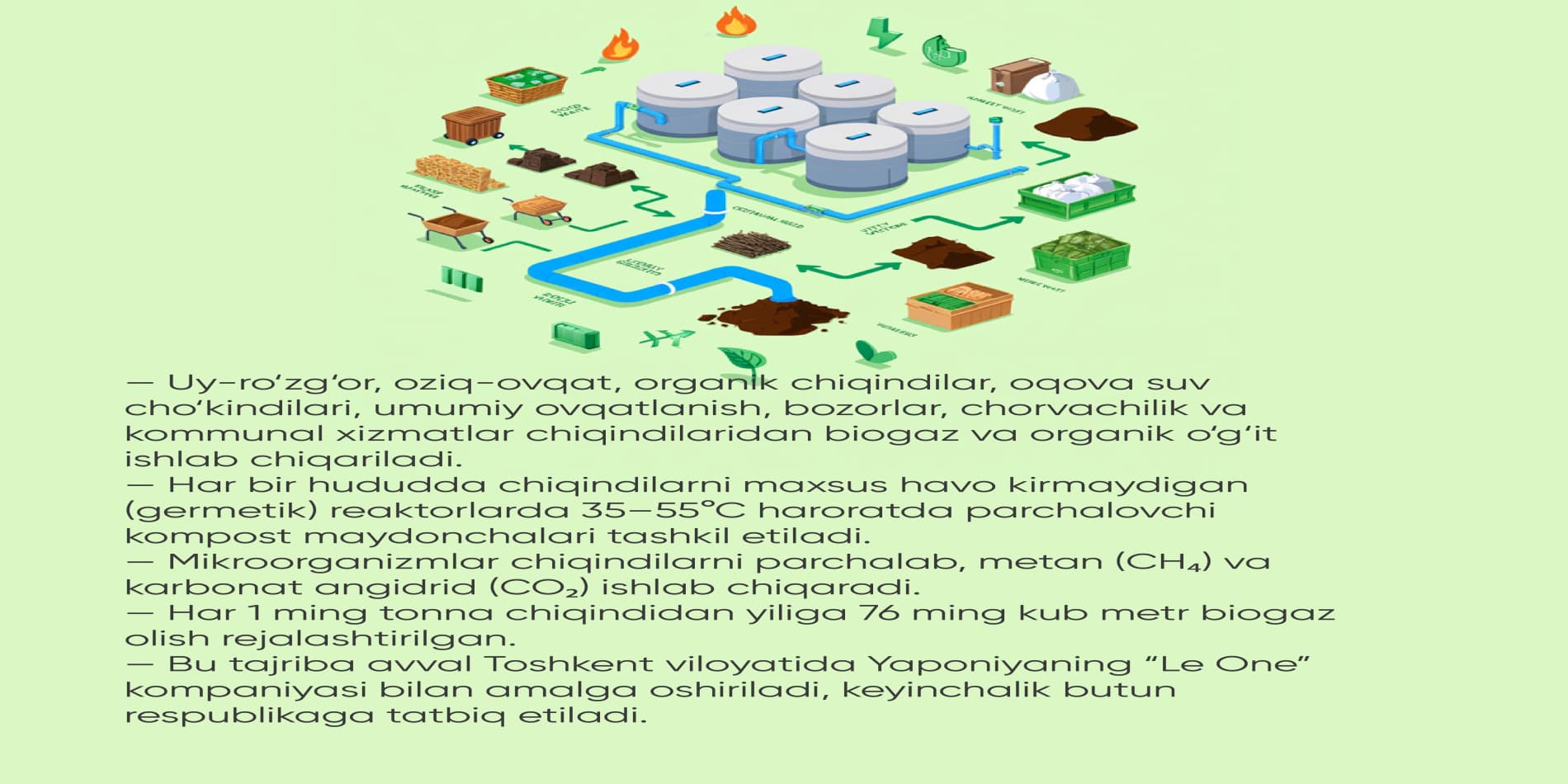
In addition, new projects will be implemented to produce biogas and organic fertilizers through the composting of household waste from special containers in households, food and organic waste, leaves, sewage sludge, and other organic matter generated by catering establishments, markets, livestock farms, and municipal enterprises. Composting sites will be created in each region, taking into account geographical and demographic factors. The prepared feedstock will be placed in sealed reactors, where an optimal temperature (35–55 °C) and an oxygen-free environment are maintained. Microorganisms will then decompose the organic material, producing methane (CH₄) and carbon dioxide (CO₂). The resulting gas can be used for in-house needs, to generate electricity and heat for sale to the power grid, as an alternative energy source in greenhouses, and, after purification, fed into the gas supply system.
This practice will first be introduced in Tashkent region in cooperation with the Japanese company Le One as a pilot project: 76,000 cubic meters of biogas will be produced annually from 1,000 tons of waste. In the future, this experience will be scaled up nationwide.
For user convenience, the ”Toza Makon” Billing system has been integrated with electronic payment services such as Paynet, Payme, Upay, Click, Munis, and Uzum. Payments are reflected online directly in subscribers’ accounts. The system is linked with the Ministry of Internal Affairs, the Ministry of Justice, customs and border agencies, the “Elektron Hukumat” programme, cadastral services, the passport and visa service, and JSC “Hududiy Elektr Tarmoqlari”. Data on 3,400 waste collection points have been entered into the system, which is also available to all legal entities. As a result, charges are applied only for services actually provided by GPS-equipped vehicles.
Furthermore, out of 185 household waste landfills, 41 (covering 1,083 hectares) have been upgraded and 29 remediated, returning 81 hectares of land to nature.
In conclusion, it was emphasized that environmental awareness must be instilled from early childhood, beginning in preschools and schools, and specific tasks have been defined in this regard.