
What is the CITES Convention?
2025-08-07 10:00:00 / News
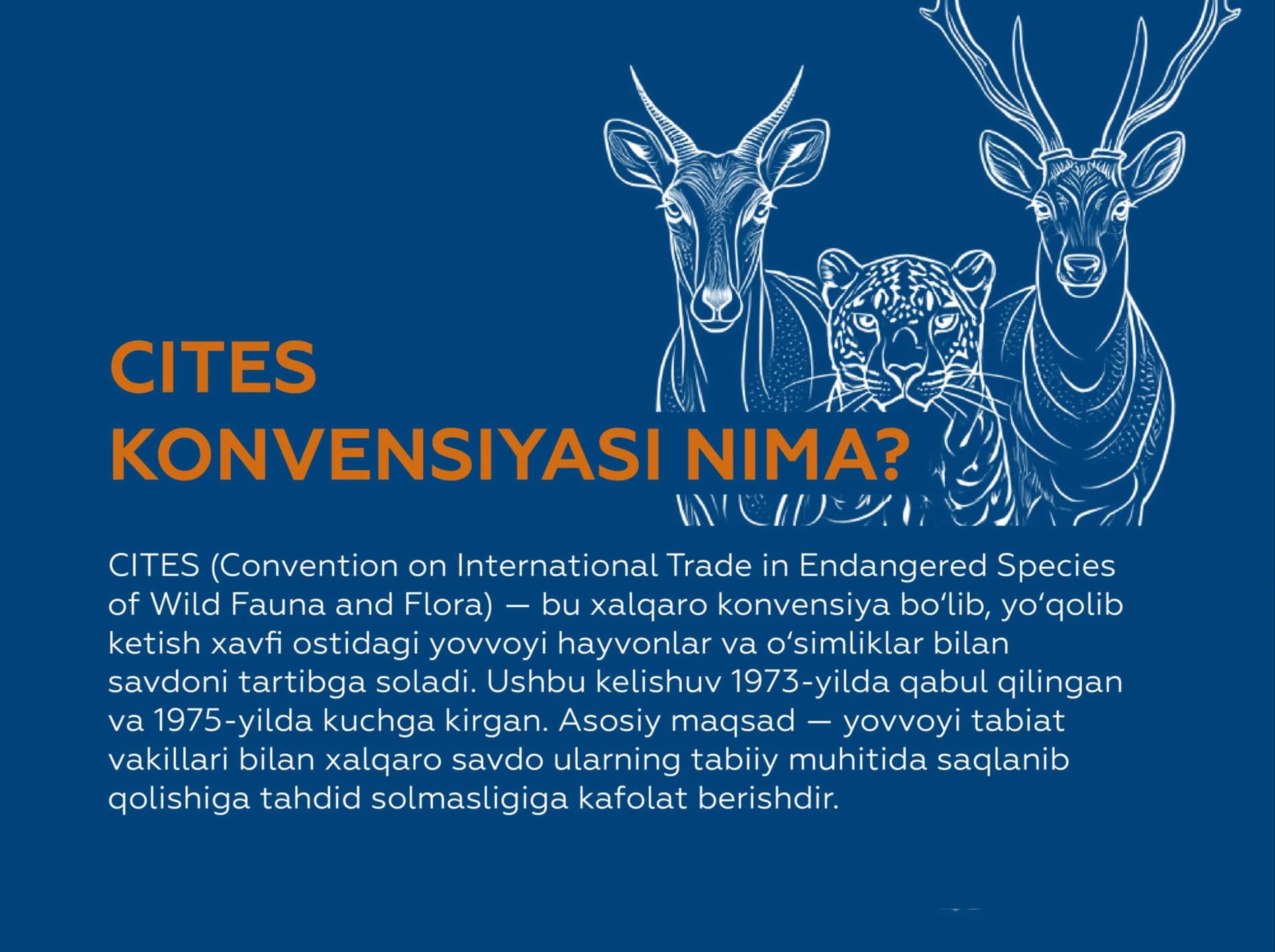
Its primary objective is to ensure that international trade in wild animals and plants does not threaten their survival in their natural habitats. CITES plays a crucial role in conserving biodiversity: it protects endangered species from overexploitation and promotes the sustainable use of natural resources. Compliance with CITES requirements helps combat illegal trade in rare animals, plants and their derivatives (such as skins, timber, horns, etc.), thereby safeguarding more than 40,000 species worldwide.
CITES currently has 184 member states and the European Union. Each Party undertakes to comply with the Convention’s rules and is responsible for controlling the export, import, re-export and introduction from the sea of listed species. Uzbekistan acceded to the Convention in 1997.
All species under CITES protection are listed in three Appendices:
•Appendix I: Species threatened with extinction; trade in these species is strictly regulated (e.g., snow leopard, saiga antelope, Amur tiger).
•Appendix II: Species that could become threatened with extinction if trade is not controlled (e.g., caracal, certain species of cacti and orchids).
•Appendix III: Species protected within a specific country and requiring international cooperation for their protection (listed at the request of a Party).
The highest governing body of the Convention is the Conference of the Parties (CoP), which meets every 2–3 years to adopt amendments, make decisions on listed species, and review implementation mechanisms. The CoP brings together representatives of all member states, experts, international organizations, and NGOs.
From 24 November to 5 December 2025, the historic city of Samarkand will host the 20th Meeting of the CITES Conference of the Parties (CoP20). Holding such a major event in Uzbekistan will enhance the country’s international standing as an active participant in global conservation initiatives, strengthen scientific and institutional cooperation, and draw attention to the unique flora and fauna of Central Asia.