
Uzbekistan and Kazakhstan to Join Forces to Restore the Saiga Antelope Population
2025-07-22 16:00:00 / News
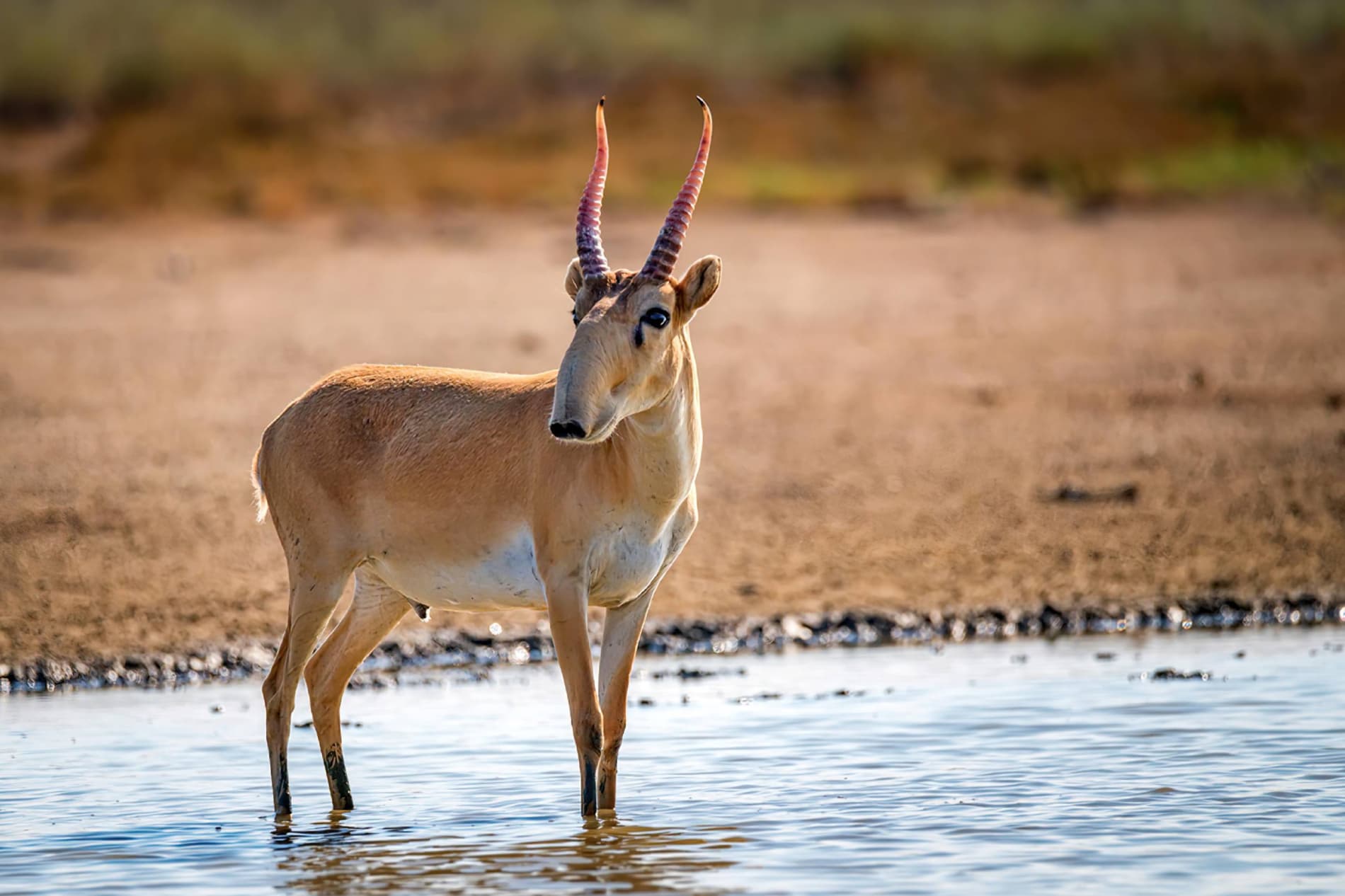
The saiga is a rare and endangered species whose historic range once covered vast areas, including Uzbekistan, Kazakhstan, Turkmenistan and southern regions of Russia. Today, the species is listed in the Red Book of Uzbekistan and included in Appendix II of the CITES Convention and Appendix I of the Convention on the Conservation of Migratory Species of Wild Animals (CMS), underscoring its vulnerability and the urgent need for international conservation efforts.
As part of the bilateral dialogue between Uzbekistan and Kazakhstan, a Memorandum of Understanding on saiga conservation is being prepared for signing. This document will lay the foundation for comprehensive programs to restore the saiga population in Uzbekistan.
The agreement will outline a wide range of joint actions, including:
– Establishing transboundary protected areas and migration corridors to ensure the free movement and safe existence of saigas along their traditional routes.
– Restoring natural pastures, water sources and ecosystems critical to the species' feeding and reproduction.
– Developing a program for the reintroduction of saigas.
– Organizing joint scientific research, monitoring and knowledge exchange, including field missions, joint patrols, specialist training and sharing population data.
The cooperation will focus on key aspects of saiga conservation, such as coordinated monitoring of population size, health and migration across transboundary ecosystems; developing habitat restoration plans and preventing range fragmentation; sharing scientific, technical and genetic information; applying satellite tracking and veterinary controls; combating poaching through strengthened conservation measures; conducting public awareness campaigns; aligning monitoring methodologies and creating a shared population database; and engaging international partners in conservation efforts.
This collaborative initiative between the two countries marks an important step not only in preserving biodiversity but also in strengthening sustainable transboundary environmental cooperation. It reflects a shared commitment to international environmental obligations and the protection of the region’s natural heritage for future generations.