
IUCN Central Asia office opened in Uzbekistan
2025-06-02 16:30:00 / News

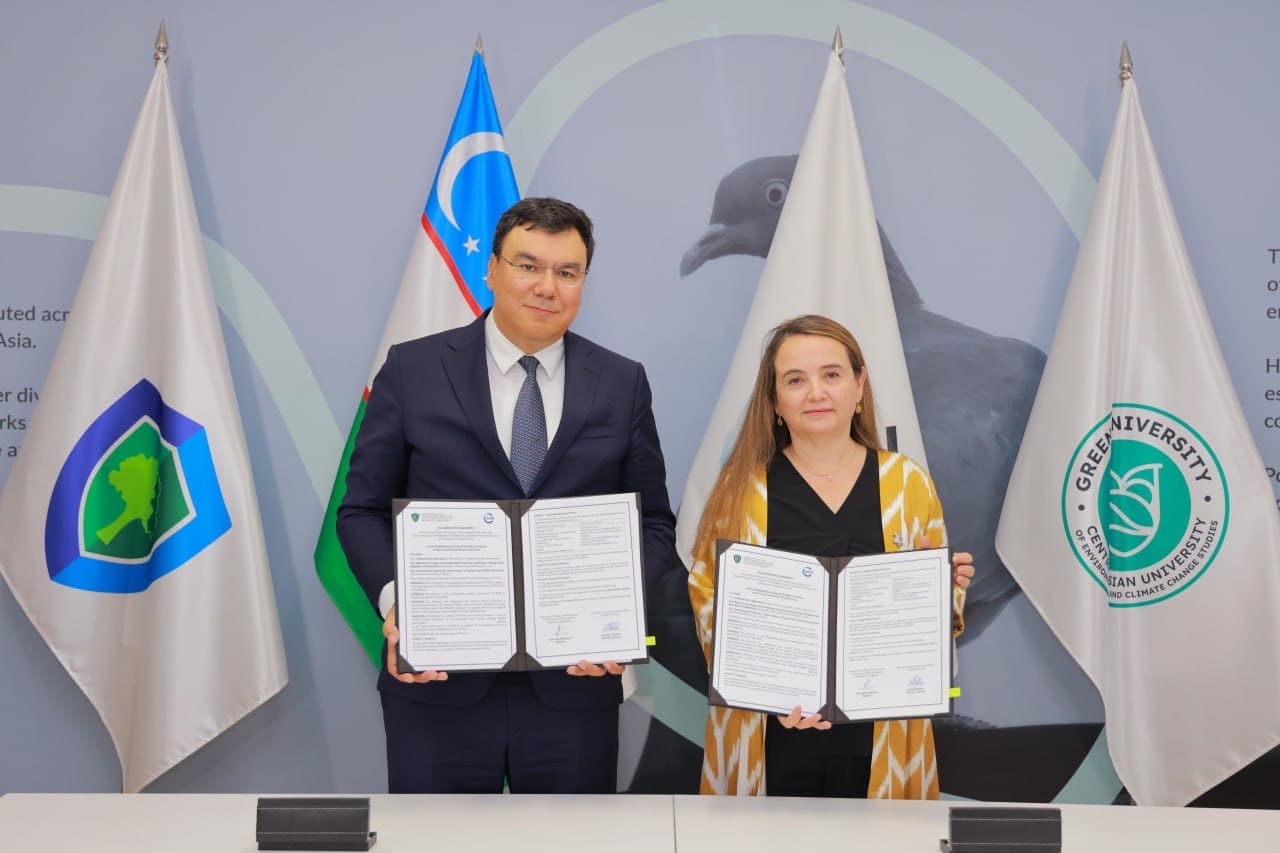


During the event, a collaborative agreement was signed between the Ministry of Ecology, Environmental Protection and Climate Change of the Republic of Uzbekistan and the International Union for Conservation of Nature (IUCN) on the opening of an IUCN office in the Green University building. This agreement is aimed at ensuring the effective operation of the office and further strengthening bilateral cooperation.
The high-level event brought together representatives from Central Asian governments, development partners, civil society and IUCN leadership. The new office will serve all five Central Asian countries – Kazakhstan, Kyrgyzstan, Tajikistan, Turkmenistan and Uzbekistan – supporting their conservation and climate resilience priorities.
In his remarks, Minister of Ecology, Environmental Protection and Climate Change of Uzbekistan Aziz Abdukhakimov highlighted that under the leadership of President Shavkat Mirziyoyev, Uzbekistan is pursuing a consistent and ambitious environmental policy, which has become a key pillar of the country’s sustainable development agenda.
“We actively participate in regional platforms such as CAREC, IFAS, CAMI, the Ramsar Initiative, and others that unite our collective efforts. In this context, I am proud to announce that Uzbekistan, together with IUCN, has launched a Central Asia Office not only for our country but also to support environmental initiatives across all five countries of the region. Moreover, the office’s location at Green University — the first university in the region dedicated to environmental and climate studies — is a strategic choice. It creates opportunities for students, scientists, researchers, and the IUCN team to work collaboratively and engage in regional activities,” said the minister.
He further underlined that the office’s establishment is a symbol of Uzbekistan’s commitment to regional cooperation, knowledge exchange and joint action for nature.
“We are thankful and excited to be able to celebrate the official opening of the IUCN Office in Tashkent, a powerful symbol of our deepening partnership with Uzbekistan and the broader Central Asian region,” said Dr. Grethel Aguilar, IUCN Director General. "This office marks more than just a physical presence; it reflects our commitment to work side by side to conserve biodiversity, restore ecosystems, and strengthen climate resilience. From supporting protected area management and advancing regional dialogue to aligning policy frameworks and delivering on-the-ground conservation programmes, we are here to work hand-in-hand with the governments and people of Central Asia to achieve lasting impact for humanity and nature.”
Located within Green University, the office will also deepen engagement with IUCN Members, creating new opportunities for collaboration and knowledge exchange. Its opening coincides with Uzbekistan’s declaration of 2025 as the "Year of Environmental Protection and Green Economy", reflecting the country’s strong focus on sustainability and resilience.
In Central Asia, IUCN drives initiatives ranging from environmental governance and protected and conserved area support to Nature-based Solutions and integrated approaches to biodiversity and climate challenges. The current portfolio includes the One Health in Nature Conservation initiative, which integrates ecosystem and human health into landscape planning and management. Blue Peace Central Asia 2.0 advances transboundary water cooperation and hydro-diplomacy across the five republics. In Uzbekistan, the FOLUR Child Project supports the restoration of high nature value habitats and promotes sustainable land use. In Kazakhstan, the Dryland Sustainable Landscapes Impact Programme enhances pasture management and drives ecosystem restoration.
These projects reflect IUCN’s integrated, cross-sectoral approach to conservation, grounded in science, policy and partnerships. Led by Dmitry Gorshkov, newly appointed Regional Programme Coordinator, the Central Asia team will guide the implementation of IUCN’s priorities and serve as a regional coordination and knowledge hub. The office will link national and regional stakeholders with global tools and standards, including the IUCN Red List of Threatened Species, the IUCN Green List of Protected and Conserved Areas, and the IUCN Global Standard for Nature-based Solutions.
With the launch of the Central Asia Office, IUCN reinforces its role as a long-term partner for conservation and sustainable development – supporting countries in achieving the goals of the Kunming-Montreal Global Biodiversity Framework and global efforts to halt and reverse biodiversity loss.