
National measures to combat sand and dust storms presented at COP31
2026-11-14 19:00:00 / News


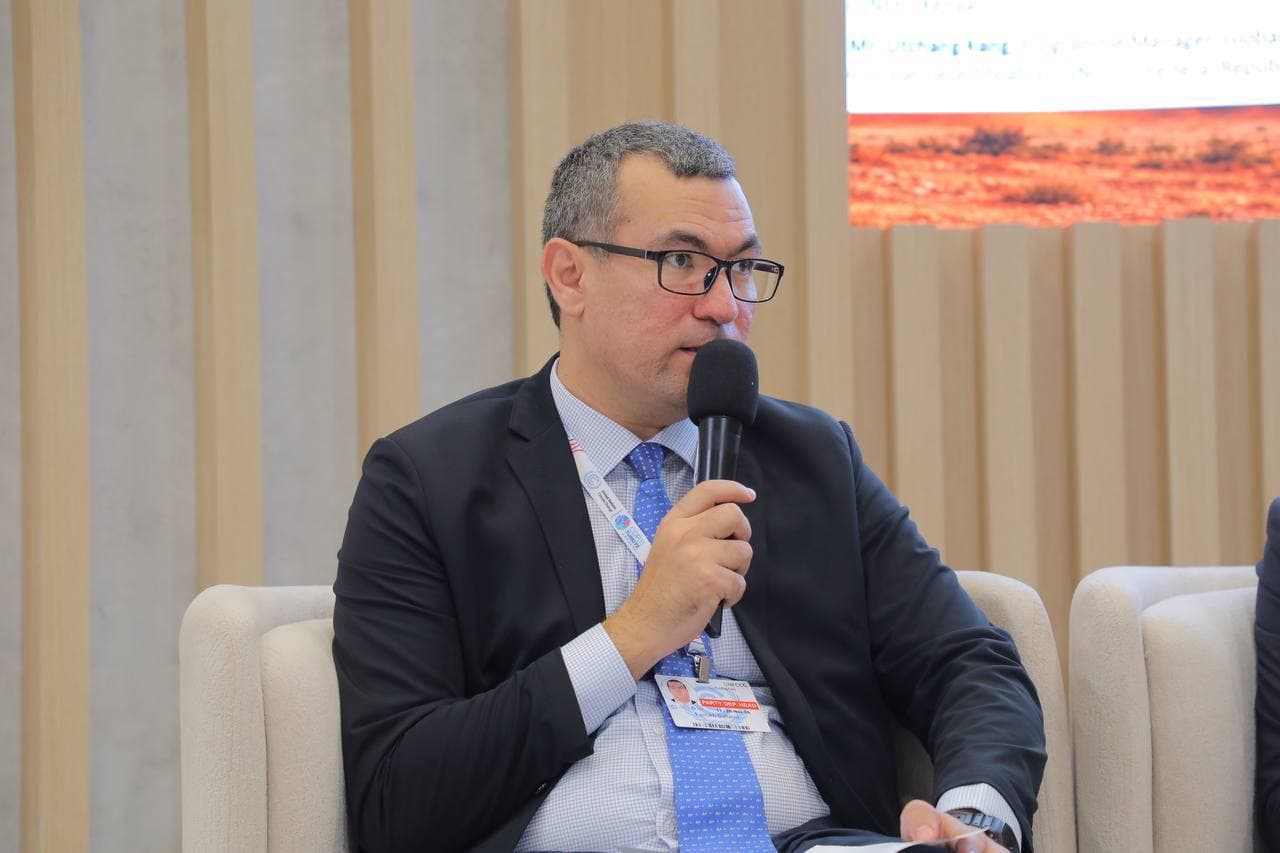

The event was organised as part of the activities of the UN Coalition on Combating Sand and Dust Storms, bringing together representatives of the United Nations Development Programme (UNDP), the World Meteorological Organization (WMO), the United Nations Environment Programme (UNEP), the World Health Organization (WHO), the Food and Agriculture Organization of the United Nations (FAO) and other international organisations.
Farrukh Sattarov, Director of Uzbekistan’s National Centre for Climate Change, spoke at a panel discussion on best practices and mobilising joint action. In his remarks, he emphasised that sand and dust storms pose not only a meteorological challenge but also a serious transboundary environmental and socio-economic threat, directly affecting public health, food security and economic resilience.
Particular attention was given to the environmental consequences of the Aral Sea’s desiccation. It was noted that ecosystem degradation has rendered approximately 3 million hectares of land unusable, with more than 56% of this area exposed to severe wind erosion. The annual economic losses resulting from land degradation and desertification in Uzbekistan are estimated at USD 830 million.
According to joint research conducted with the World Bank, dust transported by wind from outside urban areas accounts for up to 36% of Tashkent’s annual average PM2.5 concentration, with its contribution exceeding 50% during dry summer months.
Against this backdrop, Uzbekistan presented large-scale measures being implemented at the initiative of President Shavkat Mirziyoyev. In particular, the country has adopted a National Programme to Combat Dust Storms for 2024–2030, which aims to reduce the intensity of severe dust storm formation by 50% by 2028.
At the same time, efforts are underway to establish a unified network of 347 automated air quality monitoring stations, develop a multi-factor early warning system, restore degraded lands and establish protective green belts.
A separate focus of the address was the need to strengthen regional cooperation and mobilise international climate finance.
Uzbekistan proposed focusing joint efforts on developing regional infrastructure for monitoring and forecasting dust storms, satellite-based assessment of dust sources, restoration of degraded landscapes, sustainable management of pastures and water resources, and the protection of public health.
The importance of transforming national environmental programmes into concrete investment projects with the involvement of international financial institutions, UN agencies and development partners was also emphasised.
The potential of the proposed Green Central Asia Fund and Central Asian Climate Centre was highlighted as a promising avenue for strengthening regional cooperation.
Uzbekistan reaffirmed its readiness to actively participate in the work of the UN Coalition on Combating Sand and Dust Storms and in the practical implementation of the UN Secretary-General’s Framework for Action for 2025–2034.
It was emphasised that the effectiveness of international efforts should be measured above all by tangible results: improved land conditions, better air quality, enhanced forecasting systems and greater resilience of communities to climate and environmental risks.