
How do climate change and meteorological conditions affect air quality in Central Asia?
2026-10-27 17:50:00 / News
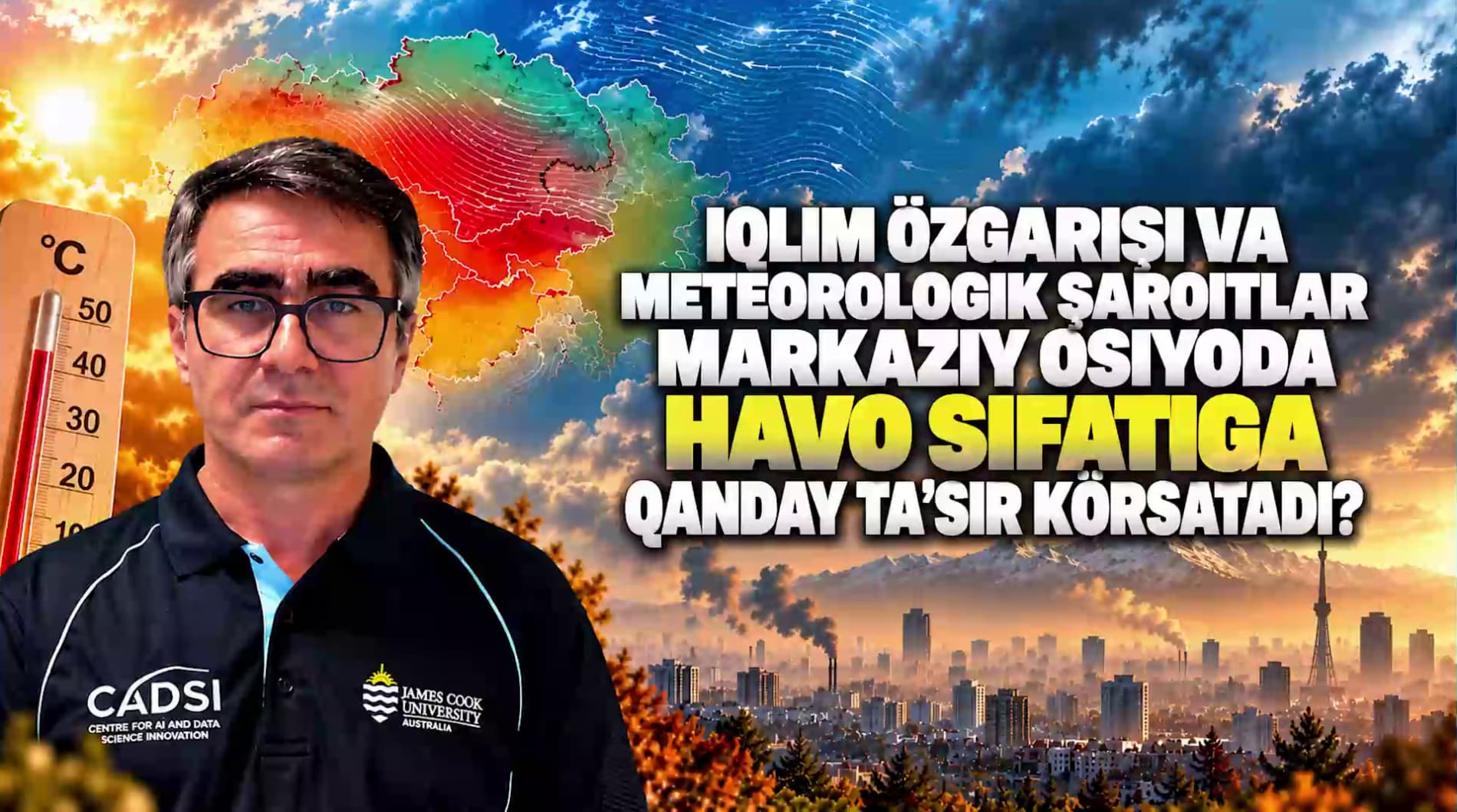
Air quality is influenced by both pollutant emissions and meteorological conditions. In autumn and winter, temperature inversions can occur in Central Asia. This phenomenon arises when a layer of warmer air sits above cooler air near the Earth's surface, preventing vertical mixing of air masses. When winds are weak and the atmosphere is stable, pollutants disperse less effectively and can accumulate in the near-surface layer. As a result, PM2.5 concentrations can rise significantly even without an increase in pollutant emissions.
This raises the question of whether climate change contributes to deteriorating air quality in Central Asia. Climate change can indeed affect air quality, although the nature of its impact varies depending on the region, season and type of pollutant. For example, rising temperatures, changes in precipitation patterns, prolonged dry periods and shifts in atmospheric circulation can affect dust generation, the formation of pollutants and the frequency of meteorological conditions that hinder their dispersion. Dust storms are particularly significant in Central Asia because dust can travel considerable distances, including across national borders. This makes regional cooperation especially important.
It is worth noting that Uzbekistan has expanded its ambient air quality monitoring network. Approximately 28 automated monitoring stations are currently in operation and connected to national platforms. Monitoring data are available to scientists and the general public through the relevant website.
In the long term, key priorities include reducing emissions from transport, heating systems and industrial facilities. Improving energy efficiency can also make a significant contribution to these efforts. In addition, it is important to control construction dust and prevent dust from being lifted from exposed land surfaces without vegetation cover. Effective urban planning and the development of green infrastructure can also play an important role.
The key takeaway is that meteorological conditions can exacerbate air pollution. Achieving sustained improvements in air quality requires not only reducing pollutant emissions but also understanding and forecasting the weather conditions that contribute to their accumulation. It is therefore essential to study both pollution sources and the meteorological factors that can cause pollutants to persist in a particular area for extended periods.