
Information Note on the Deterioration of Ambient Air Quality
2026-10-26 20:20:00 / News
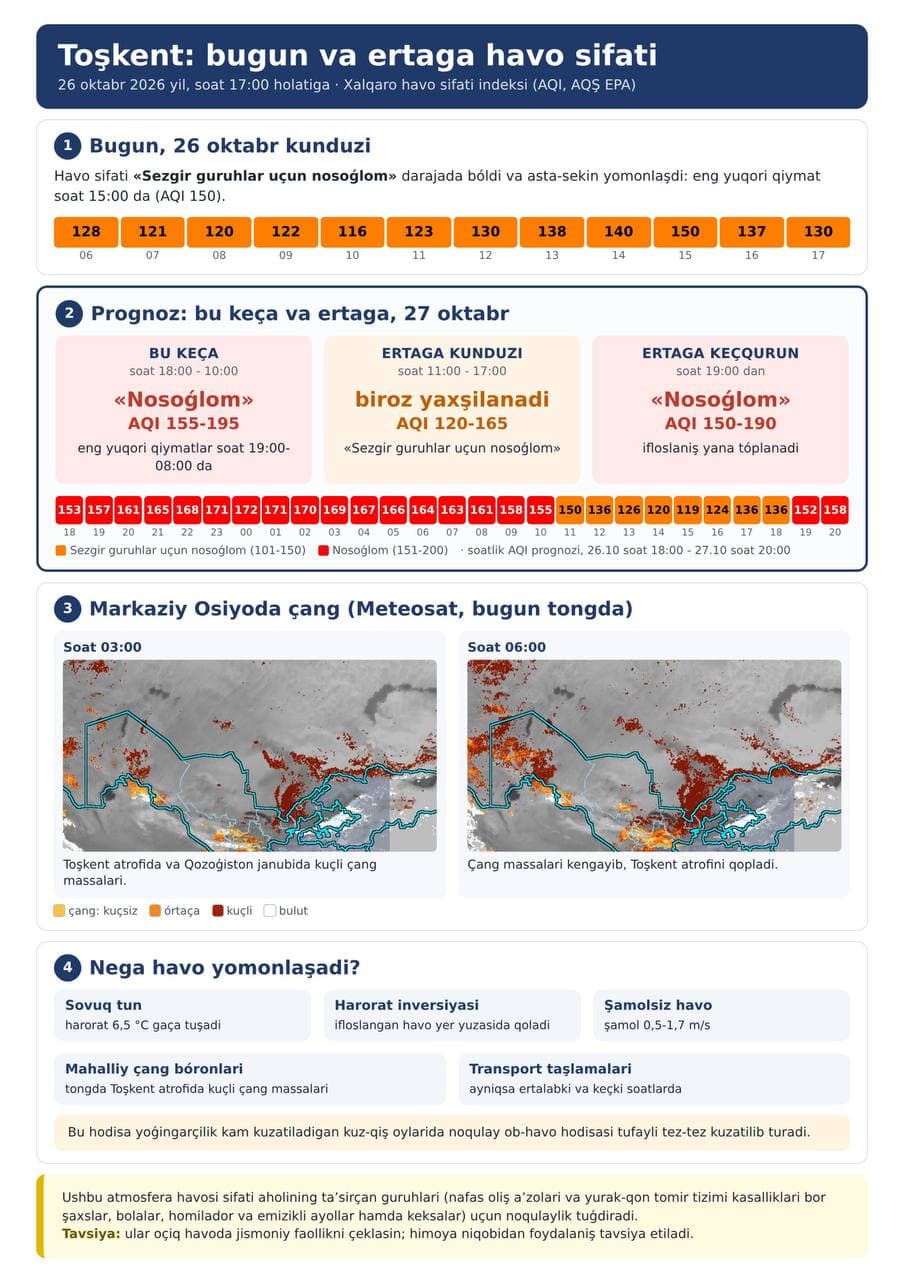
In addition, as temperatures drop, atmospheric emissions from heating systems and other sources increase. The combined impact of dust and anthropogenic pollutants consequently has a negative effect on air quality.
In October, the Tashkent Meteorological Observatory recorded just 11.4 mm of precipitation, compared with the October monthly average of 23.7 mm.
According to meteorological forecasts, the current situation may persist for a week due to the absence of expected precipitation.
The following measures are being taken to improve ambient air quality:
• Warnings have been issued to 30 major construction companies, instructing them to implement dust suppression measures to prevent dust and sand particles from becoming airborne.
• Warnings have been issued to 131 major business entities classified under Environmental Impact Categories I and II, calling on them to reduce their atmospheric emissions by 50%. In addition, seven thermal power plants (TPPs) operating in Tashkent and the surrounding areas have been warned.
• The khokimiyats (local administrations) of the Republic of Karakalpakstan, the regions, and the city of Tashkent have been urged to organize the removal of accumulated sand and dust from major streets and roadside areas, as well as to ensure that existing fountains remain operational.
The international air quality monitoring platform IQAir confirms that natural factors account for the predominant share of the current pollution.( Source: IQAir)
The National Committee on Ecology and Climate Change regularly informs the public about changes in air quality and provides relevant recommendations.