
“Yashil Makon” to focus more strongly on protecting and caring for trees
2026-09-21 20:00:00 / News
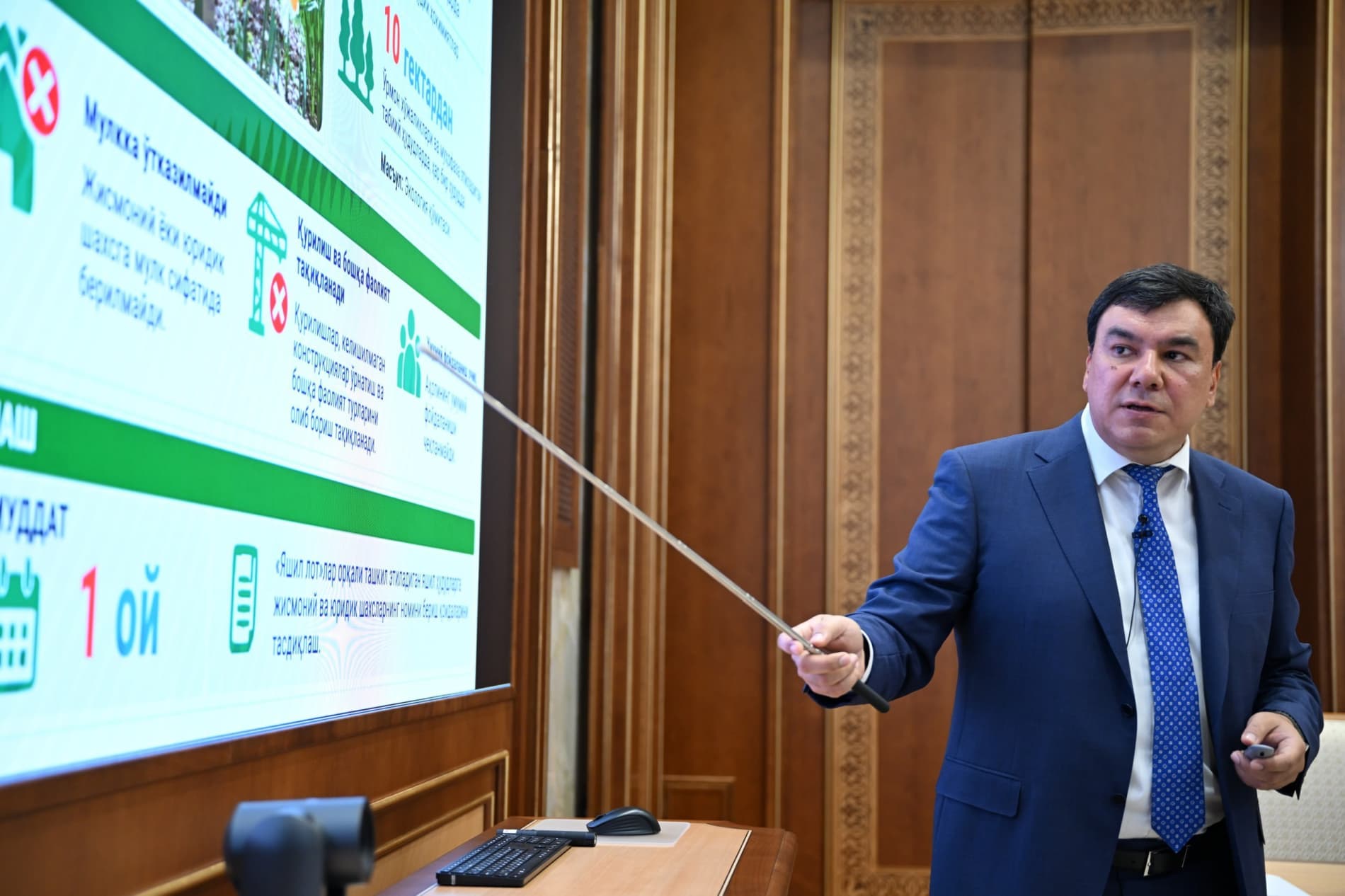
Going forward, greening efforts will be tailored to the climatic and soil conditions of each region. This will involve selecting tree species that are adapted to local conditions and resilient to heat, cold and water scarcity, determining planting schedules based on scientific recommendations, and ensuring that newly planted trees receive care for at least three years. The condition of planted trees will be assessed after one, three and five years.
Each mahalla will have a “Green Map” identifying the species planted, their locations and the irrigation systems in place. Forestry specialists will be assigned to mahallas as mentors, providing residents with guidance on planting and caring for trees and supporting the development of community gardens and small green spaces. A “green rating” for mahallas has also been proposed, with assessments based on factors such as the extent of green space, tree survival rates and community participation.
Greening initiatives will also incorporate the “3-30-300” principle. Under this approach, everyone should be able to see at least three trees from their home, at least 30 percent of the area where they live should be covered by tree canopy, and a green space for recreation should be located within 300 metres of their home. Pilot projects applying these principles have already been developed in Yangihayot, Alat and Urgut.
The project will also receive stronger scientific and technological support. Plans include establishing in vitro laboratories and modern nurseries, replacing water-intensive lawns with drought-tolerant plants, and introducing a “Green AI” module. Artificial intelligence will be used to analyze data on soil conditions, climate and water availability and provide recommendations on the most suitable locations and tree species for planting. It will also support the early detection of trees at risk of drying out, as well as potential disease and pest threats.