
How to turn plant residues into natural fertiliser
2026-08-17 10:30:00 / News
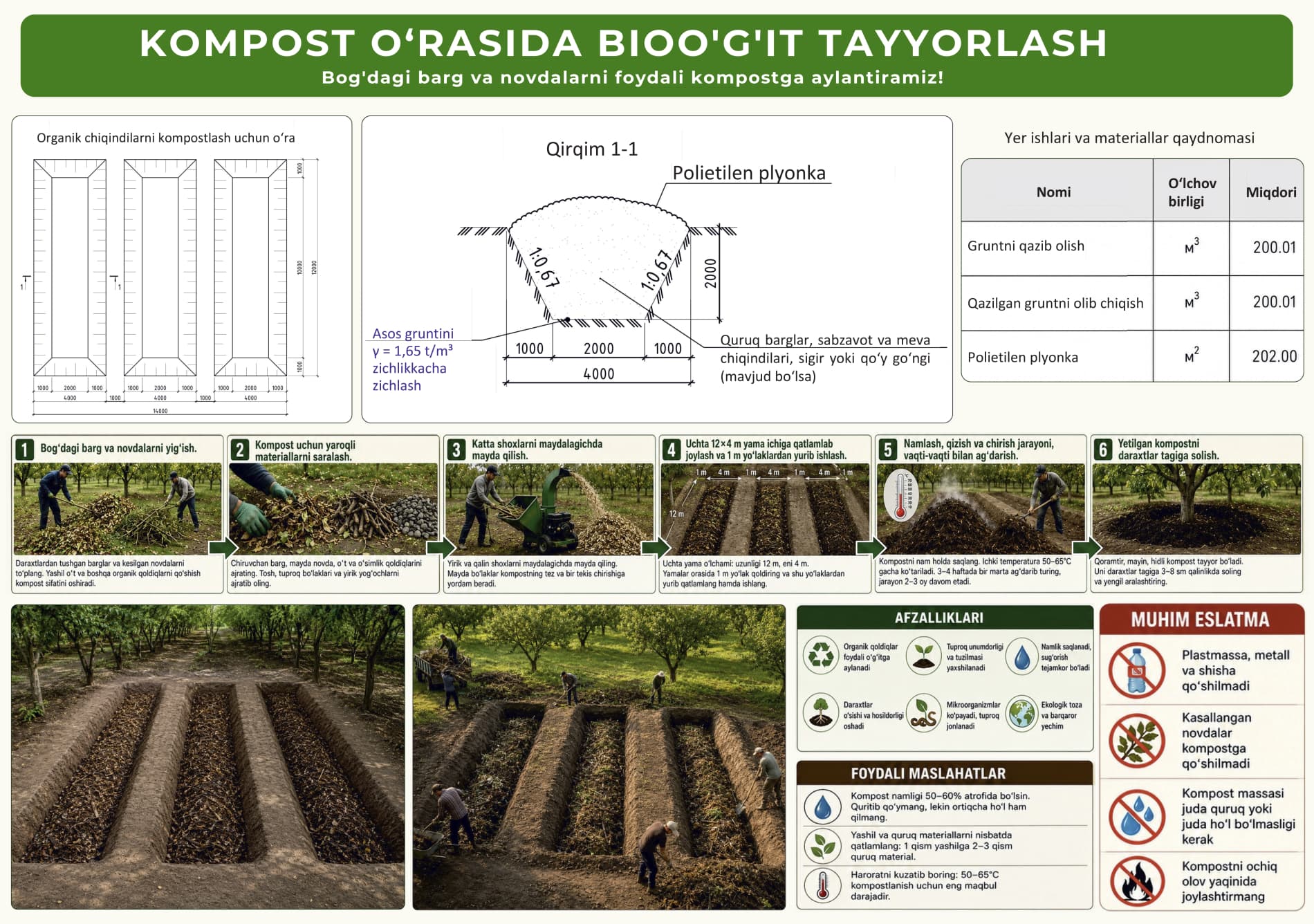
Where to start?
The first step is to collect the organic materials. Suitable materials for composting include fallen leaves, small branches, grass clippings and other healthy plant residues. The collected material should be carefully sorted to remove stones, soil, plastic, metal, glass and any other foreign materials.
Large or thick branches should preferably be shredded or chopped into smaller pieces. The smaller the organic material, the more quickly it decomposes and the more evenly the composting process can proceed.
How to set up a composting area?
For orchards, a system of three composting pits, each measuring approximately 12 × 4 metres, may be used. A passageway of around 1 metre between the pits is recommended to facilitate access, turning and general maintenance.
Shredded leaves and branches should be placed in the pits in layers. It is advisable to combine moist, green materials with dry leaves and shredded branches. This balanced mixture helps create favourable conditions for effective decomposition.
Moisture, air and temperature are essential
Adequate moisture must be maintained to support active composting. The composting material should not be allowed to dry out completely, but it should also not become excessively waterlogged. Periodic mixing or turning ensures sufficient aeration and promotes the even decomposition of organic matter. During the active composting process, the temperature inside the compost pile may reach 50–65°C. Monitoring the temperature can help assess the intensity of the process and the overall condition of the compost.
With proper management, compost may be ready within approximately two to four months, depending on the composition of the materials, moisture levels, temperature and other conditions.
What should not be added to compost?
To produce high-quality and safe organic fertiliser, it is important to carefully control the composition of the composting materials.
The following should not be added:
– plastic, metal or glass;
– chemicals or household waste;
– plant material affected by diseases or pests;
– flammable materials or ash;
– other foreign or non-organic materials.
It is also important to avoid allowing the compost to become excessively dry or waterlogged.
How to use finished compost?
Mature compost typically has a dark brown colour, a loose, crumbly texture and an earthy smell. It can be used to nourish trees, incorporated into the soil or applied around plants. Organic fertiliser improves soil structure and fertility, enhances its capacity to retain moisture and creates favourable conditions for beneficial microorganisms. Using compost can also help reduce reliance on chemical fertilisers and support the more efficient use of organic resources available in the garden or orchard.
Composting: a simple step towards a more sustainable garden
Instead of burning or discarding fallen leaves and branches, they can be returned to the natural cycle. Composting transforms organic residues into a valuable resource that helps maintain soil fertility and reduce the volume of waste. By recycling organic materials, we care for the soil, support healthy plant growth and protect the environment—laying the foundation for healthier and more sustainable gardens.