
Goitered Gazelles Recorded in the Surkhan State Nature Reserve for the First Time
2026-07-06 16:30:00 / News
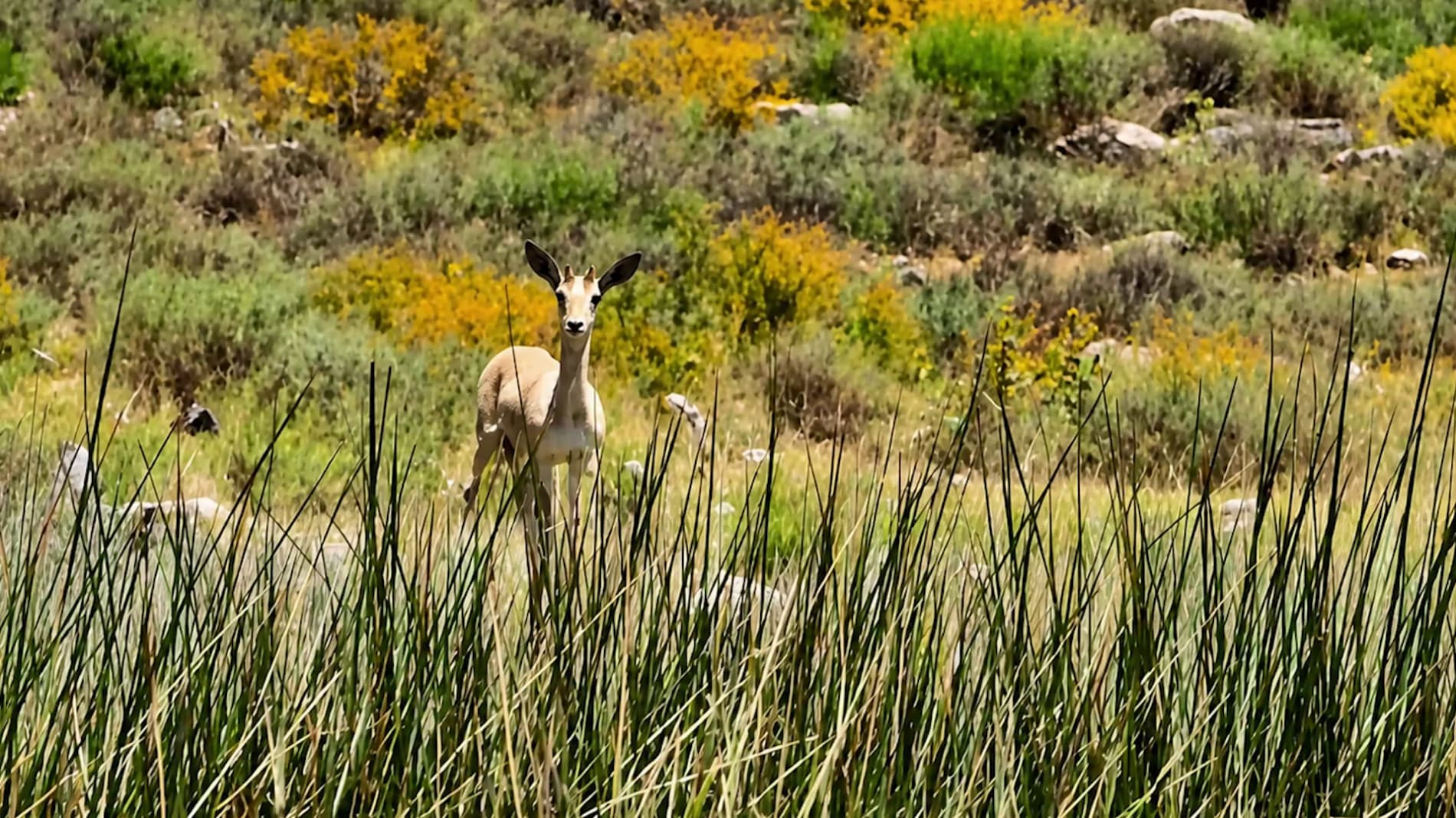
Notably, this is the first recorded occurrence of the species in the reserve since its establishment in 1986. As a result of the favourable conditions maintained within the protected area, a group of 10 goitered gazelles naturally migrated from Turkmenistan into the reserve.
The goitered gazelle is classified as a Vulnerable species with a declining population. It is included in the Red Book of the Republic of Uzbekistan and is also listed on the IUCN Red List of Threatened Species.
Until the first half of the twentieth century, the goitered gazelle was widely distributed across the sandy deserts and foothill plains of Uzbekistan. Today, this species is found only in a limited number of sparsely populated and relatively undisturbed areas of the country. Adult individuals measure approximately 110–115 cm in body length and weigh between 25 and 30 kg. Males have dark, lyre-shaped horns, while females are hornless. Owing to its distinctive dark, almost black tail and pale rump, the species is also known as the black-tailed gazelle.
In Uzbekistan, the goitered gazelle occurs on the Ustyurt Plateau, in the Kyzylkum Desert and adjacent areas, in the Karshi Steppe, as well as in parts of Surkhandarya Region. In the southern part of the Kugitang mountain system, small groups of 10–15 individuals have been recorded in the Aktash, Kyzyl, Alisherdara and Khojabesh massifs. An additional 20–25 individuals inhabit the foothills of the Babatag Mountains.Goitered gazelles generally live in groups or herds and undertake seasonal movements across extensive territories, although solitary individuals are also occasionally observed.
For reference: The Surkhan State Nature Reserve was established on 8 September 1986 in Sherabad District of Surkhandarya Region. The reserve is home to approximately 200 animal species, nearly 30 of which are included in the Red Book of the Republic of Uzbekistan.