
Reduction of carbon emissions into the atmosphere by 15-20 percent has been achieved
2024-08-08 19:45:00 / News
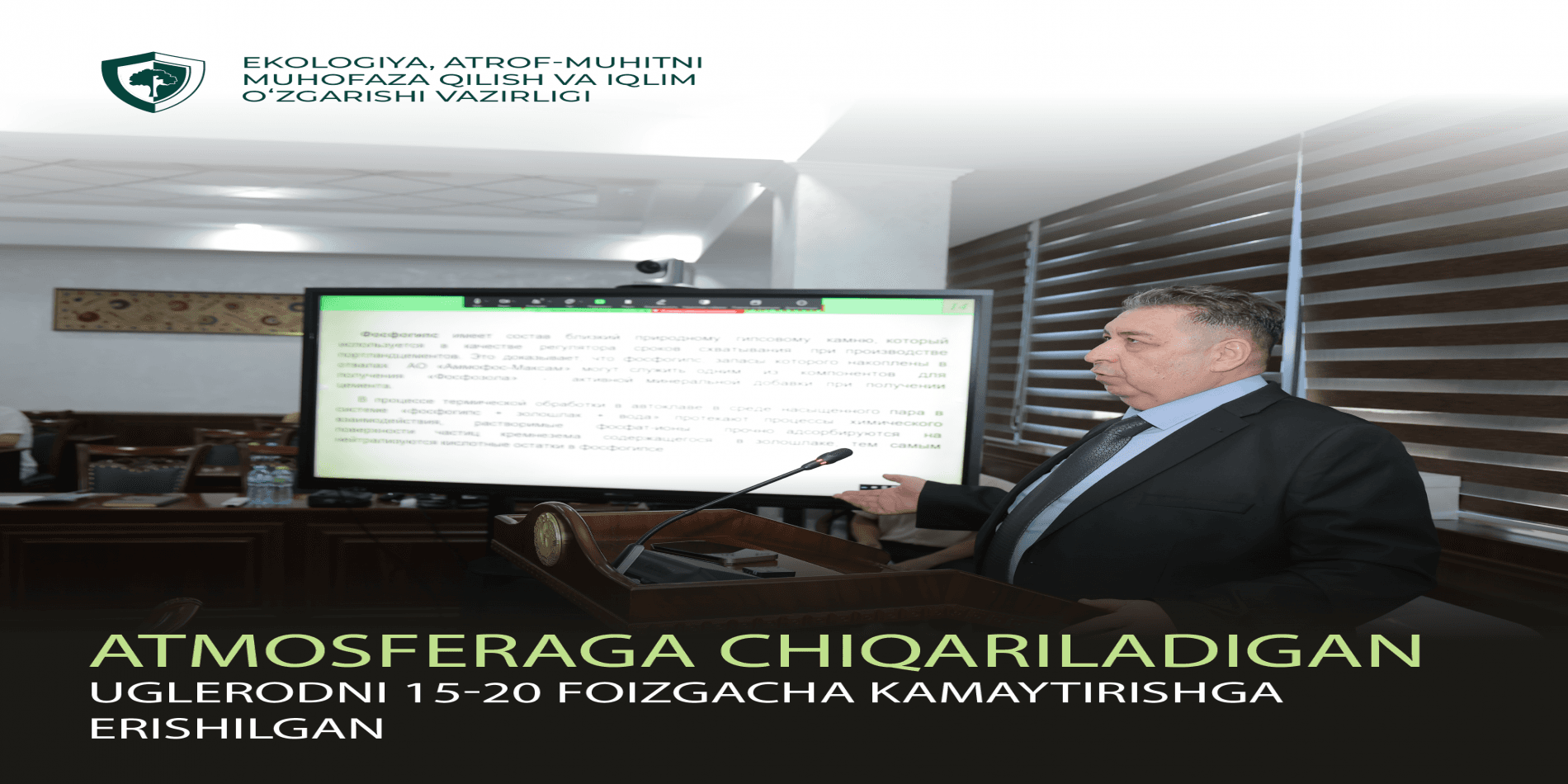
This study aims to develop a technology for obtaining an active mineral additive in cement by processing industrial waste that harms the environment.
As an object of research, the processes of obtaining an active mineral additive to cement and additive cement with the processing of ash and slag from the Angren thermal power plant – phosphogypsum (currently 70–80 million tons have been accumulated and lie on an area of several tens of hectares), waste from the production of phosphoric acid, formed in large quantities.
It is worth noting that using man-made waste (phosphogypsum, ash and slag) in cement production, a new type of active mineral additive to cement has been created - "phosphosol". By adding 20 percent of recycled technogenic waste "phosphosol" to cement, cement grade 400 was obtained, which meets the requirements of National Standards.
As a result of the created technologies, more than 500,000 tons of industrial waste were disposed of, more than 3,000,000 tons of cement additives were produced that meet the requirements of National Standards, and the economic efficiency amounted to about 350 billion sums.
Also, due to the use of industrial waste as secondary raw materials, it was possible to save 150,000 tons of gypsum, which is added in an amount of 5% in traditional cement production. According to the new technology, natural gas used in cement production is saved by 20–25%, and carbon dioxide emissions into the atmosphere are reduced by 15-20%.
The scientifically based results obtained in the dissertation lead to a reduction in industrial waste, saving raw materials and energy resources. In addition, it will help reduce carbon dioxide emissions and make the environment healthier.