
First Results Recorded from Trials of a New Technology for Greening Saline Lands
2026-05-21 12:20:00 / News
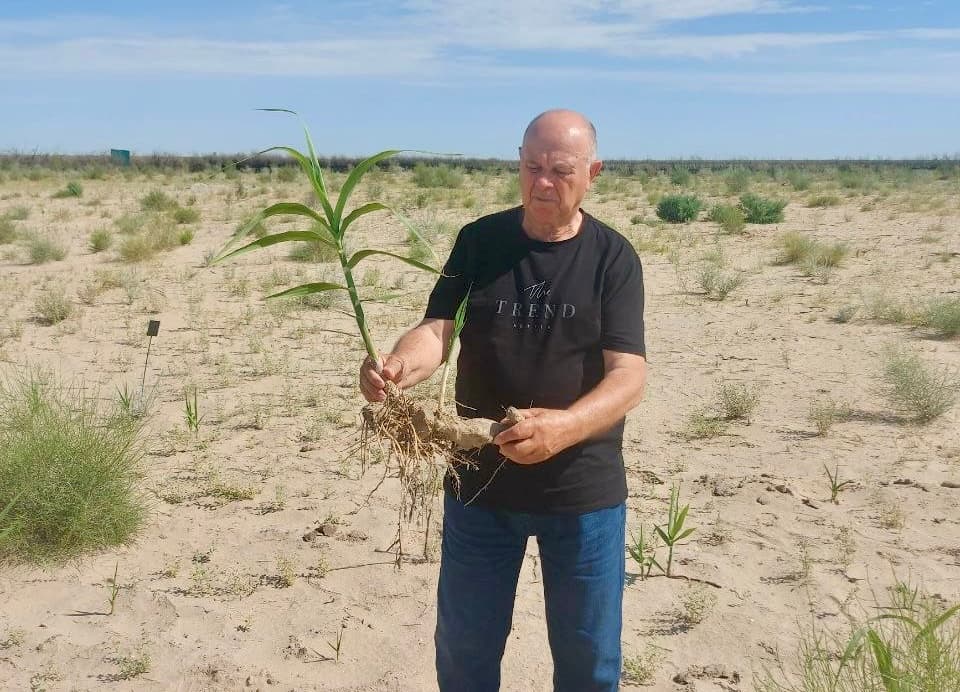
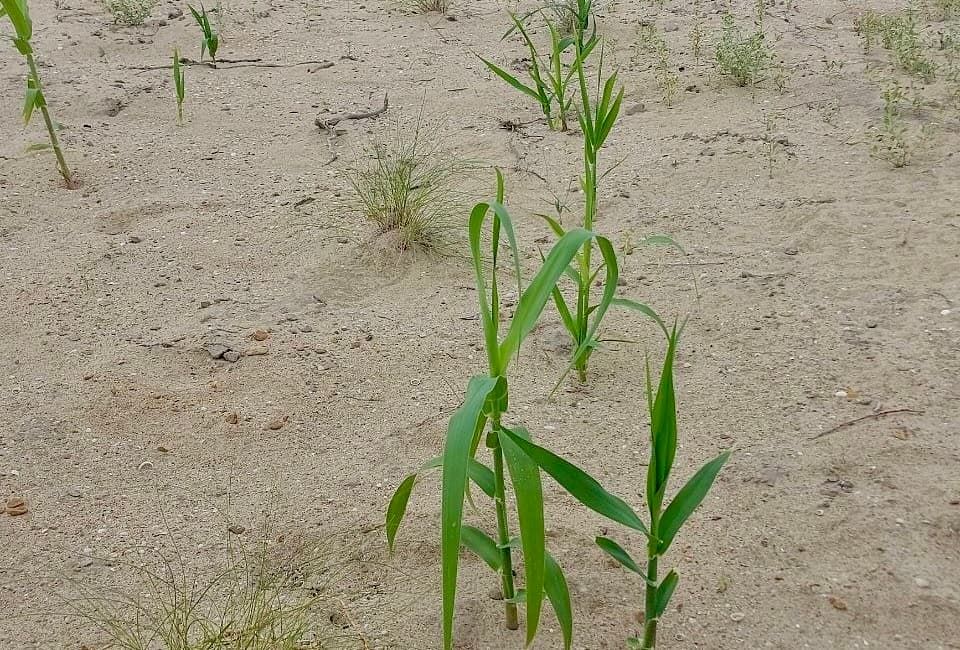
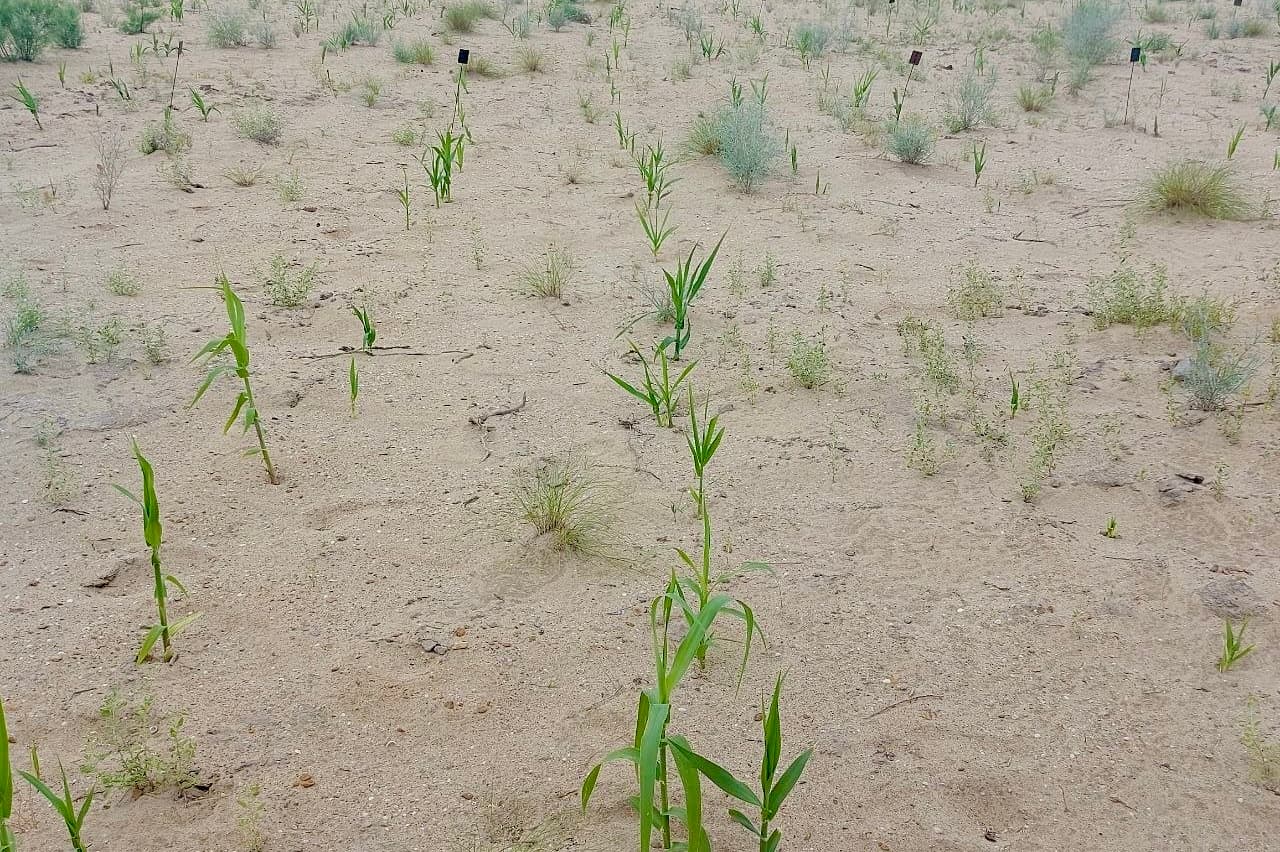
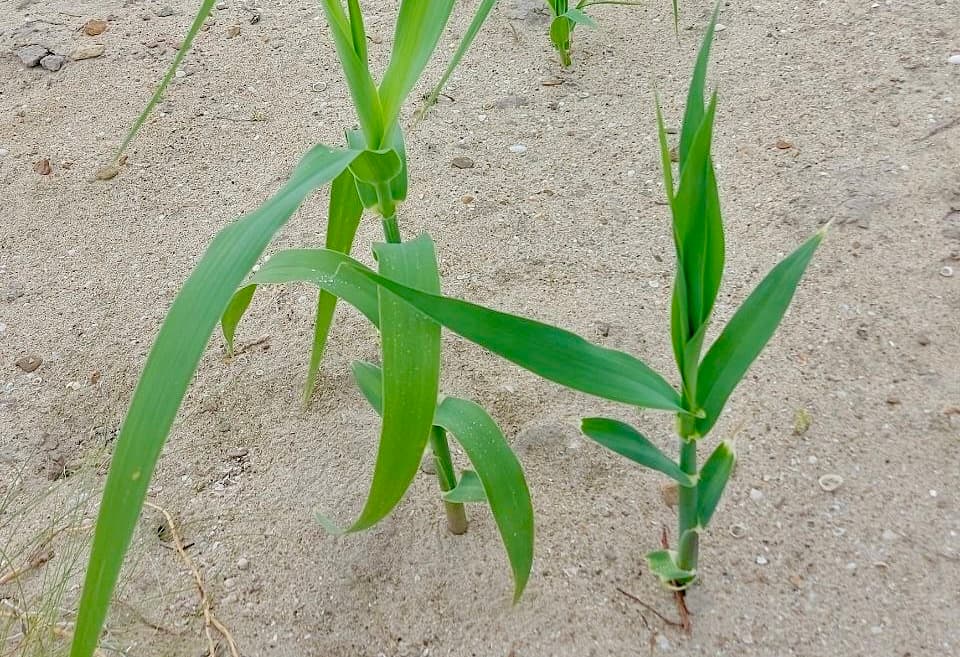
The pilot project is being carried out on a 2-hectare site. According to researchers, the entire area is expected to be covered with green vegetation within the next 15–25 days. This would provide important evidence that arundo can be effectively used for large-scale greening projects, including on difficult terrains such as saline soils with shallow mineralized groundwater.
The concept developed by the Laboratory of Protective Afforestation and Forest Reclamation at the Forestry Research Institute is now proving effective under real field conditions and is gradually moving from hypothesis to validated practice. The initial results open new opportunities for restoring degraded lands and strengthening ecosystem resilience.
Arundo (Arundo donax), commonly known as giant reed, is a fast-growing perennial plant notable for its strong tolerance to salinity and drought. It can grow on low-productivity soils where many other species fail to survive, generating substantial biomass while helping stabilize soil through its extensive root system. In forest reclamation, arundo is considered a promising tool for combating land degradation and desertification, particularly in the Aral Sea region. The plant contributes to ecosystem restoration, improves soil structure and may also serve as a valuable source of raw material.
The successful testing of the root-cutting cultivation method creates new opportunities for the rapid and large-scale introduction of the crop. The findings confirm the strong potential of arundo as a sustainable nature-based solution for restoring degraded landscapes.