
Uzbekistan’s experience in the circular economy was highly recognized
2026-04-23 09:00:00 / News
The event served as an important platform for discussing the transition of Central Asian countries to sustainable development models based on the principles of efficient resource use and waste reduction. Particular attention was given to the need to shift from a linear to a circular economy, which contributes to reducing environmental and climate risks, fostering innovation, and creating new jobs.
During the session, it was emphasized that the environmental agenda is no longer limited to environmental protection issues alone, but is increasingly becoming a matter of economic sustainability, governance quality, and strategic security. It was noted that in the 21st century, ecology serves as an indicator of state maturity, while the key principle of development is the reintegration of resources into the economic cycle.
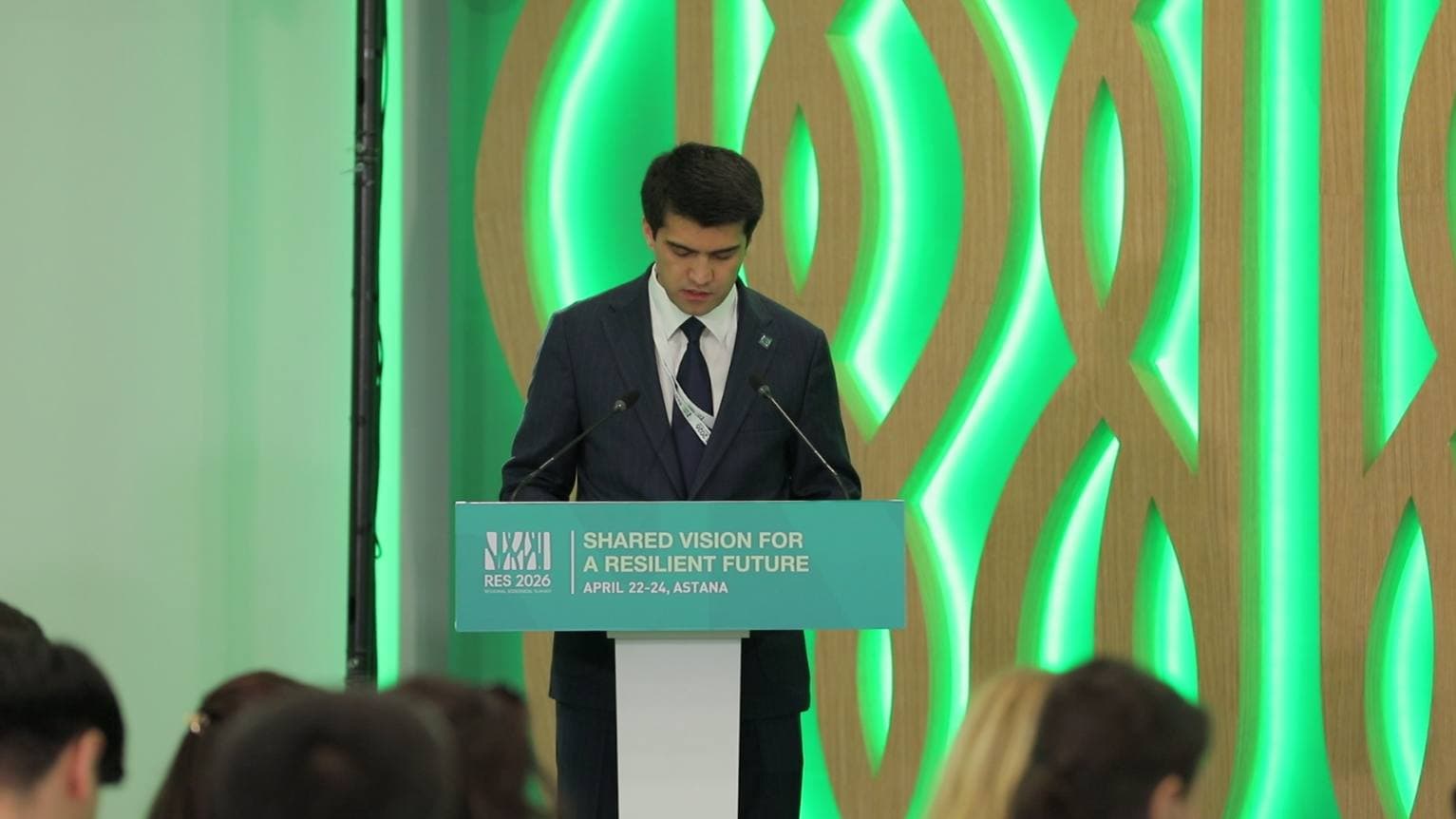
It was also highlighted by Sharifbek Khasanov, Director of the Waste Management and Circular Economy Development Agency under the National Committee on Ecology and Climate Change of the Republic of Uzbekistan, that, at the initiative of the President of the Republic of Uzbekistan, Shavkat Mirziyoyev, waste management and the development of the circular economy have been defined as one of the priority areas of state policy. The establishment of the Agency was noted as an important step towards a systemic reform of the sector, increasing transparency, and enhancing investment attractiveness.
Today, waste management services coverage has reached 90 percent of the population. The sector involves around 300 enterprises, approximately 20,000 employees, and more than 4,500 units of equipment. Projects worth over $ 1.5 billion are being implemented, including the construction of modern waste-to-energy facilities. By 2028, it is planned to commission 11 waste incineration plants, two of which are scheduled to be launched within the current year.
In parallel, a digital waste management system is being introduced to ensure full process monitoring, transparency, and efficiency. Uzbekistan is also actively developing international cooperation and stands ready to share its experience.
Participants noted that Central Asian countries face a number of common challenges, including the growing volume of waste, limited natural resources, and low recycling rates. It was further emphasized that the widespread use of single-use products and mass consumption patterns has a negative impact on the environment, public health, and food security.
In addition, the need to harmonize regional waste management policies, align regulatory frameworks, and develop infrastructure was underlined. It was noted that only coordinated regional actions can ensure the effective implementation of international commitments and accelerate the transition towards a circular economy.