
Uzbekistan Presents Central Asian Mammals Conservation Initiative at CMS COP15
2026-03-26 19:00:00 / News
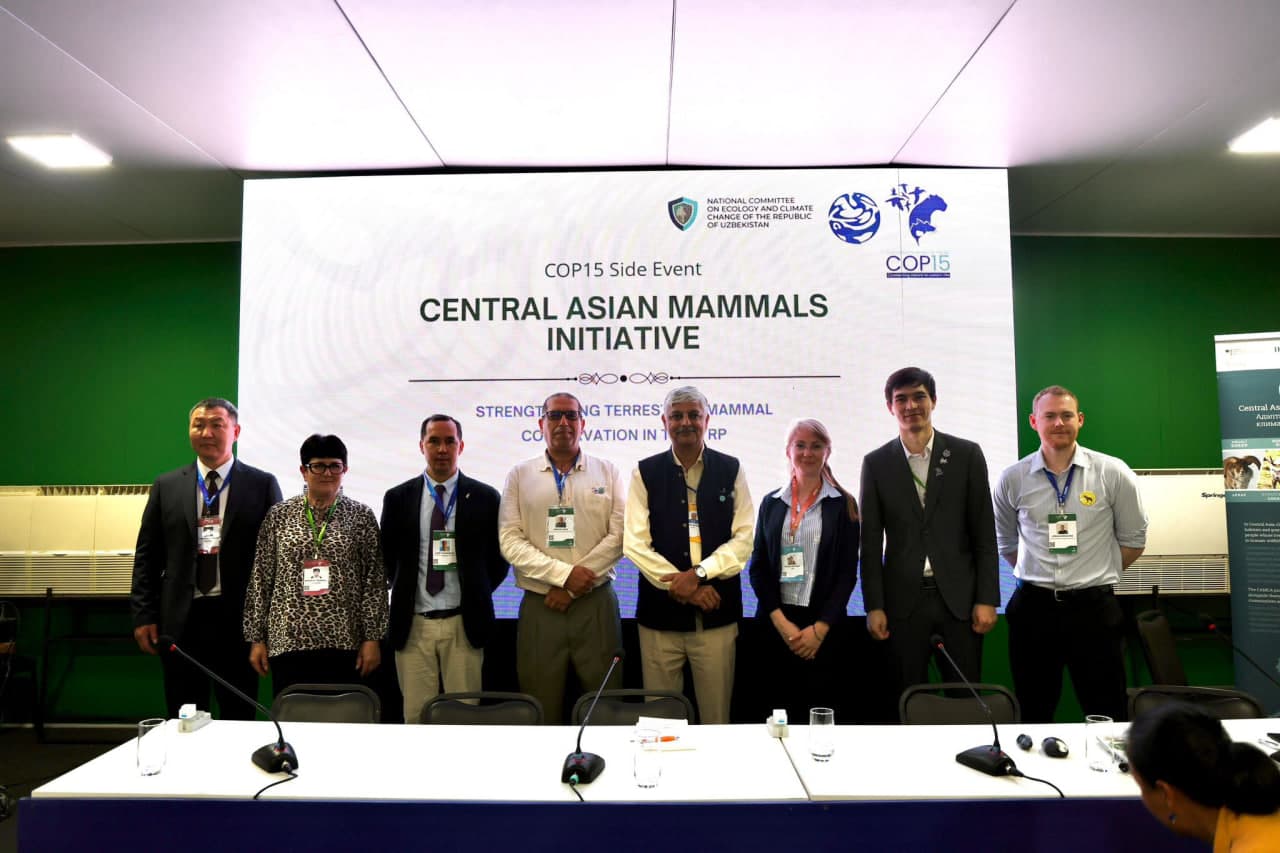

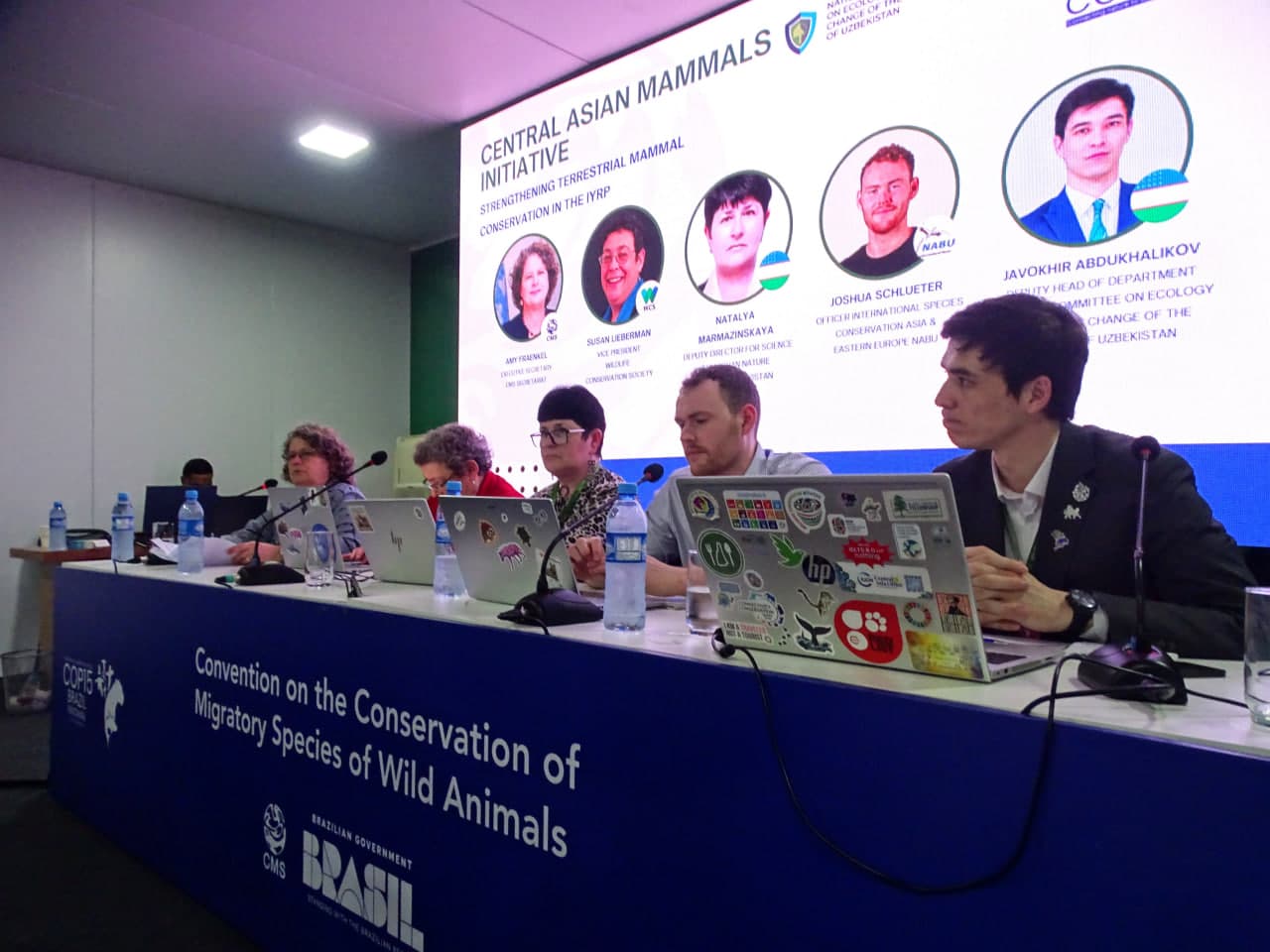
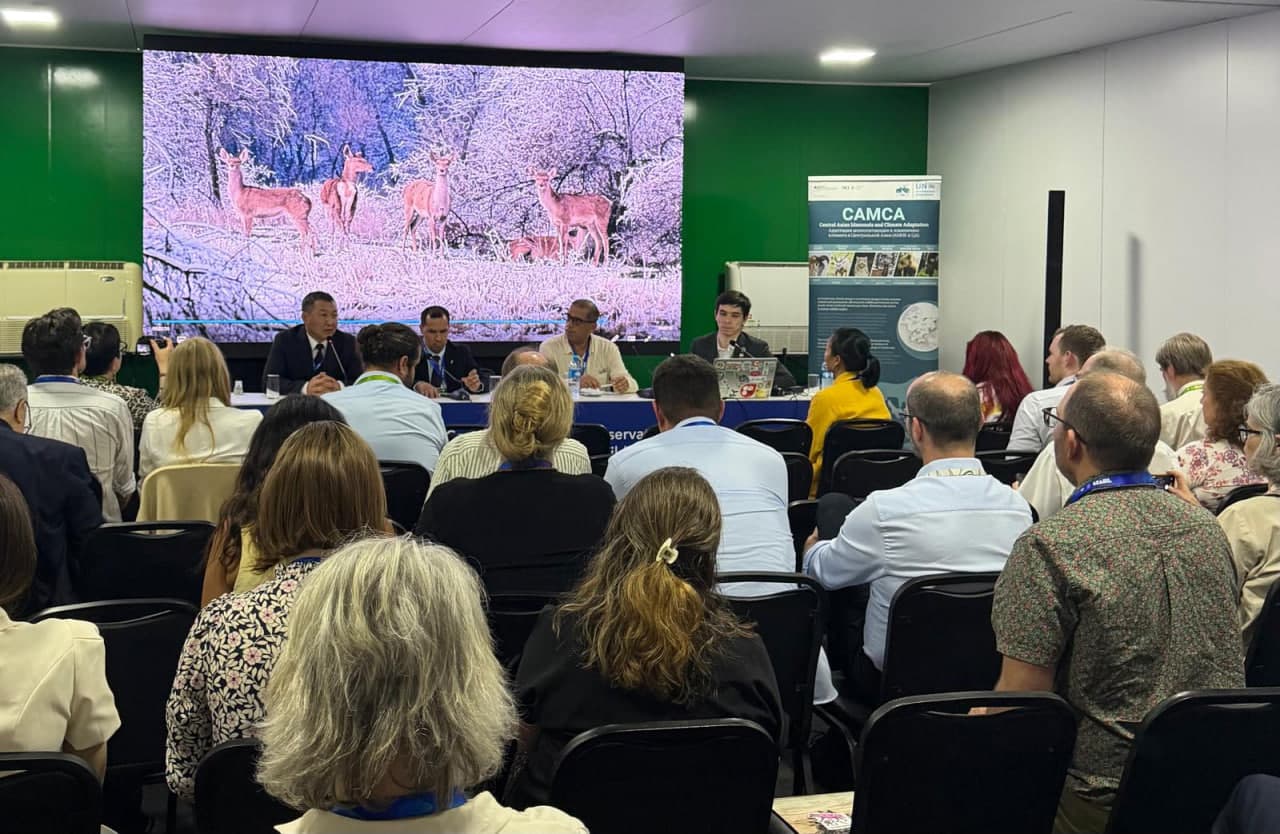
The event aimed to promote regional cooperation for the conservation of migratory mammals in Central Asia, discuss the implementation of the Central Asian Mammal Initiative (CAMI) and present new approaches to species and habitat conservation.
Organized by Uzbekistan, the side event underscored the country’s leading role in advancing the regional environmental agenda and fostering transboundary cooperation under the CMS framework. Executive Secretary of CMS Amy Fraenkel and Vice President of the Wildlife Conservation Society Susan Lieberman highlighted the importance of CAMI as a key regional mechanism for coordinating biodiversity conservation efforts.
Natalya Marmazinskaya, Deputy Director for Science at the Zarafshan National Nature Park, served as the key speaker representing Uzbekistan. In her presentation, she introduced the new CAMI Programme of Work for 2026–2032, based on a landscape approach and the identification of priority transboundary conservation areas.
Particular attention was given to Uzbekistan’s practical achievements. Notably, the population of the Bukhara deer has recovered significantly, increasing from approximately 2,780 individuals in 2015 to over 5,000 in 2025, as a result of consistent protection, monitoring and management measures.
A separate segment featured the joint initiative of Uzbekistan and Tajikistan to include the striped hyena in Appendices I and II of CMS. The proposal was presented by NABU representative Joshua Schlüter, who substantiated the need for coordinated international action to conserve the species, whose population is declining and estimated at fewer than 10,000 individuals.
During the panel discussion, international experts addressed issues related to sustainable rangeland management and its impact on the conservation of migratory species, including the saiga antelope, as well as the need to strengthen global biodiversity policy.
In concluding the event, participants emphasized that Uzbekistan, serving as Chair of CAMI until 2032, plays a pivotal role in shaping the regional agenda, strengthening transboundary cooperation and integrating conservation initiatives into national and international strategies.
The side event demonstrated Uzbekistan’s strong engagement in global environmental processes and reaffirmed its position as one of the regional leaders in biodiversity conservation in Central Asia.