
Key Initiatives to Ensure Environmental Sustainability Reviewed
2026-03-23 21:40:00 / News
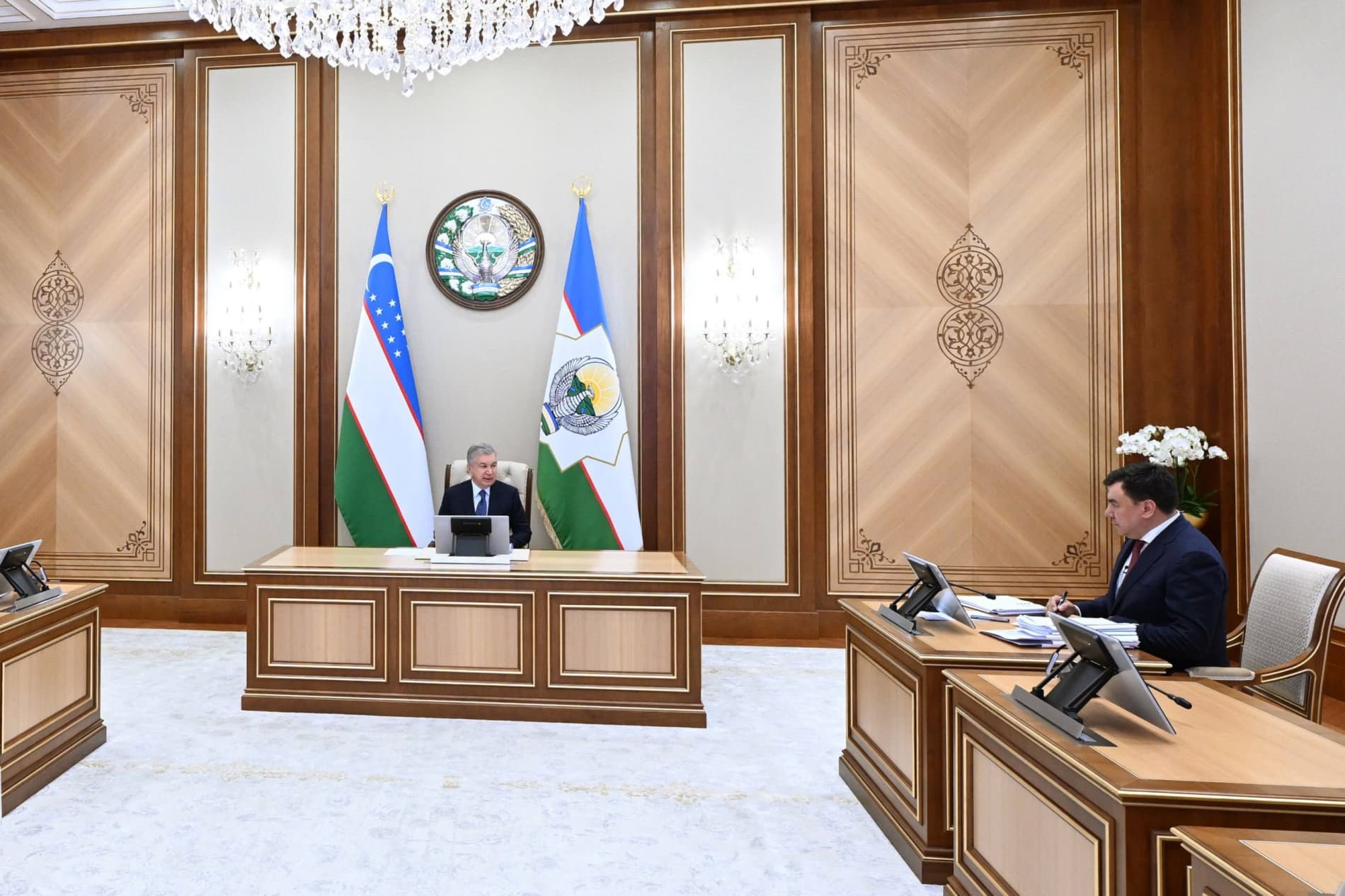

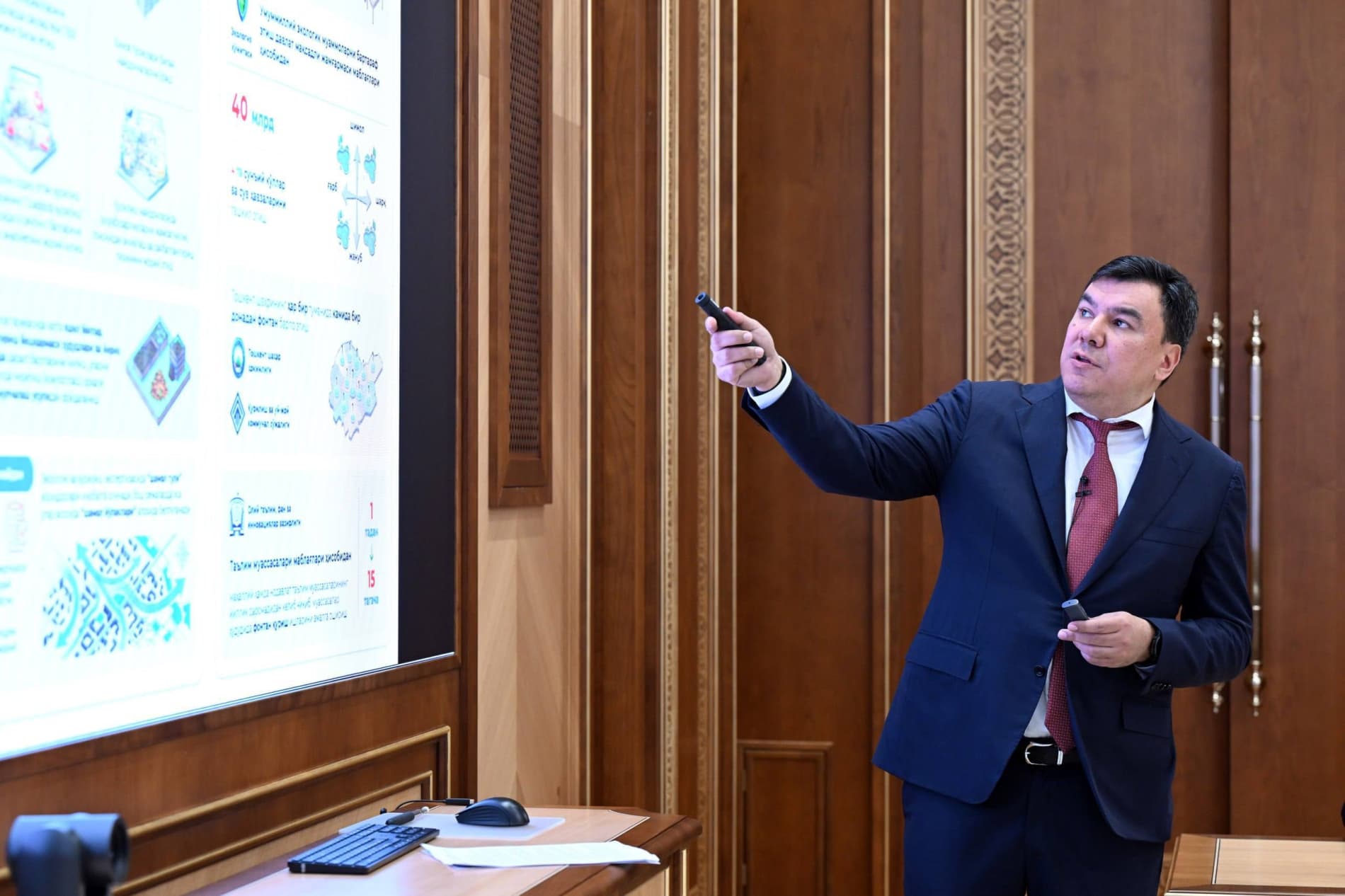
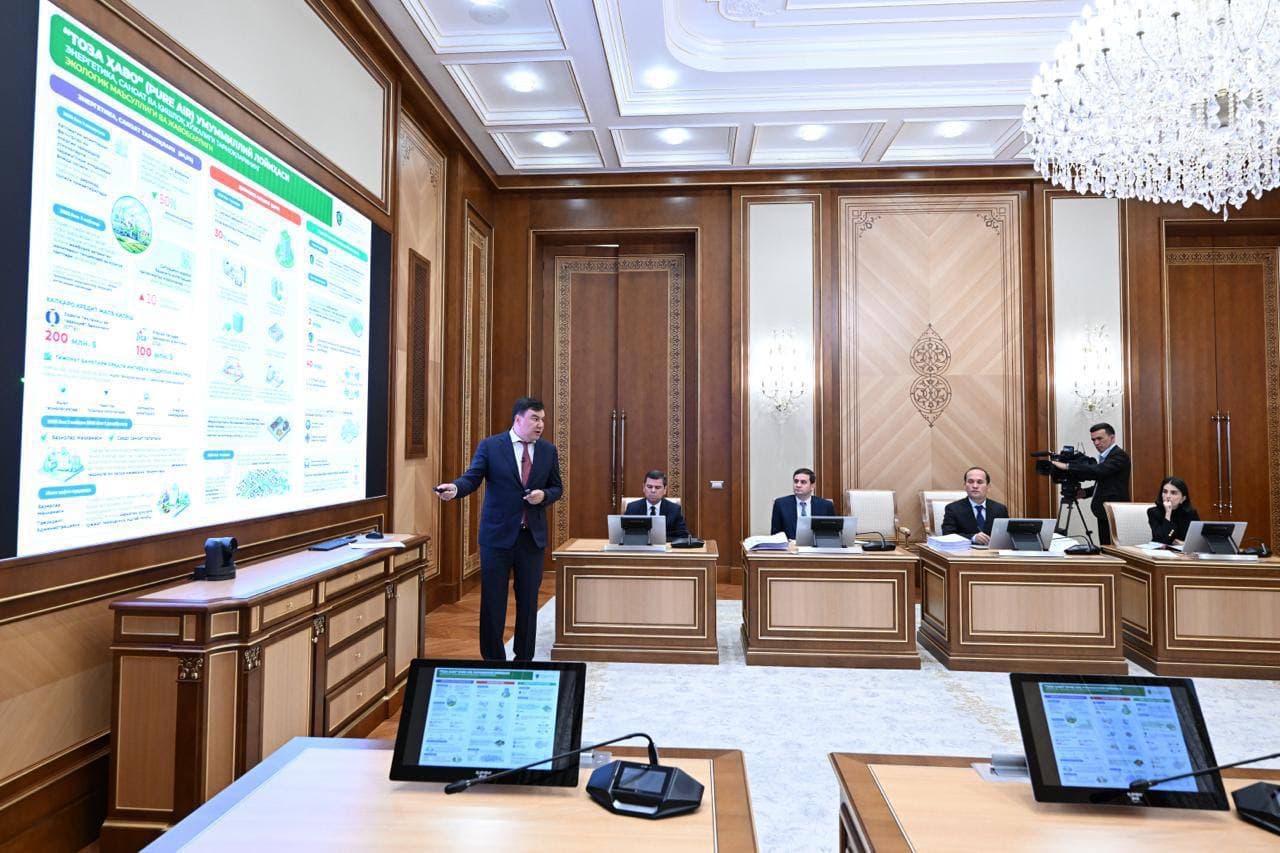
The presentation outlined a range of initiatives aimed at improving ambient air quality, expanding green spaces across cities and regions, enhancing environmental education and culture and strengthening the scientific and practical foundations for combating desertification.
Particular attention was given to the measures planned under the nationwide “Clean Air” project. The main drivers of air pollution were identified as industrial growth, the widespread use of carbon-based fuels, the increasing number of vehicles, natural factors and insufficient monitoring and enforcement.
In this context, key targets have been set through 2030, including reducing pollutant emissions, increasing the share of emissions captured at industrial facilities, lowering transport-related emissions, and decreasing the number of days when PM2.5 levels exceed permissible limits.
As a result of measures already taken, air quality in Tashkent has improved to some extent. In particular, PM2.5 concentrations in January–February 2026 declined noticeably compared to the same period of the previous year. Going forward, regional programmes will be introduced in stages, with each region establishing systems for analysis and diagnostics, a unified air quality monitoring framework and a comprehensive inventory of pollution sources.
Within the “Clean Air” project, particular emphasis is placed on the energy and industrial sectors. The project provides for tax incentives and financial support for enterprises using alternative energy sources, as well as the large-scale deployment of automated monitoring stations, filtration systems, dust and gas purification technologies and energy-efficient equipment. Mandatory automated monitoring systems will be installed at industrial enterprises in Tashkent and surrounding areas, with data integrated into a unified geoinformation system. Compensation payments for non-compliance will be significantly increased.
Environmental requirements in the construction sector will also be tightened. New large-scale projects will be required to incorporate enhanced greening at the design stage, ensure that construction materials are stored in enclosed conditions, manage waste through designated systems, install protective barriers around construction sites and deploy online surveillance cameras.
It has also been proposed to preserve “wind corridors,” make environmental impact assessment conclusions a mandatory requirement in construction and develop a master plan for managing the city’s environmental and water resources.
Targeted measures have been identified to mitigate the impact of natural dust. These include the creation of a green belt around Tashkent, the establishment of green barriers in the Surkhandarya and Syrdarya regions, the construction of artificial lakes and reservoirs, an increase in the number of fountains across the capital, and the processing of leaf waste into compost and mulch. All of these measures are aimed at reducing particulate matter concentrations and improving the urban environment.
In the transport sector, dedicated measures have also been defined to improve air quality. These include the gradual tightening of motor fuel standards, the introduction of an environmental classification system for vehicles with “red,” “yellow” and “green” stickers, linking technical inspections to environmental requirements, implementing programmes to modernise the vehicle fleet and increasing the share of public transport. These steps are expected to reduce traffic-related pollution, particularly in the centres of major cities and improve overall air quality.
As an integral component of the “Clean Air” project, the issue of greenhouse operations was also addressed.
It was noted that a significant number of greenhouses are concentrated in Tashkent and the Tashkent region, with a high proportion relying on coal, fuel oil and non-standard fuels. This leads to emissions of hazardous substances such as NO₂, SO₂ and PM2.5, which have a serious negative impact on air quality.
In addition, due to relatively low levels of solar insolation in the Tashkent region, the cost of greenhouse production is significantly higher. For example, while the average air temperature in January is around +6°C in Tashkent, it reaches +10.8°C in Termez. The cost of producing one tonne of greenhouse output amounts to 11.9 million sums in the Tashkent region, compared to 4.9 million sums in the Surkhandarya region.
Growing produce in regions with higher levels of solar insolation is therefore more efficient both for producers and for ensuring price stability in the domestic market.
In this regard, it has been proposed to gradually relocate greenhouse operations from Tashkent and surrounding areas to regions with more favourable climatic conditions. In particular, an agropark covering at least 940 hectares is planned in Sherabad district of the Surkhandarya region. The area benefits from higher solar insolation, a milder climate and lower heating costs, enabling a significant reduction in production costs.
Starting from October 1, 2026, restrictions will be introduced on the establishment of new greenhouse operations in Tashkent and surrounding areas. At the same time, relocated enterprises will be provided with infrastructure support, access to financing and logistical incentives.
The presentation also introduced a concept for the development of botanical and dendrological parks under the “Yashil Makon” programme. As noted, botanical gardens are intended for the study, conservation, propagation, and display of local and foreign plant species, while dendrological parks focus on the introduction, acclimatisation and scientifically based management of trees and shrubs. The concept предусматривает the creation of floral exhibitions, greenhouses, nurseries, water features, pathways, gazebos and landscaped areas.
At present, three botanical gardens are operating in the country. Plans are in place to establish an additional 12 botanical gardens and 16 dendrological parks, taking into account regional soil and climatic conditions.
By 2028, botanical and dendrological parks with an area of at least 100 hectares are to be established in the Republic of Karakalpakstan, all regions, and the city of Tashkent. As a result, by 2030 it is expected to increase the country’s greening level from 14.2 percent to 30 percent, reduce PM2.5 and PM10 concentrations by 20–25 percent and lower average air temperatures in climatically challenging regions by 1.5–2 degrees.
At the same time, a concept was presented for the creation of a National Dendrological Park in the capital, with a total area of 108 hectares. The project includes the planting of 50,000 trees and 100,000 shrubs. The park will contribute to biodiversity conservation, improved air quality, increased carbon absorption, the advancement of scientific research and the improvement of the urban microclimate.
It is expected to reduce air temperatures by 2–4 degrees and increase humidity levels by 10–15 percent. The National Dendrological Park will be developed not only as a green space, but also as a scientific, educational and public environment.