
Initiatives for the Conservation of Central Asia’s Small Cats Presented
2025-12-03 17:00:00 / News

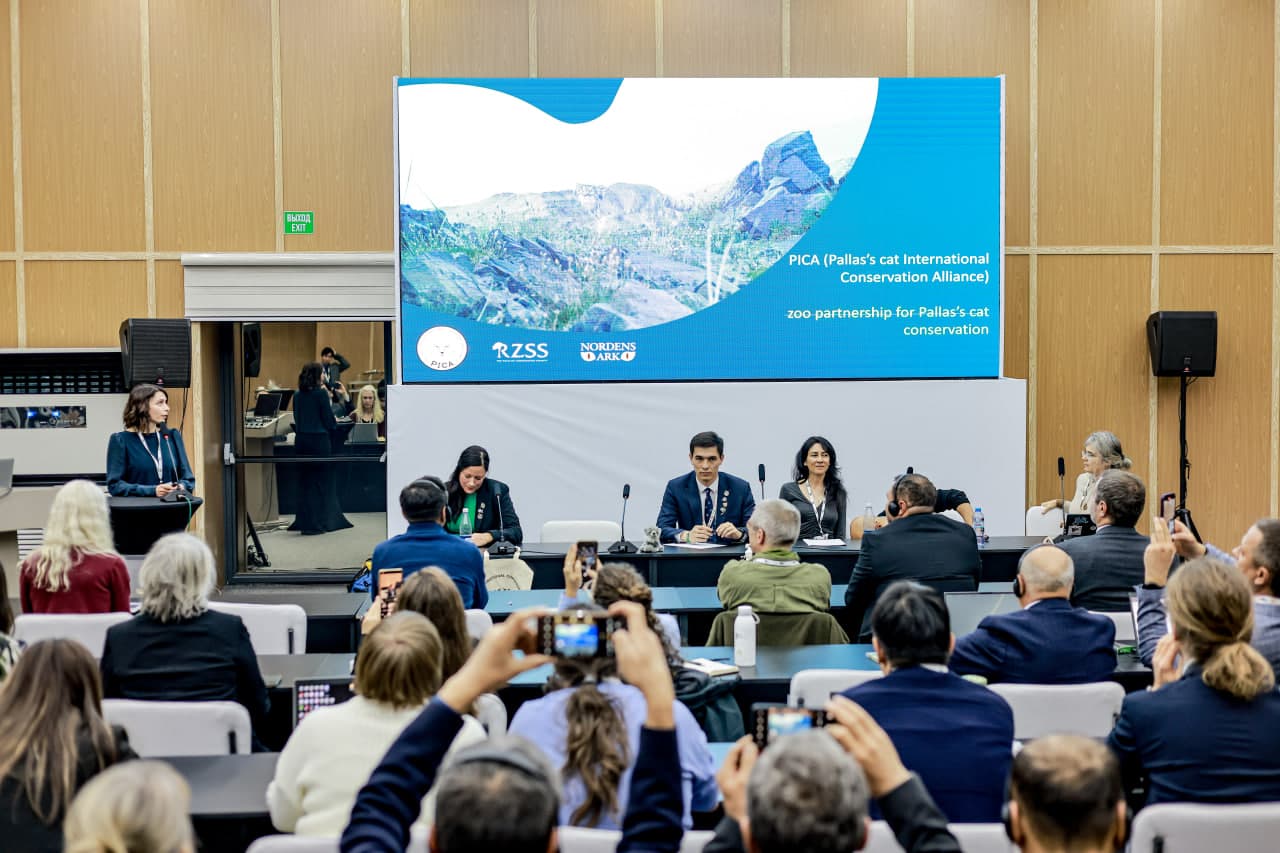
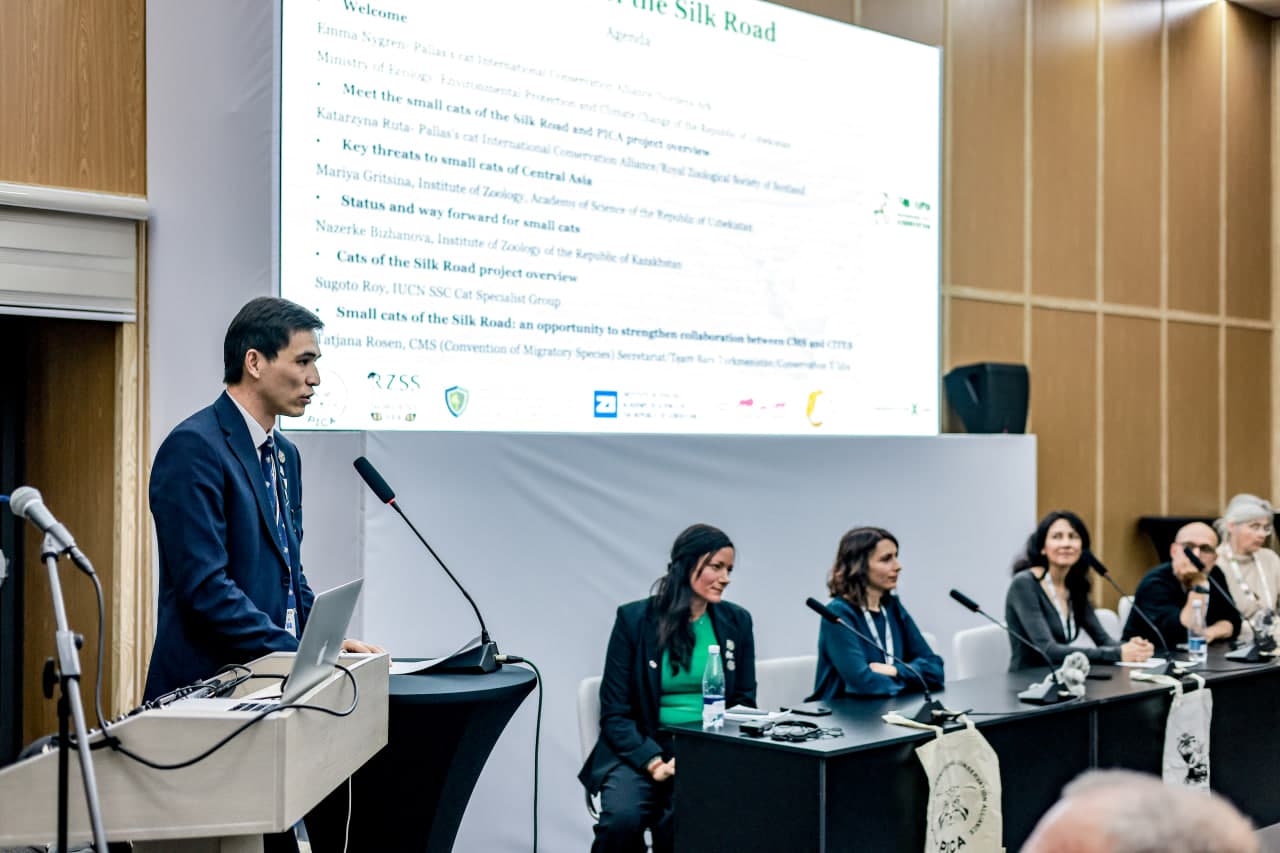

Participants included scientists from Uzbekistan, Kazakhstan, and Turkmenistan, representatives of the CMS Secretariat, experts from PICA, the IUCN Cat Specialist Group, and coordinators of international conservation initiatives.
Opening the session, Javokhir Abdukhalikov, a representative of Uzbekistan’s National Committee for Ecology and Climate Change, emphasized that the country has for many years consistently supported the conservation of the Pallas’s cat—an emblematic species of Central Asia’s wildlife. Uzbekistan co-authored the species’ inclusion in Appendix II of the CMS Convention, supported its integration into the Central Asian Mammals Initiative (CAMI), and today serves as a co-organizer of this event dedicated to the region’s small cats:
“The Pallas’s cat has become a true symbol representing the broader efforts to protect all small cats that inhabit our deserts, steppes, and mountains. These species are discreet, understudied, yet play a crucial role in maintaining the health of Central Asia’s ecosystems,”
the Committee representative noted.
The session combined scientific presentations with interactive components. Participants began with a quiz—“Who Can Name the Most Small Cats of the Silk Road?”—after which experts delivered an overview of the region’s key small cat species, including the Pallas’s cat, jungle cat, wildcat (Asian steppe cat), caracal, sand cat, and the Turkestan lynx.
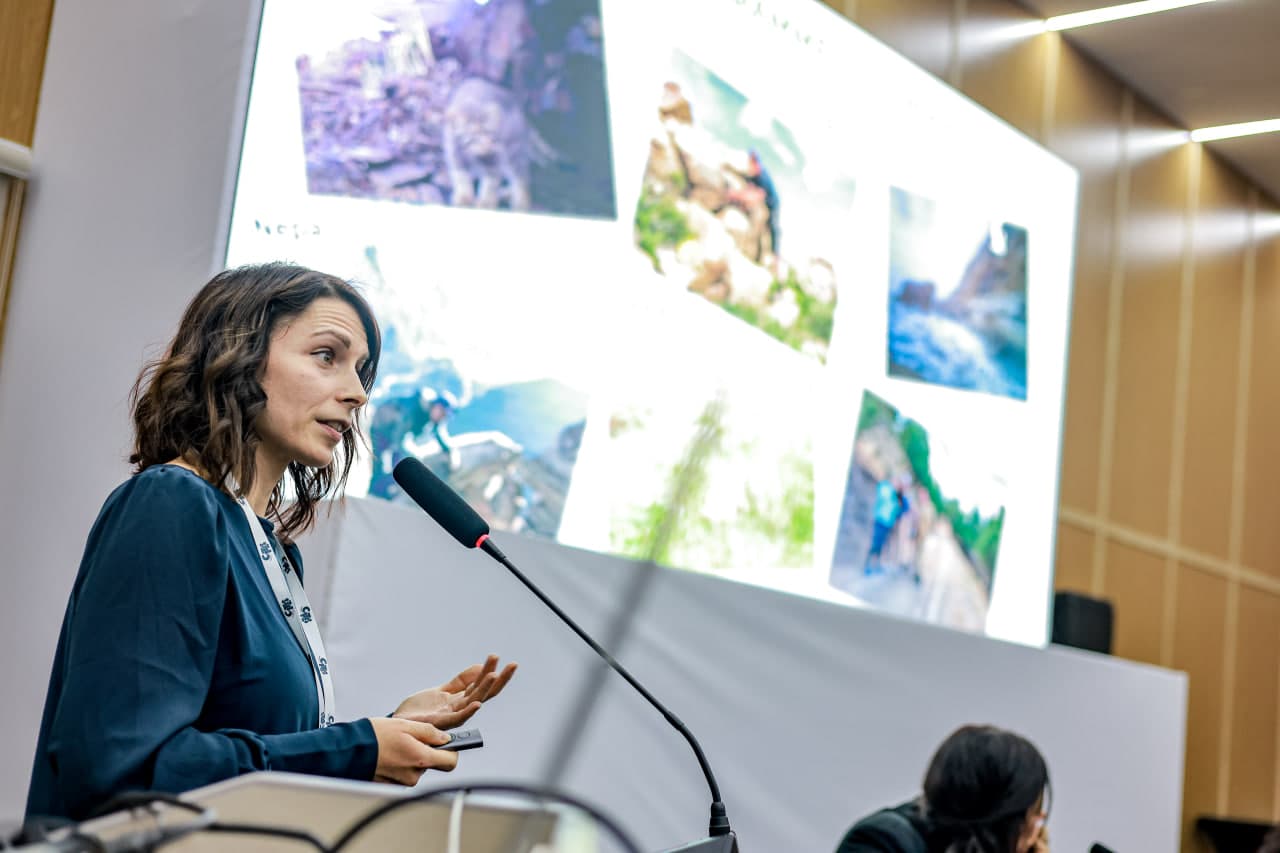
Representatives of PICA provided a concise overview of major habitat types, including the Turan deserts, steppe zones, and mountain ecosystems, and presented video materials on World Natural Heritage sites significant for wildlife conservation in the region. Participants also discussed key threats facing small cats. Through an interactive quiz, experts highlighted issues related to international and domestic trade, as well as factors linked to habitat loss and fragmentation. Scientists noted that population data remain fragmented for most species, complicating the development of effective conservation strategies.
In conclusion, new initiatives were presented, including the Cats of the Silk Road project—an international program aimed at studying and conserving small cats of Central Asia. Experts outlined achieved results, planned research activities, and opportunities for expanding regional cooperation. A joint initiative by CAMI and CITES was also presented, framing small cats as a promising platform for strengthening inter-convention collaboration.