
Innovative solutions for the conservation of rare flora and fauna were discussed
2025-11-23 18:00:00 / News


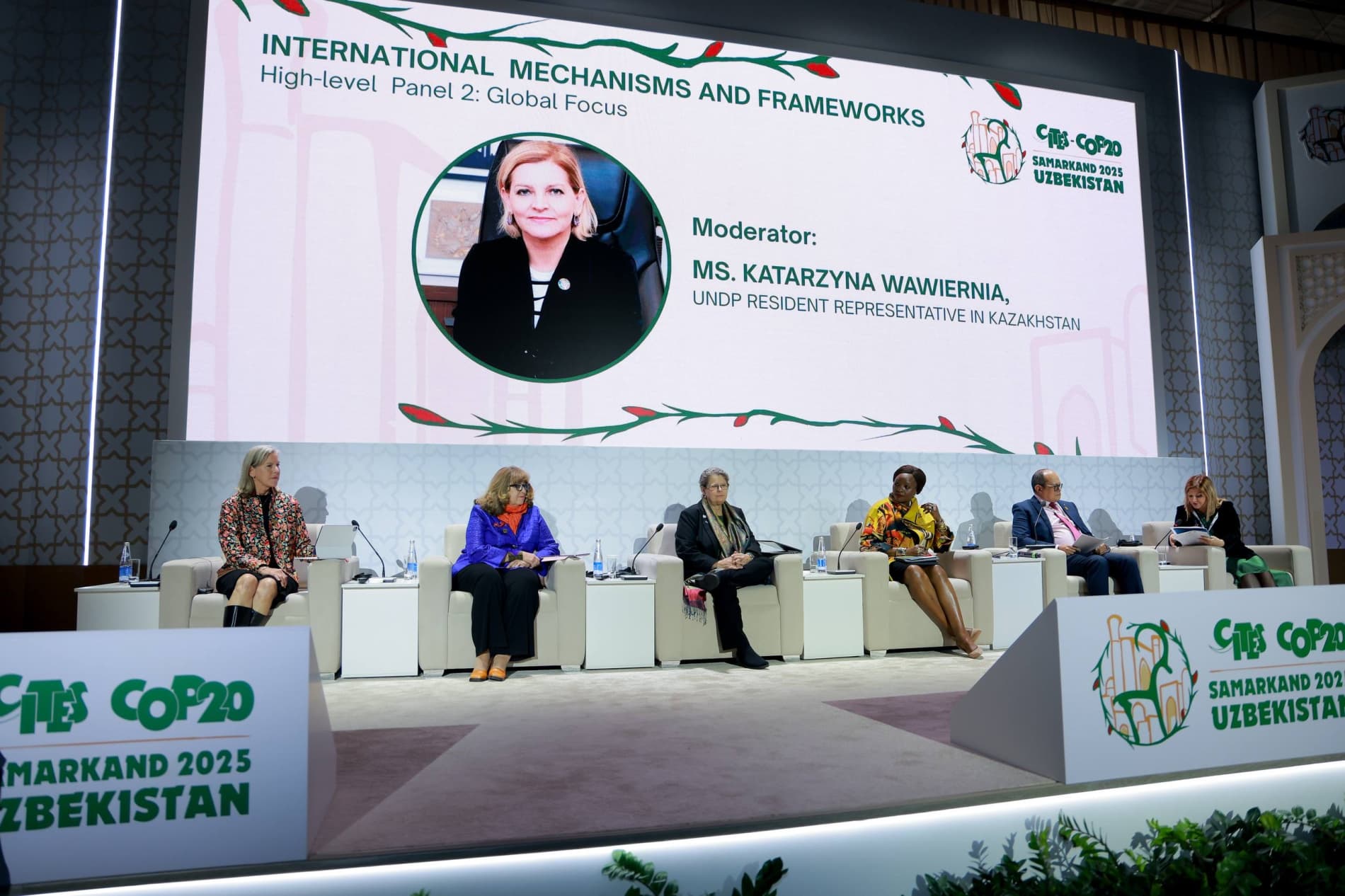
The event was officially opened by: Aziz Abdukhakimov, Advisor to the President of the Republic of Uzbekistan and Chair of the National Committee on Ecology and Climate Change; Ivonne Higuero, CITES Secretary-General; Akiko Fujii, UNDP Resident Representative in Uzbekistan.
During the panel session, a ministerial dialogue on “Innovative Solutions for Biodiversity Conservation in the Region” took place with the participation of: Yerlan Nysanbayev, Minister of Ecology and Natural Resources of Kazakhstan; Almaz Musaev, Deputy Minister of Natural Resources, Ecology and Technical Supervision of the Kyrgyz Republic; Grethel Aguilar, Director General of IUCN; Richard Scobey, Executive Director of TRAFFIC International.
In his remarks, Mr. Abdukhakimov underscored that illegal wildlife trade remains one of the world’s largest criminal activities, ranking fourth after drug trafficking, arms smuggling, and human trafficking.
“According to the recently published 2024 report, cases of illegal wildlife trade have been recorded in 162 countries, affecting 4,000 species of plants and animals, of which 3,250 are listed under CITES. More than 13 million items have been seized by governments,” he noted.
Mr. Abdukhakimov proposed a number of measures to address these challenges, including:
- encouraging private-sector investment in wildlife parks, rehabilitation centres, and native plant cultivation;
- supporting nature-based tourism initiatives that benefit biodiversity and local communities;
- investing in regional training programmes for environmental engineers, customs officers, and veterinary and quarantine services.
He added that the recently established Central Asian University for Environmental and Climate Research (“Green University”) is prepared to host such capacity-building programmes.
Global trends indicate that existing financial flows remain insufficient — currently estimated at around USD 143 billion per year, of which 80–85% is generated by the public sector — while achieving the Kunming–Montreal Global Biodiversity Framework targets will require approximately USD 824 billion annually.
The high-level dialogue highlighted innovative financing solutions and practical regional experiences, with participants discussing integrated approaches that combine domestic and international resources, as well as public and private investment.
Uzbekistan has been a Party to the CITES Convention since 1997 and is home to several species listed in its Appendices. CITES CoP20 serves as a comprehensive platform for addressing the sustainability and legality of international wildlife trade and improving monitoring systems, particularly for species listed in Appendices I and II.
Hosting CITES CoP20 in Samarkand represents an important milestone in strengthening international cooperation and reaffirms Uzbekistan’s firm commitment to wildlife conservation and the sustainable use of natural resources.