New Uzbekistan: A New Model of Occupational Safety
2026-08-28 16:00:00 / News of ministry
The 35th anniversary of Uzbekistan's independence is an important period not only for summarizing the reforms carried out across various areas of our country's development, but also for reassessing the results achieved in ensuring human dignity and protecting people's interests.
During the years of independence, ensuring human rights and interests, creating decent working conditions, and protecting employees' life and health have become one of the important directions of state policy.
Today, occupational safety is becoming one of the key conditions for preserving human capital, increasing labor productivity, and ensuring the sustainable operation of organizations.
In recent years, the field of occupational safety in Uzbekistan has risen to a new level.
During this period, the legal and institutional foundations of the field have been improved, modern mechanisms for managing occupational safety have begun to be introduced, the employee training system is being updated, and digitalization processes are accelerating.
Most importantly, attitudes toward safety are changing: the shift from addressing consequences after an incident to proactively identifying and managing risk is gaining strength.
Transition to a Safety Management System
The key distinction of the modern occupational safety system is that safety is viewed not as a set of separate activities or solely the task of oversight bodies, but as an integral part of an organization's overall management system.
An important step in this regard was the adoption on July 21, 2025, of Resolution No. 454 of the Cabinet of Ministers of the Republic of Uzbekistan "On Introducing an Occupational Safety Management System."
This resolution established the organizational and practical mechanisms for a systematic approach to managing occupational safety in organizations. An approach was formed based on setting policies and goals for occupational safety and health, distributing responsibility and authority, training employees, organizing internal audits, and regularly improving the system.
In particular, employer identification of hazards, assessment of occupational risks, and organization of their management are among the key principles of the new approach.
Now the question is not only "Is there a violation?" but also "Where is the risk, what is its level, and how can it be managed before an incident occurs?"
Systematized Occupational Safety
Cabinet of Ministers Resolution No. 819, "On Approving Certain Regulations in the Field of Occupational Safety," adopted on December 24, 2025, became one of the most important legal steps in the field of occupational safety.
The resolution systematized the procedures for organizing occupational safety work and the activities of the relevant service in organizations, conducting employee briefings and training, testing knowledge, upskilling and retraining, developing instructions, and the activities of occupational safety representatives. The overall goal of these mechanisms is single: to transform occupational safety not merely into a set of documents, but into a fully managed system.
In this framework, hazard identification, employee training, internal control, assignment of responsibility, prevention, accident analysis, and system improvement are viewed as an interconnected process.
In this sense, the core formula of the new model is: not waiting for an incident — but managing risk.
Occupational Safety Culture
The effectiveness of any regulatory document is determined by the extent to which it is applied in practice.
That is why, in the new occupational safety model, safety culture takes on particular importance.
Occupational safety culture is not simply familiarizing oneself with instructions or formally completing occupational safety documents.
It means a manager treating safety as a priority value, an employee recognizing responsibility for their own safety, not being afraid to report a hazard, taking immediate action upon identifying a hazardous situation, learning from mistakes, and eliminating causes before an accident occurs.
For this reason, an occupational safety specialist should not merely be an employee handling paperwork, but a professional managing occupational risks.
Knowledge Management — The Starting Point for Risk Management
A sustainable occupational safety system relies on a knowledgeable and skilled workforce. If an employee does not understand a risk, the mechanism for protecting against it will not function properly either.
That is why improving the system of occupational safety training, briefings, knowledge testing, upskilling, and retraining in line with modern requirements is of strategic importance.
The main goal is to develop an employee's ability to see risk, assess it, and make safe decisions. Therefore, knowledge must be managed before risk can be managed.
The Concept of Safety Is Expanding
Today, the concept of a safe workplace is also expanding in content. While the traditional approach has mainly focused on mechanical, physical, chemical, and other production-related hazards, the modern occupational safety system also requires taking into account factors affecting a person's mental and psychological state.
Excessive workload, disrupted work-life balance, unclear responsibilities, psychosocial risks, pressure and violence, and an unhealthy work environment — all of these can directly affect an employee's safety and labor productivity.
Thus, a modern safe workplace is one that is physically safe as well as mentally and psychologically stable.
Accidents: From Investigation to Systemic Lessons
However important prevention may be, when accidents do occur, the prompt, impartial, and transparent response of government bodies to such incidents is also of great importance.
Another important aspect of today's reforms is the consistent resolution of pressing occupational safety issues at the level of state policy.
Based on instructions from the head of state to improve the system for investigating and recording work-related accidents in line with advanced international practice, a draft of the relevant Cabinet of Ministers resolution has been developed.
This draft covers new mechanisms aimed at reporting accidents, investigating and recording them, compensating for damage caused, and ensuring the objectivity and transparency of investigations.
The main task in this process is not merely formalizing the incident. Most importantly, it is finding the answer to the question: "Why did it happen, and what needs to change so that such an incident does not recur?"
An accident is not merely a statistical figure. Behind it lie a human life, a family's fate, working capacity, and matters of social protection.
That is why every incident must become a lesson and a point of improvement for the safety system.
Digitalization: From Data to Management Decisions
Another important direction in occupational safety is digitalization. However, digitalization itself is not the goal. Its true value lies in enabling faster, more objective, and more effective decision-making based on accurate data.
Going forward, digital systems will expand opportunities for:
- collecting data on hazards;
- recording and analyzing accidents;
- maintaining electronic records of workplaces and working conditions;
- analyzing risk levels;
- identifying repeat violations;
- targeted planning of oversight and preventive measures.
As a result, state oversight, too, may increasingly shift toward a model based on data, analysis, and risk level.
A New Philosophy of State Oversight
A modern labor inspectorate should not remain merely an institution that identifies violations that have already occurred. It should become a modern institution that identifies and analyzes risks, defines preventive measures, contributes to developing a culture of occupational safety, and ensures the practical guarantee of human rights.
To achieve this, oversight mechanisms must also be risk-based. It should be able to answer, based on data and analysis, questions such as which organizations have higher risk levels, in which sectors accidents are recurring, at which workplaces harmful and hazardous factors are more common, and in which organizations the results of workplace condition assessments may differ from the actual situation.
Occupational safety cannot be ensured through state oversight alone. Safety is not solely the state's responsibility but the shared responsibility of society as a whole — that is, a shared responsibility of the state, employers, employees, trade unions, employee representatives, and the professional community.
Employers should view safety not as an expense, but as a long-term investment.
An occupational safety specialist should not be limited to processing documents but should be a professional managing real risks.
An employee should know their rights, be able to recognize risk, and have the opportunity to demand safe working conditions.
Trade unions and employee representatives, in turn, must become active participants in the culture of occupational safety. Only then will occupational safety be established not as a requirement, but as an everyday value of the organization.
The overall goal of the reforms being implemented in the field of occupational safety is single: reliably protecting human life and health.
For a country's development is not measured solely by the number of new organizations, modern technologies, or digital systems. One of the most important criteria of development is how safely, healthily, and with what dignity people are able to work.
Tasks Ahead
Going forward, the following tasks should be prioritized in the field of occupational safety:
First, fully forming a national model based on proactive hazard identification, assessment, and management.
Second, developing digital databases and analytical mechanisms in the field of occupational safety.
Third, improving objective and transparent reporting and investigation mechanisms that prevent the concealment of accidents.
Fourth, increasing objectivity and transparency by assessing working conditions and digitalizing data on workplaces.
Fifth, strengthening state labor oversight with modern mechanisms based on risk-level assessment and data analysis.
Sixth, making the prevention of pressure and violence in the workplace an integral part of occupational safety.
Seventh, regularly developing the professional competence of employers, occupational safety specialists, and employees.
Eighth, elevating social partnership among the state, employers, employees, trade unions, and experts to a new level.
Our greatest task is to create a working environment in which every employee arrives at work healthy and returns safely to their family at the end of the working day. This is an important goal not only of the occupational safety system, but also of state policy in which human dignity is a priority.
Indeed, in the development model of New Uzbekistan, safe labor is an important foundation of human dignity, a stable economy, and a worthy future.
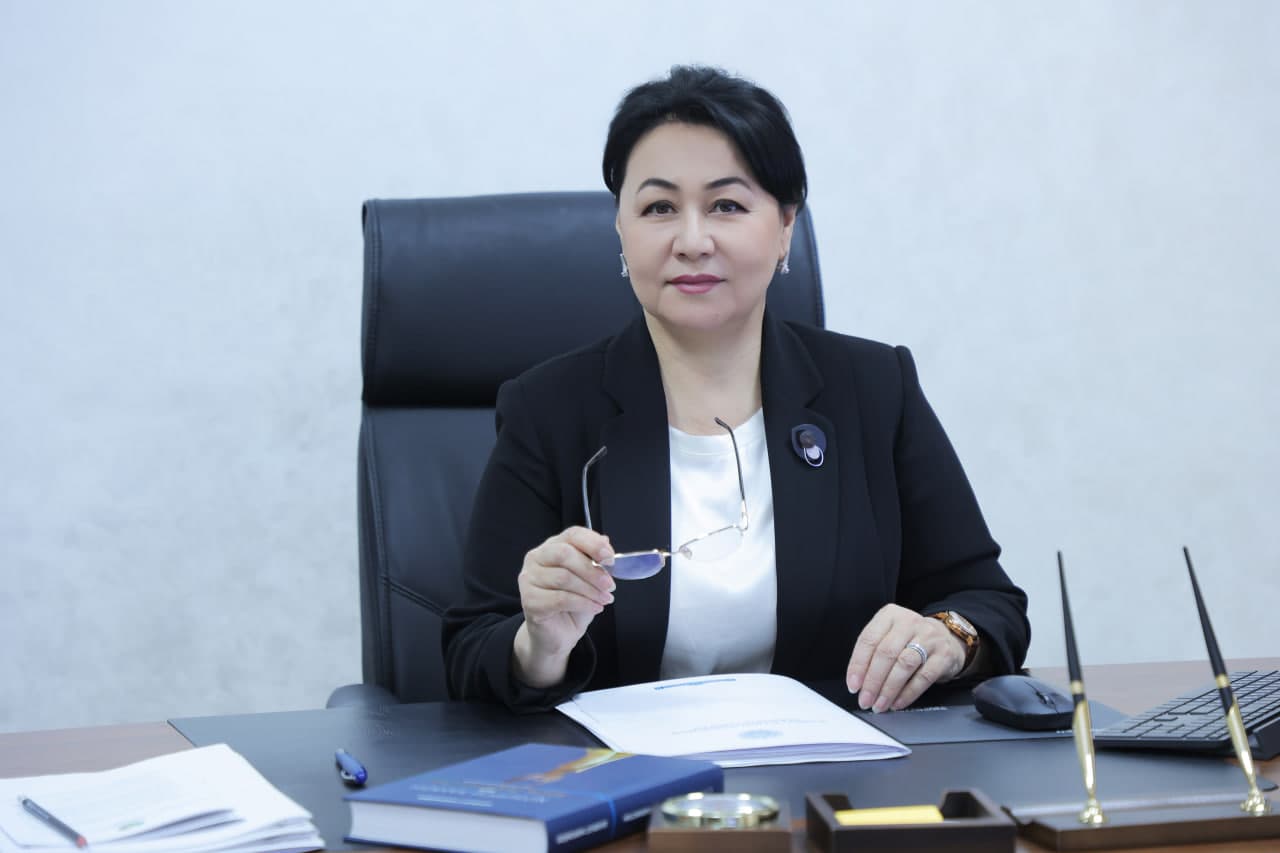
R. Turdiboyeva, Deputy Minister of Employment and Poverty Reduction of the Republic of Uzbekistan, Candidate of Legal Sciences