
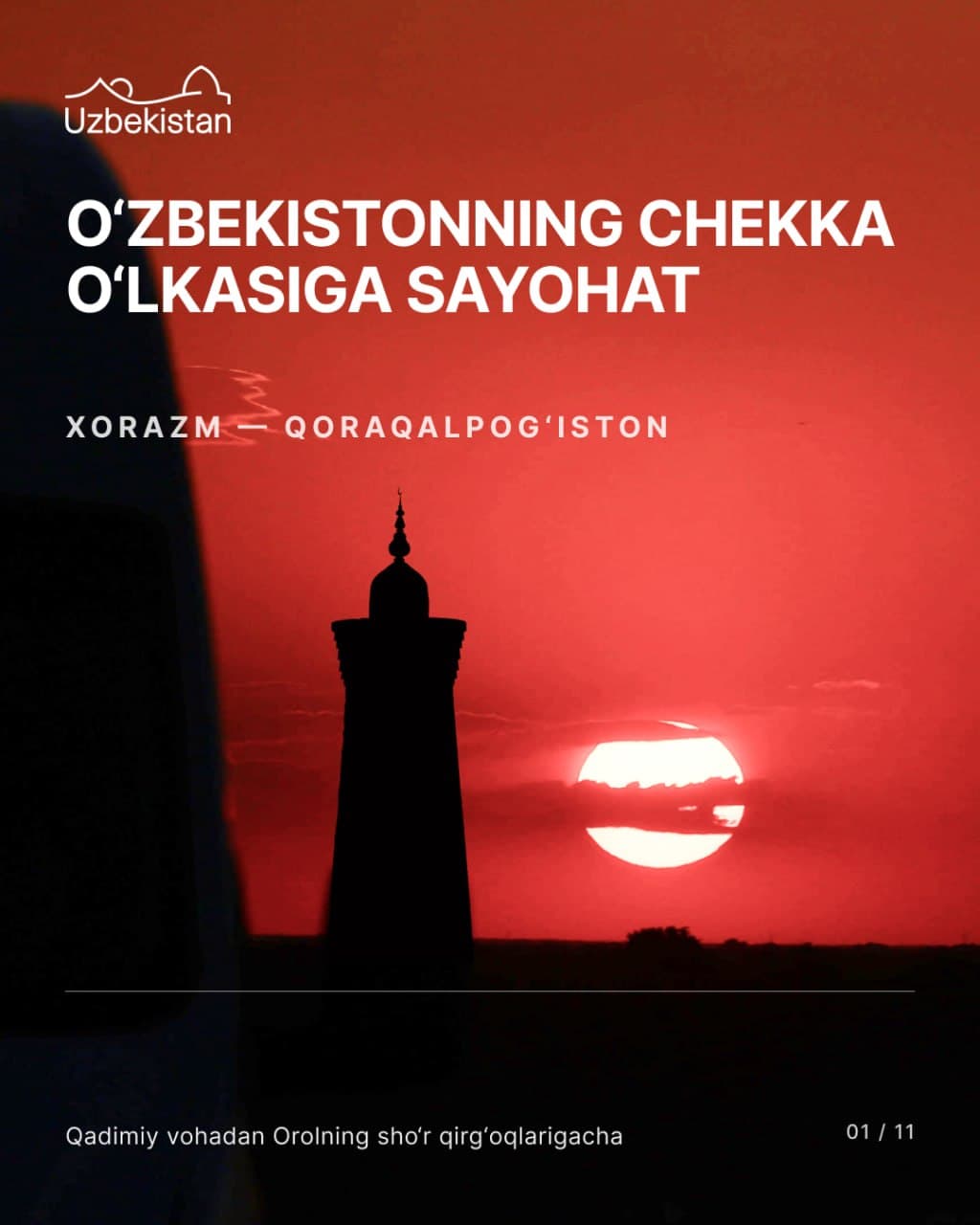
Pack your bags — we’re off to Khorezm and Karakalpakstan!
2026-08-29 12:05:00 / News
How to Get There
By plane — to Urgench or Nukus
By train — to Urgench or Khiva
By car or taxi
Day 1 — Khiva: A City Behind Fortress Walls
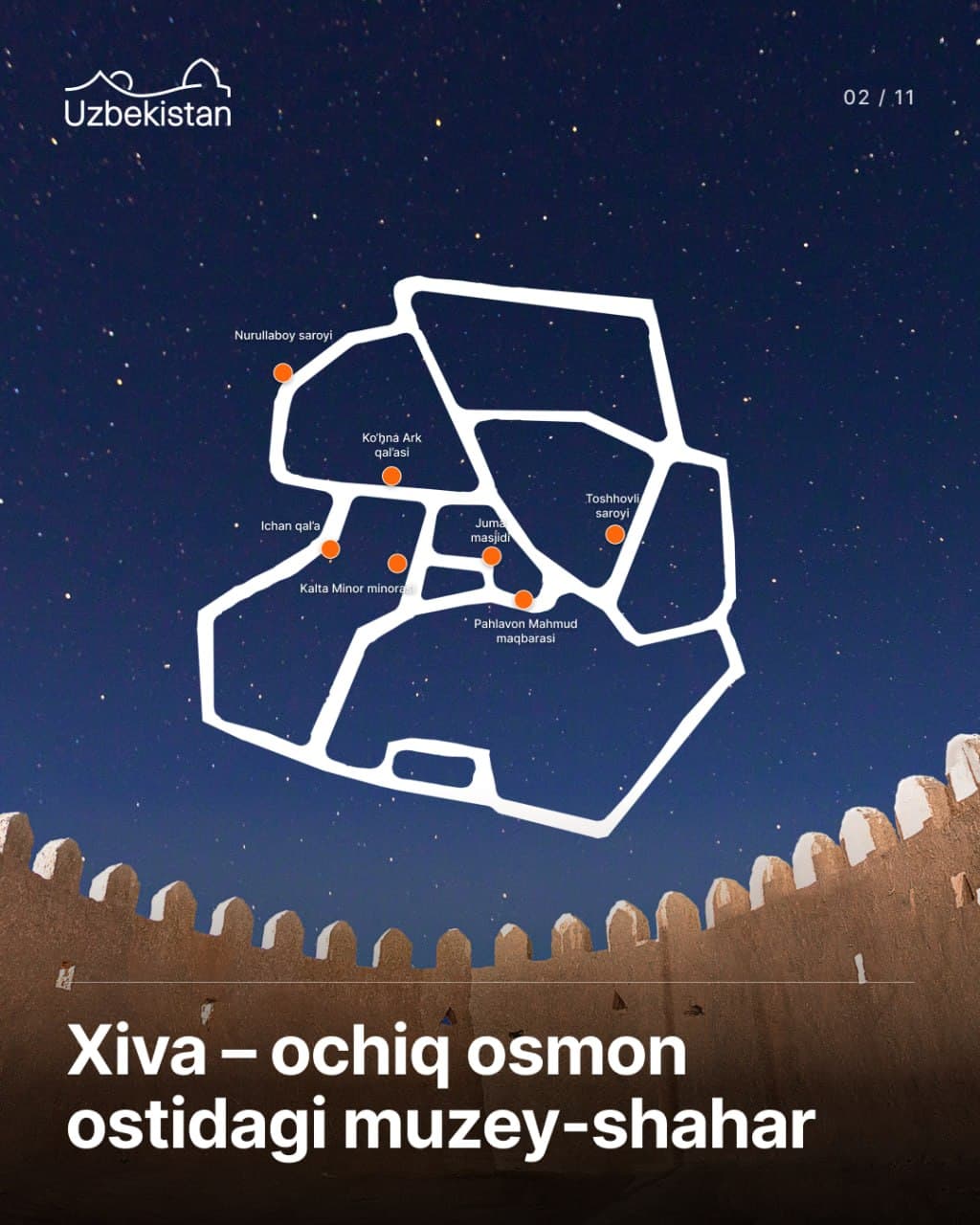
Ichan-Kala is an ancient walled city with a history spanning more than 2,000 years and a UNESCO World Heritage Site. Behind its imposing walls, dozens of historical monuments have been preserved, including mosques, madrasas, palaces, and traditional craft workshops.
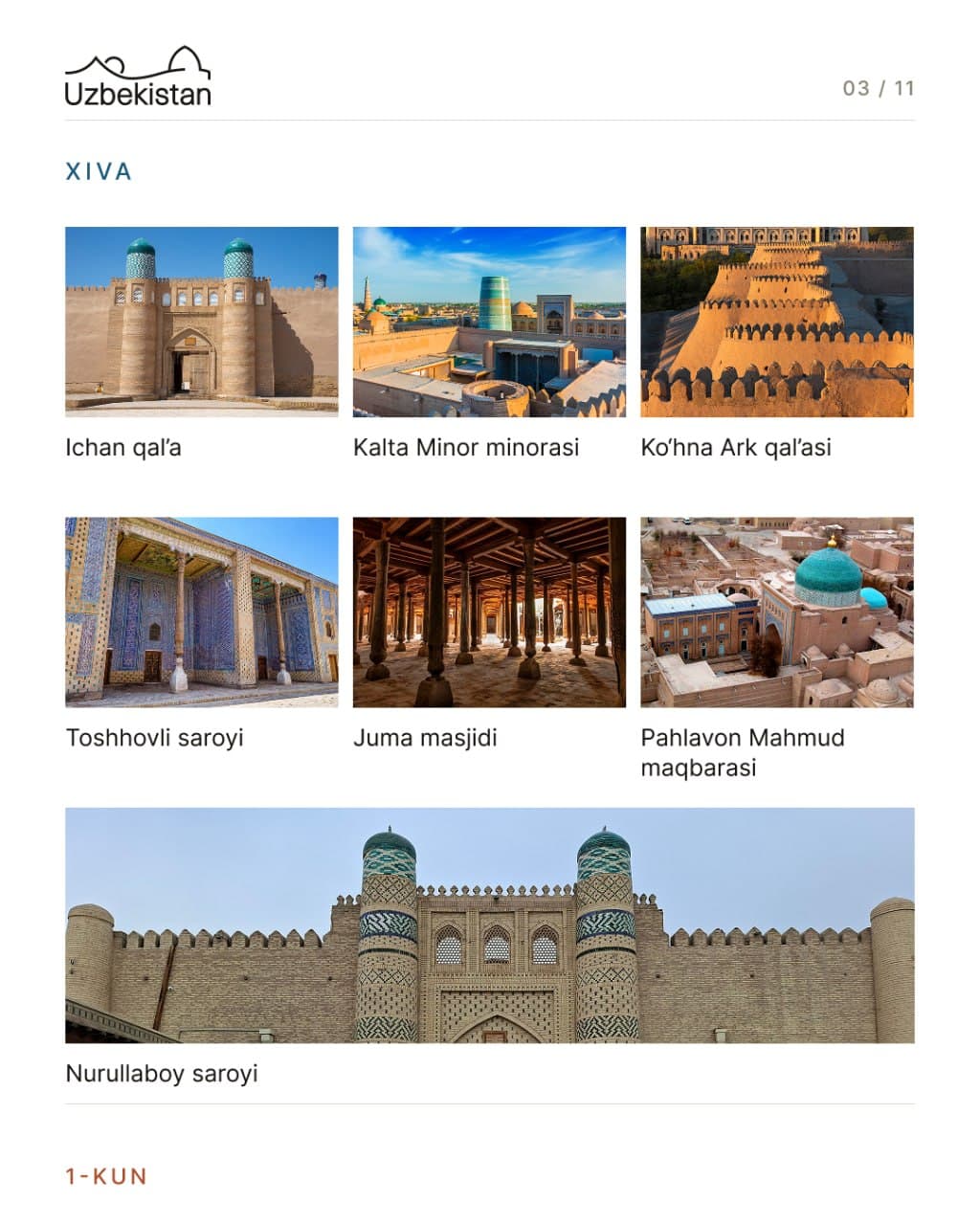
Narrow streets lead to Kalta Minor Minaret, the Kunya-Ark Fortress, Tash-Khauli Palace, the Juma Mosque, and the Mausoleum of Pahlavan Mahmud.
Traditional crafts are an essential part of Khiva’s atmosphere. Local workshops offer a chance to see the art of wood carving, carpet weaving, and other traditional techniques passed down from generation to generation.
In the afternoon, continue to Nurullaboy Palace, the country residence of Khiva’s rulers, where Eastern architecture blends with European influences.
In the evening, return to Ichan-Kala. Illuminated minarets, quiet streets, and traditional local cuisine provide the perfect finale to the day.
Day 2 — The Ancient Fortresses of Khorezm in Karakalpakstan
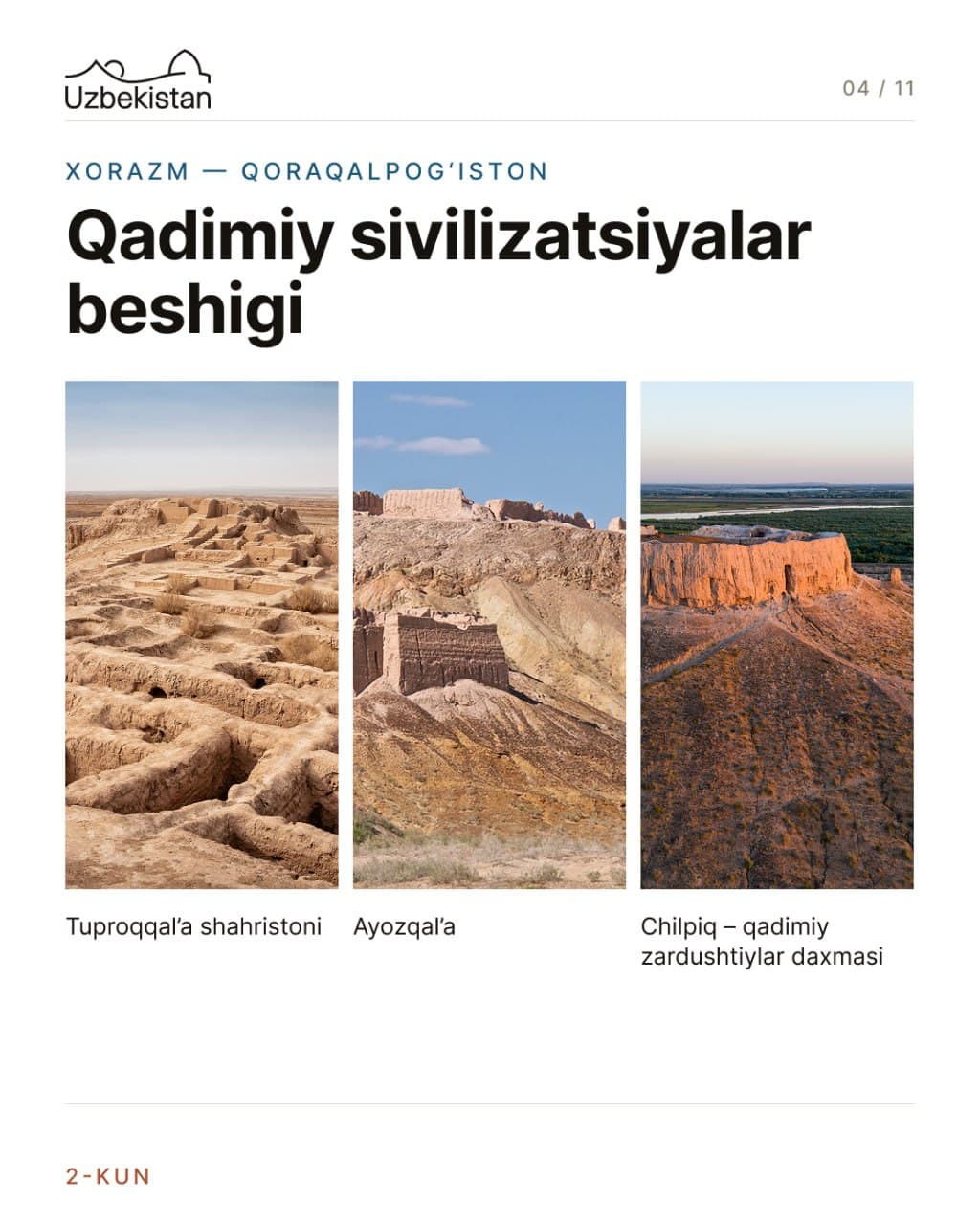
Beyond Khiva, the journey continues into Karakalpakstan, where ancient fortresses of the Khorezm oasis have survived amid vast desert landscapes. It is no coincidence that this region is known as the “Land of a Thousand Fortresses.”
The first stop is Toprak-Kala, an ancient fortress associated with the history of the Khorezm state. Next comes Ayaz-Kala, a complex of ancient fortresses surrounded by vast desert landscapes.
The next stop is Chilpyk, an ancient Zoroastrian dakhma (Tower of Silence) rising above the surrounding plain.
The final part of the day takes place in Nukus, the cultural center of Karakalpakstan. The city can be reached by car or taxi in approximately 40–50 minutes.
Day 3 — Culture and Heritage of Karakalpakstan
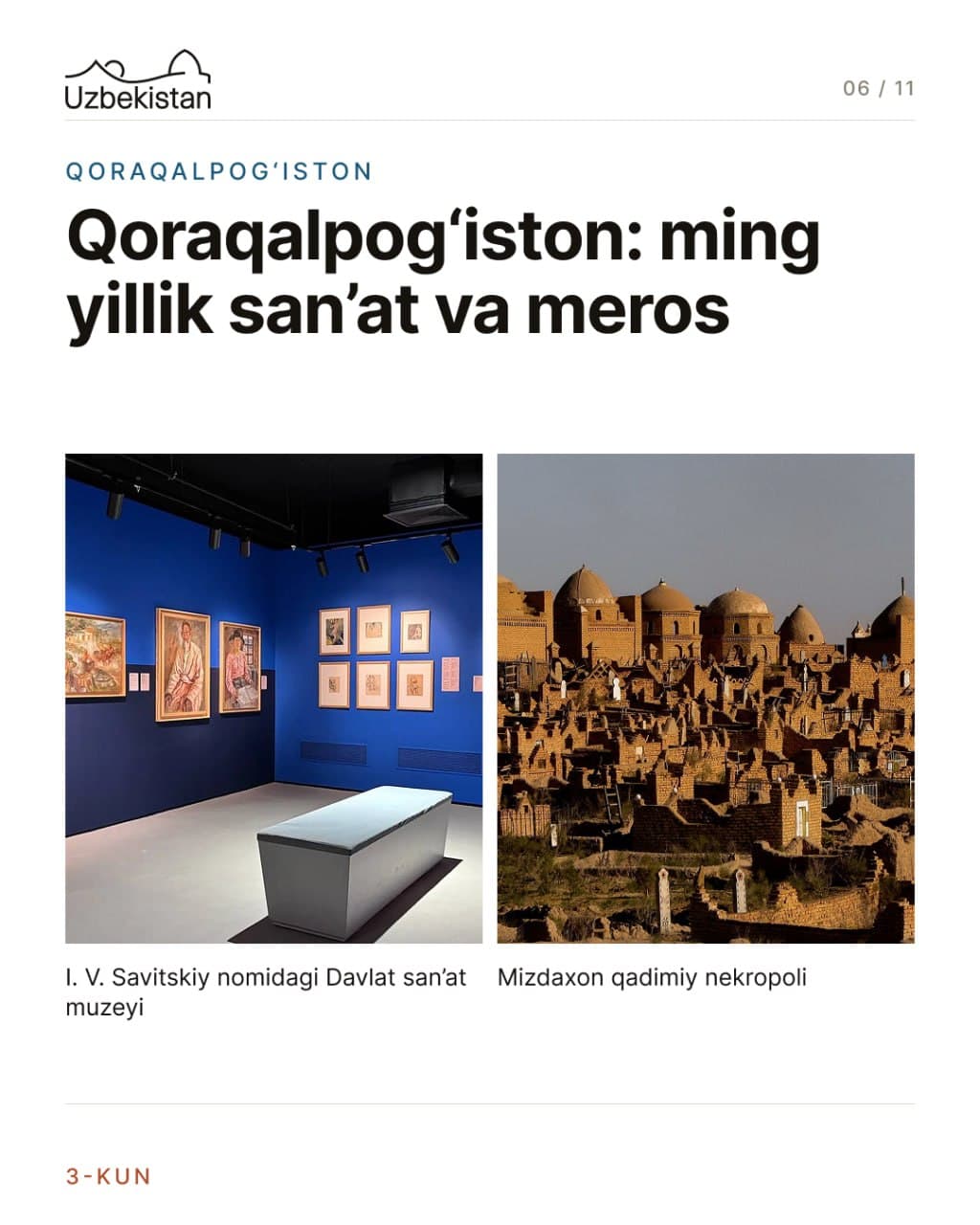
Begin the day at the I.V. Savitsky State Museum of Arts in Nukus, one of the most renowned art museums in Central Asia. Its collection comprises around 100,000 exhibits, including Russian avant-garde art, ancient Khorezmian art, as well as Karakalpak folk art and traditional crafts.
Continue by exploring the culture and traditions of the Karakalpak people.
The route then leads to the ancient Mizdakhan Necropolis, one of the best-known historical and archaeological sites in Karakalpakstan. Spend the evening discovering the region’s local cuisine and traditional dishes.
Day 4 — The Aral Sea: History and Landscapes
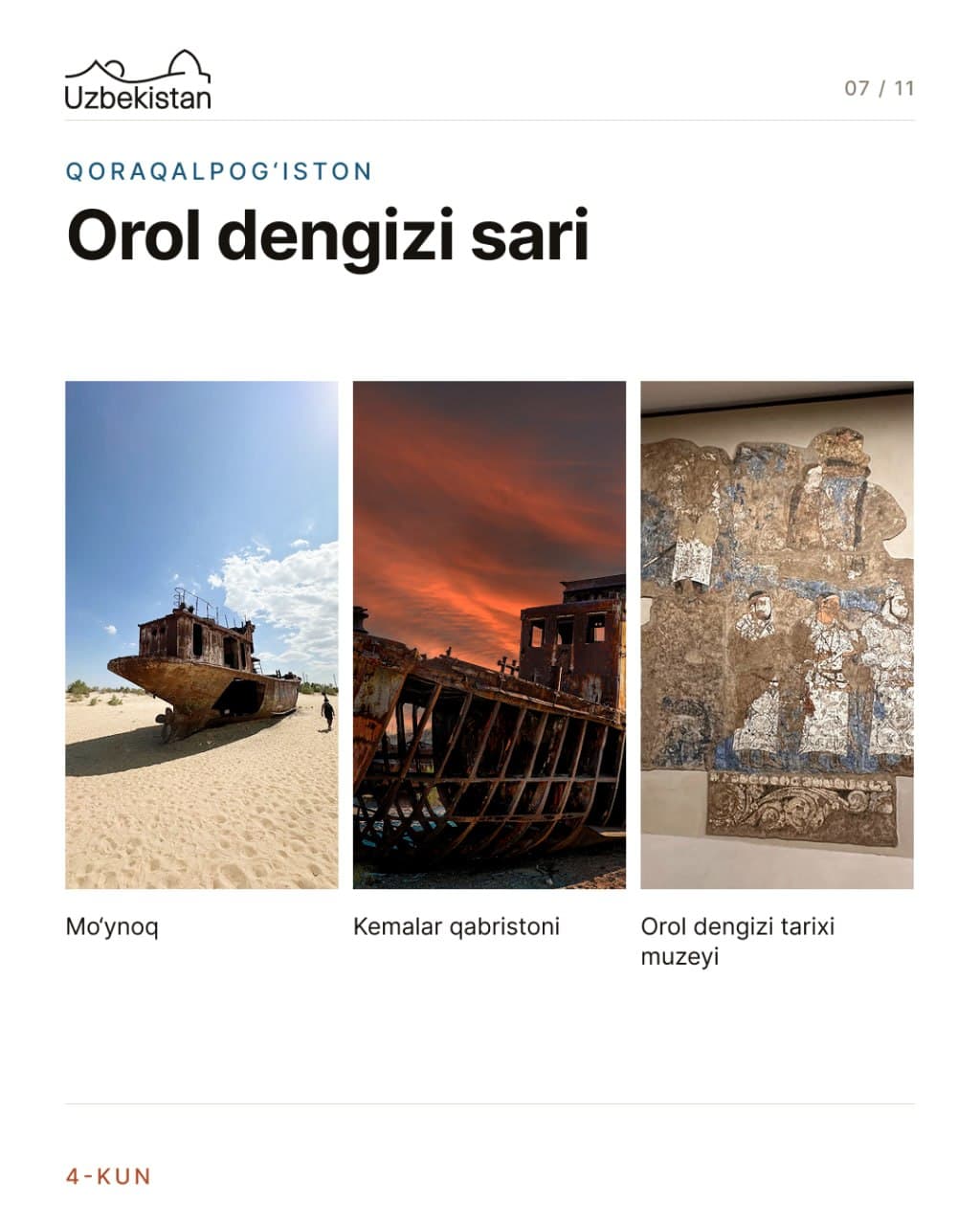
The final day takes you to Muynak, a former port city on the dried-up shores of the Aral Sea.
The city’s main symbol is the famous Ship Graveyard. Once home to a major port, the area is now a striking landscape where fishing vessels stand in the middle of the Aralkum Desert — on land where the sea once stretched.
The history of the region comes to life at the Museum of the History of the Aral Sea, dedicated to Muynak’s past, its fishing traditions, and the dramatic changes that have taken place here over recent decades.
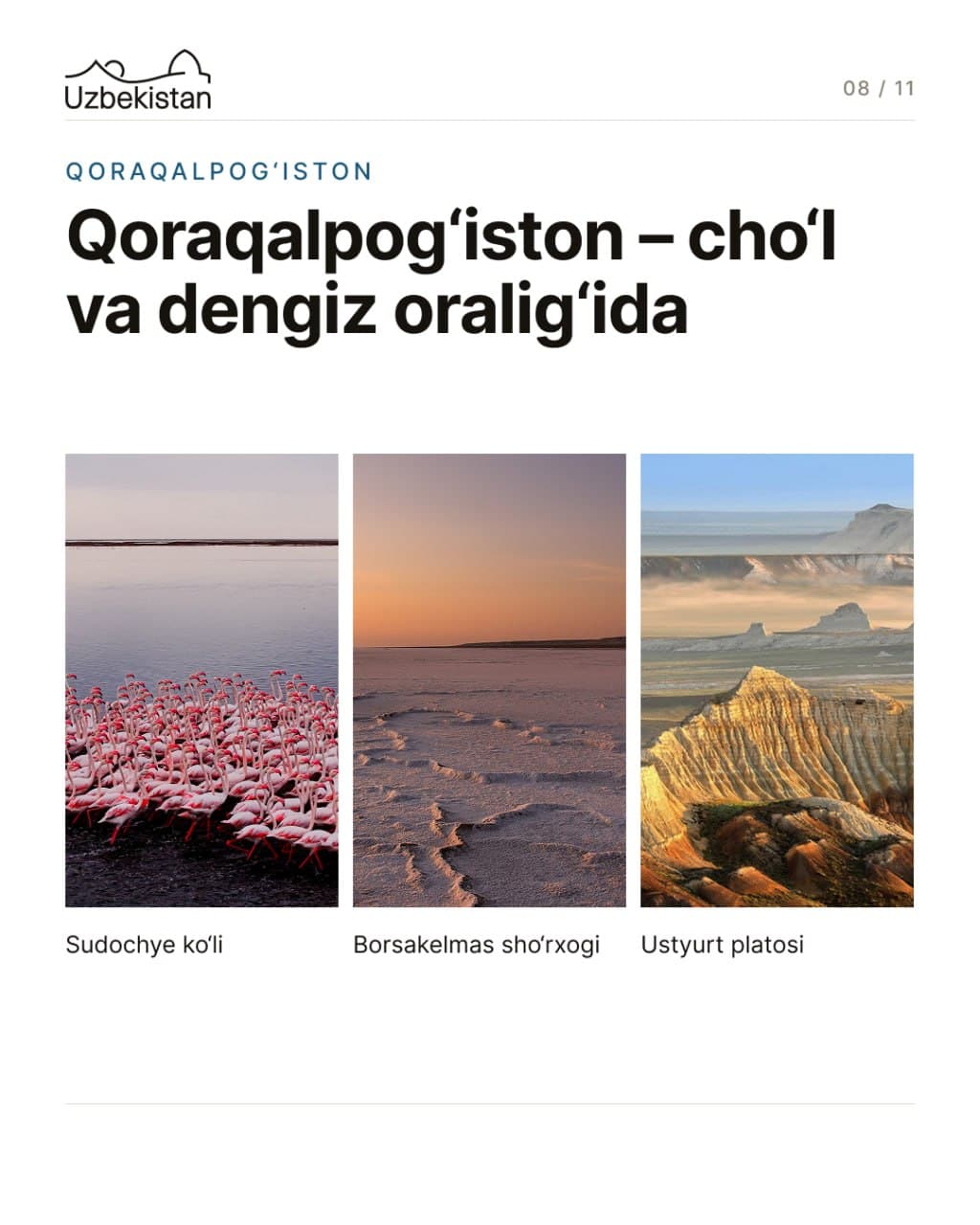
For a longer trip, the itinerary can be extended to include natural destinations that reveal Karakalpakstan from an unexpected perspective: Sudochye Lake, home to flamingos; the vast Barsakelmes salt flats; and the mesmerizing Ustyurt Plateau, with landscapes that seem to belong to another planet. These places are worth lingering in — for their vast open spaces, extraordinary light, and spectacular scenery.
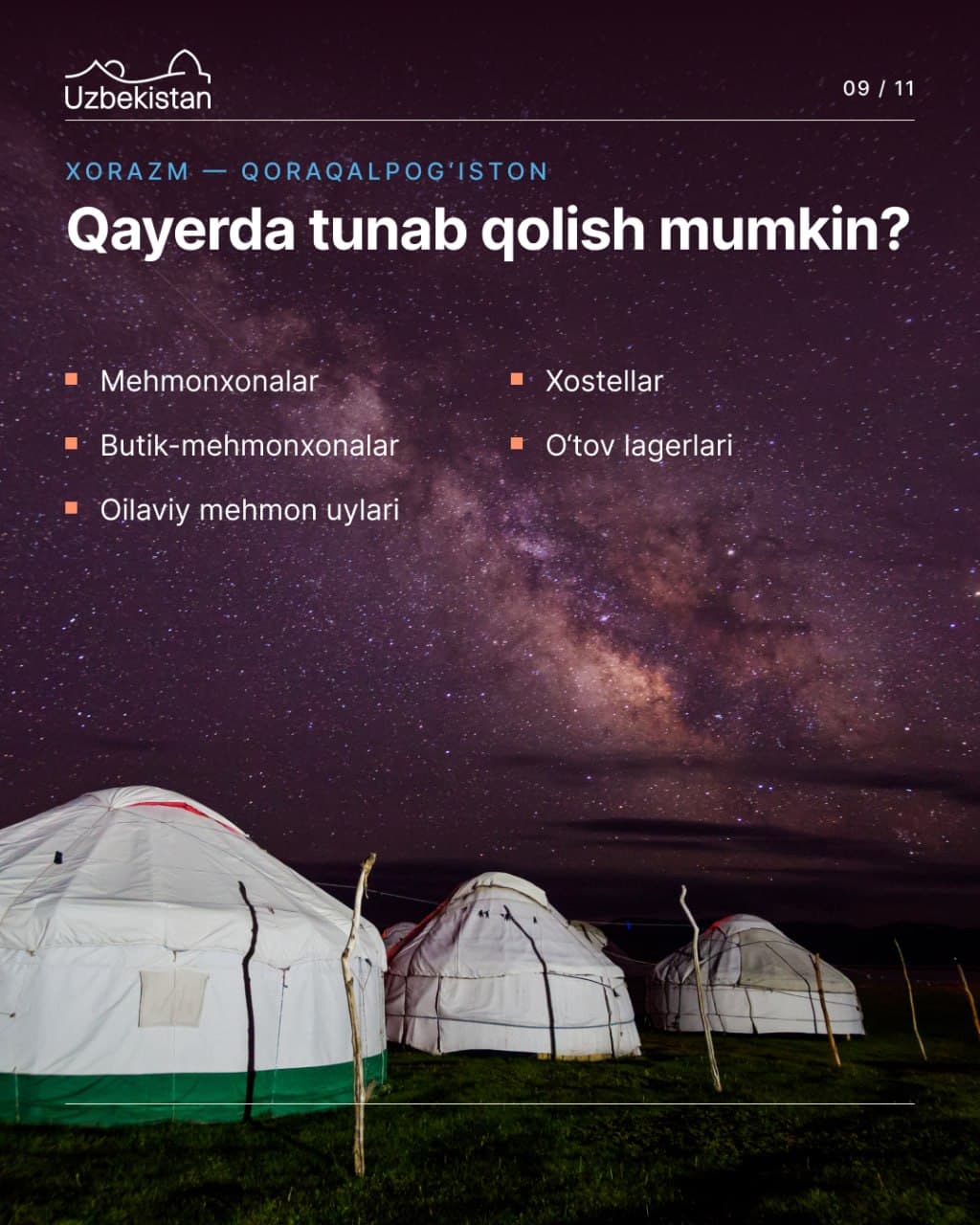
Where to Stay?
Khiva and Karakalpakstan offer accommodation options to suit every type of traveler:
Hotels
Boutique hotels
Family-run guesthouses
Hostels
Yurt camps
What to Try?
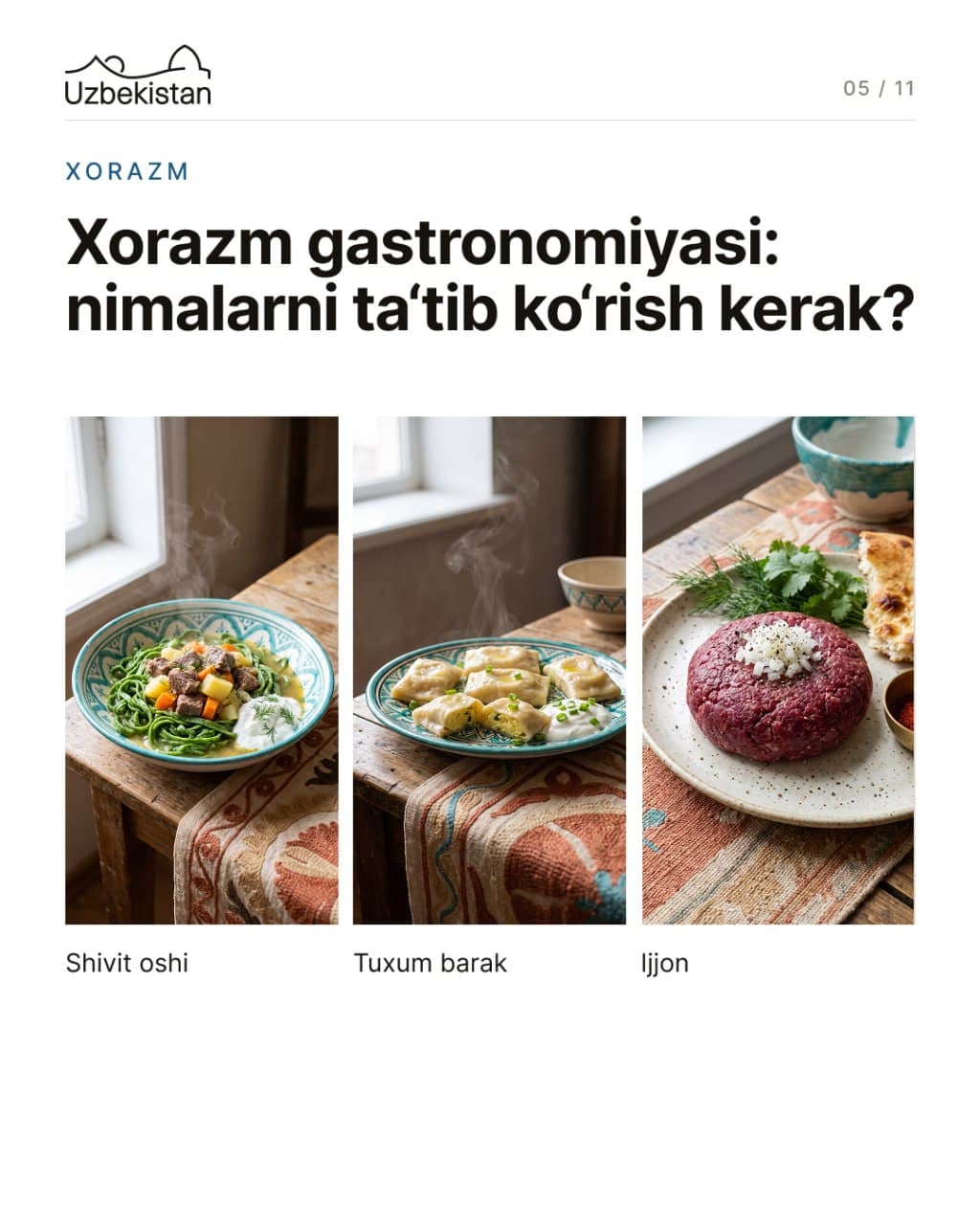
Shivit Oshi — bright green noodles made with dill infusion, served with a meat sauce and a tangy fermented dairy topping. It is one of the most famous dishes of Khorezm.
Tukhum Barak — traditional Khorezm dumplings filled with an egg-based mixture.
Ijjan — a dish made from finely chopped meat with onions and spices, reflecting the traditions of home-style Khorezm cuisine.
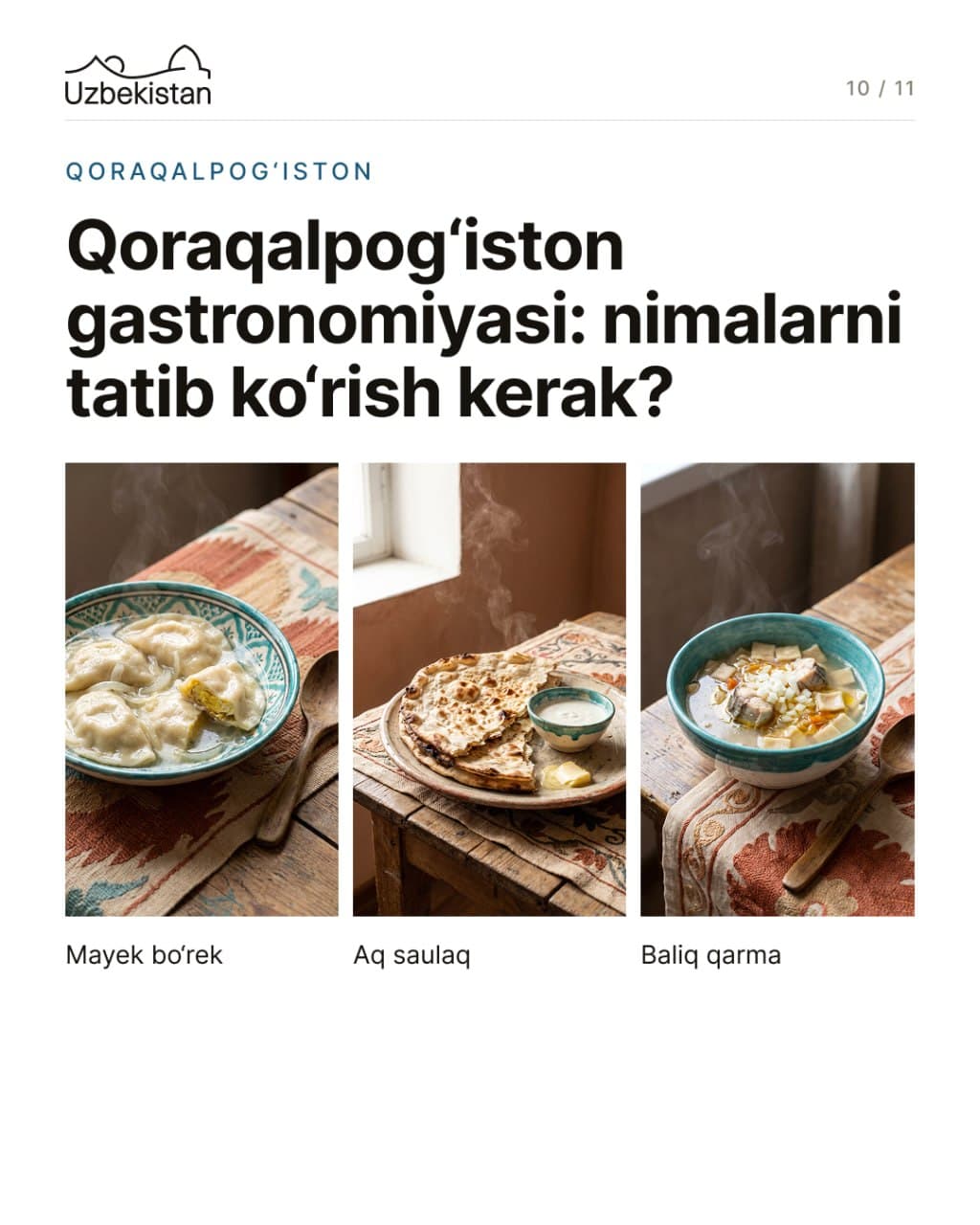
Mayok Boryok — a traditional Karakalpak dish made from thin dough filled with eggs, milk, vegetable oil, and salt.
Ak-Saulak — thin traditional Karakalpak flatbreads, typically served with fermented dairy products or butter.
Balyk Karma — a signature dish of Karakalpakstan and a traditional Karakalpak specialty consisting of broth with boiled fish, finely chopped vegetables, and dumplings.
Save this itinerary and set off on a journey into history, culture, and landscapes you will never forget!