Environmental impact assessment
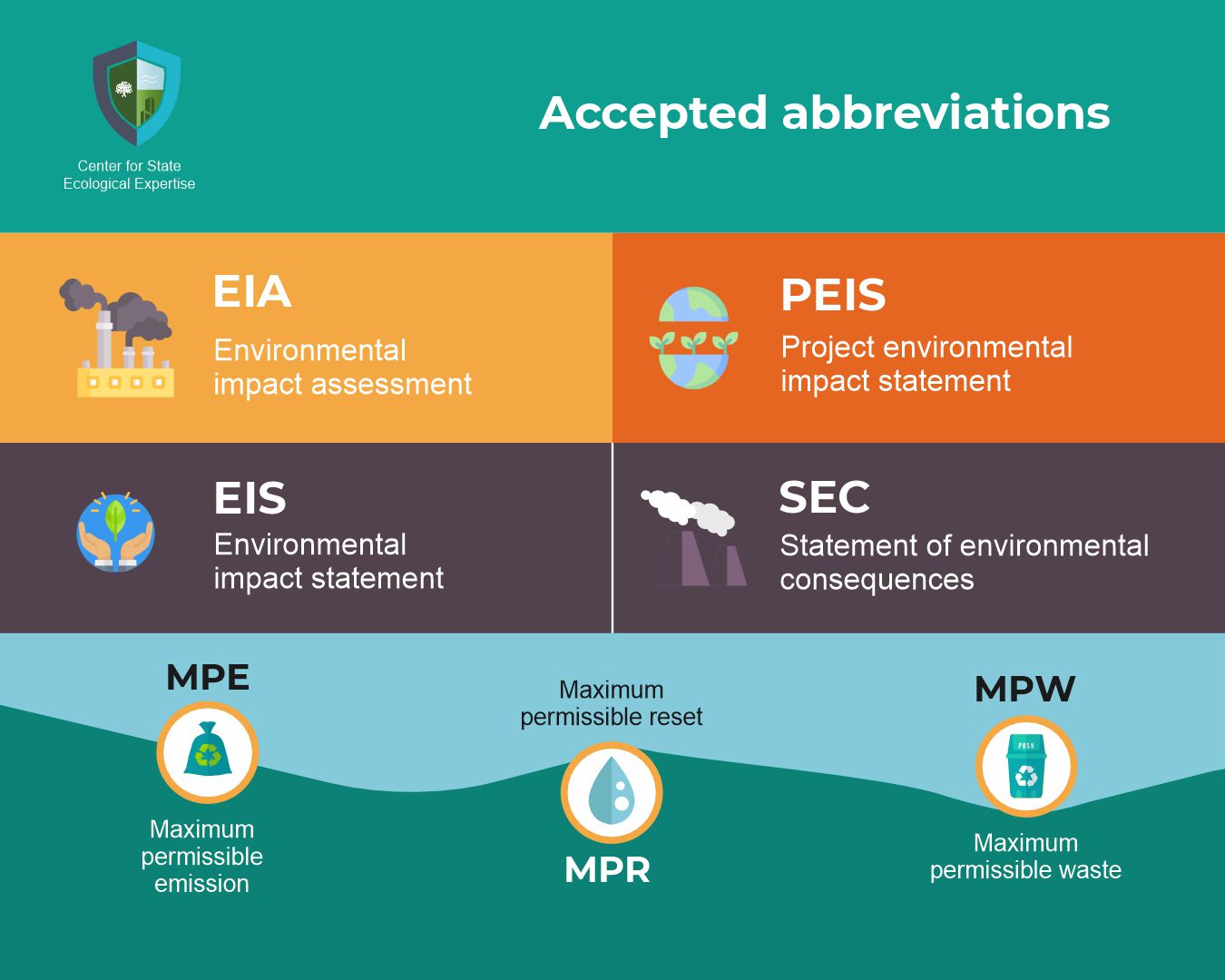
 Environmental impact assessment is a process that facilitates the adoption of an environmentally oriented management decision on the implementation of planned economic and other activities by identifying adverse environmental consequences, taking into account public opinion, and developing measures to prevent irreversible negative consequences.
Environmental impact assessment, as a procedure that accompanies the entire design process, from concept to commissioning, as a sequence of organizational and logically interrelated actions, has been used in Uzbekistan since the 90s, in accordance with the guidelines of the State Committee for Nature Protection.
With the entry into force on July 1, 2000 of the Law on Ecological Expertise of the Republic of Uzbekistan, the environmental impact assessment (EIA) system received a legislative basis.
The main goal of introducing EIA into the design process is to create conditions for finding optimal design solutions that contribute to:
- prevention of environmental degradation;
- ensuring ecological, economic and social balance of economic development;
- improving the living conditions of people;
- development of effective measures to reduce the level of adverse environmental impacts to an acceptable level and eliminate irreversible negative consequences of the planned activities;
- alternative design solutions, the formation of new options;
- application of EIA as a decision-making tool at the stage of conception of the proposed activity;
- availability of information on design solutions to the public at the earliest stage of design consideration, prior to site selection for construction;
- responsibility of the customer for the consequences of the implementation of design decisions.
The principles of EIA are to consider the interconnection of technological, technical, social, environmental, economic and other indicators of design solutions.
The procedure for conducting an EIA when developing decisions on an economic activity consists in the implementation of successively performed stages of the procedure:
Stage 1. Project Environmental Impact Statement (project EIS).
Step 2. Environmental Impact Statement (EIS).
Stage 3. Statement of environmental consequences (SEC).
For objects of category III, the EIS (stage II of the EIS) is not carried out, and the SEC - in the presence of emissions, discharges and waste generation at the facility of economic activity.