
Uzbekistan Presented Measures to Strengthen Capacity in Environmental Governance and the Implementation of the Aarhus Convention Principles
2026-06-25 16:30:00 / Statements and speeches of administration
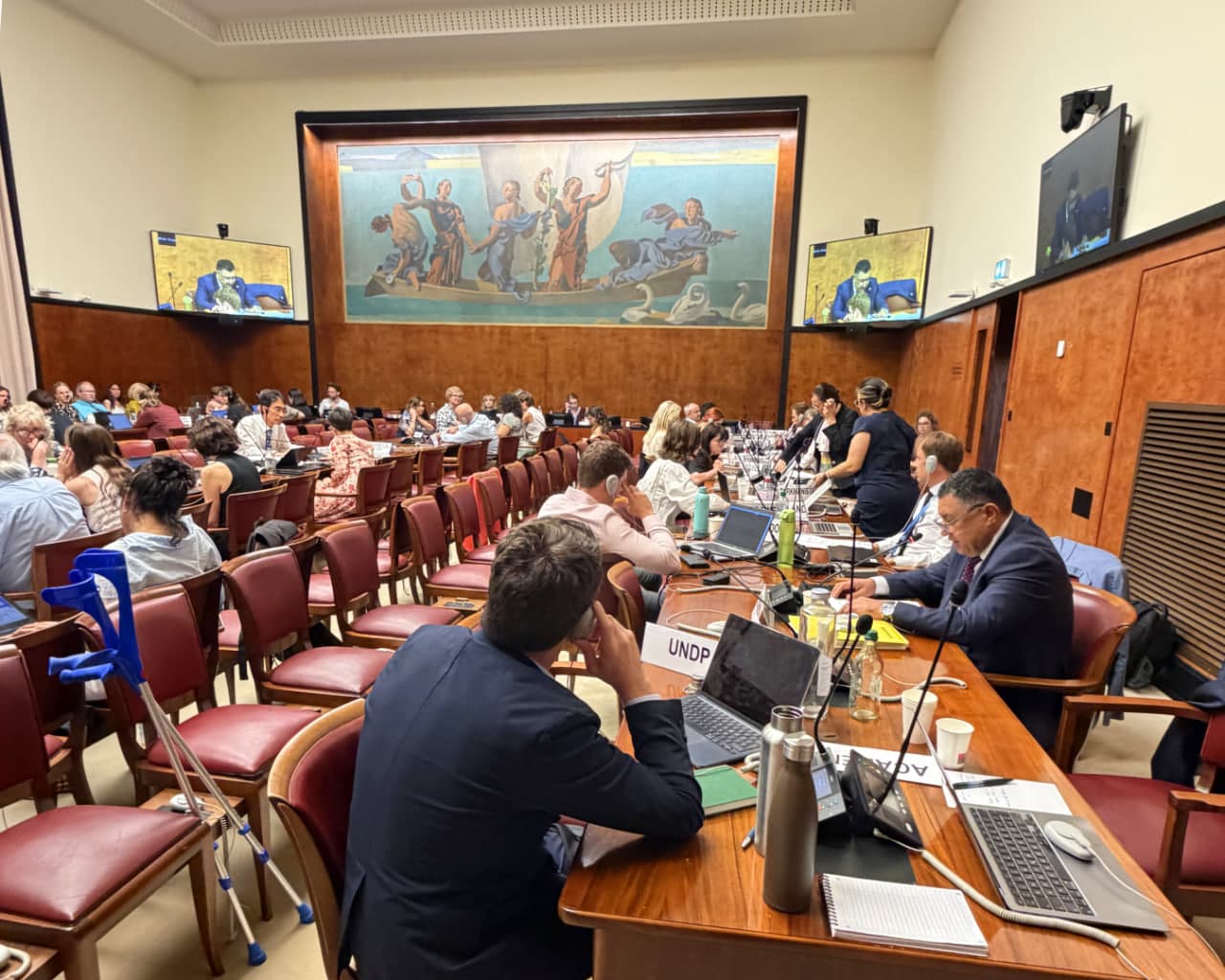
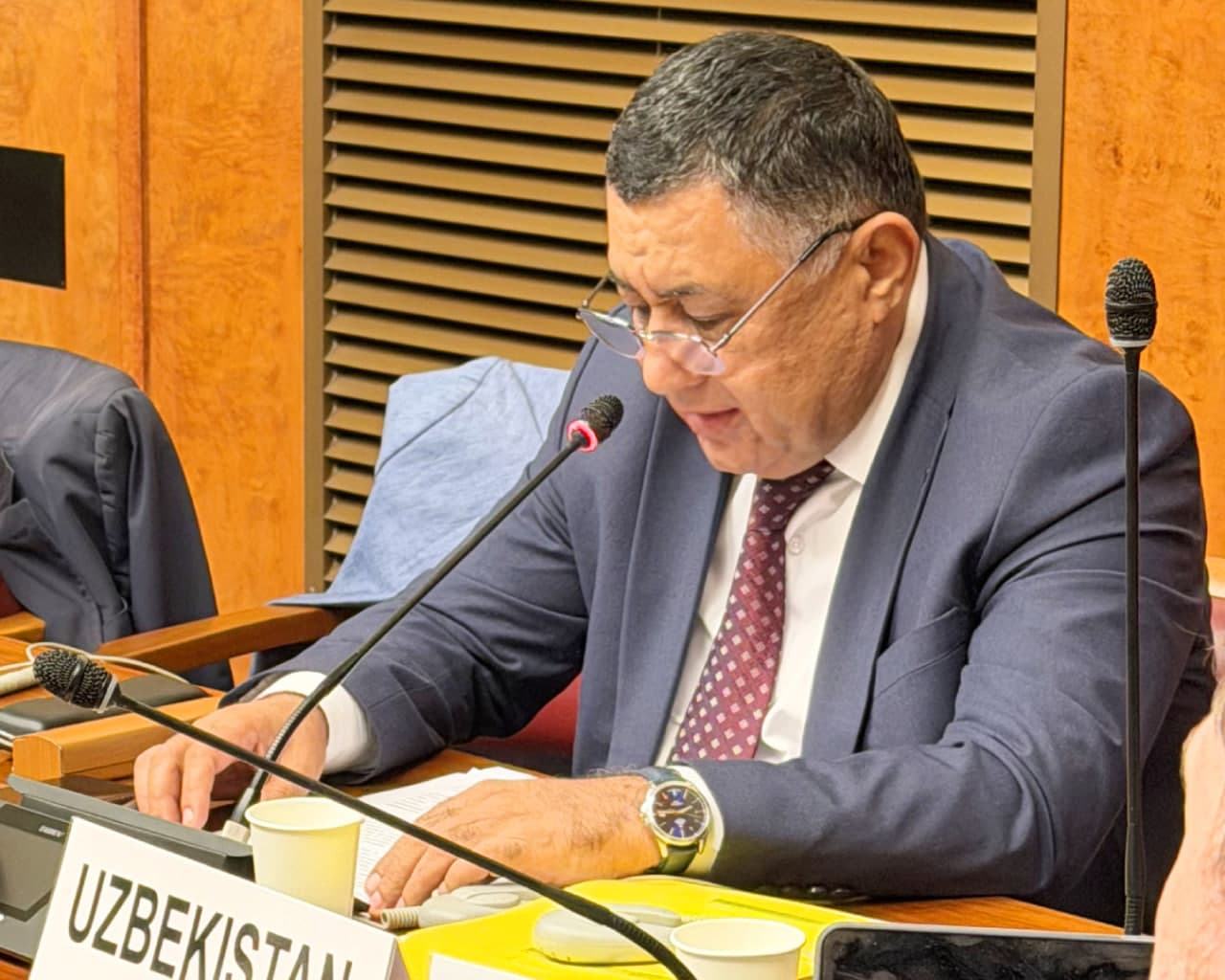
In his statement, Mr. Mukhamedov emphasized that capacity-building and awareness-raising are essential for the practical implementation of the Aarhus Convention principles. Access to environmental information, public participation in decision-making, and transparency of environmental procedures are not possible without qualified professionals, effective mechanisms for engaging with the public, and open access to reliable environmental information.
Particular attention was given to the institutional and legal reforms being implemented in Uzbekistan in the field of environmental protection. An important milestone was the adoption in 2025 of the Law “On Environmental Expertise, Environmental Impact Assessment and Strategic Environmental Assessment,” which, for the first time, established Environmental Impact Assessment (EIA) and Strategic Environmental Assessment (SEA) at the legislative level. This creates clearer rules and responsibilities for project developers, designers, government authorities, and the public.
The significance of the Republic of Uzbekistan’s accession to the Aarhus Convention was also highlighted. This step confirms the country’s commitment to improving access to environmental information, promoting public participation, and ensuring transparency in environmentally significant decision-making processes.
International partners and donors play an important role in strengthening national capacities. In particular, cooperation with the Korea Environment Institute focuses on improving environmental assessment systems, digitalizing EIA procedures, and enhancing public participation mechanisms. Within this cooperation, Uzbekistan is studying the experience of the Republic of Korea in early public engagement, public consultations, and the application of digital tools in Strategic Environmental Assessment.
The development of cooperation with Italy, Germany, and France was also noted. Cooperation with Italy focuses on the digitalization of environmental assessment and the introduction of artificial intelligence technologies. Cooperation with Germany is aimed at studying best available techniques and supporting the environmental modernization of industry. Cooperation with France focuses on climate policy development, the green economy, and Strategic Environmental Assessment.
The statement also highlighted the international environmental agenda formed on the basis of initiatives announced by the President of the Republic of Uzbekistan during the opening ceremony of the 8th Assembly of the Global Environment Facility in Samarkand. These initiatives include the development of the “Green Samarkand – 2030” model, the establishment of a National Climate Change and Hydrometeorology Center, the creation of the “Clean Air” Consortium, the development of the Eco Expo Central Asia platform, the implementation of the “Green Regions – 2035” programme, the promotion of a circular economy, and the training of specialists in climate policy, green economy, and sustainable development.
In its future work, Uzbekistan plans to focus on enhancing the qualifications of specialists in environmental expertise, environmental impact assessment, strategic environmental assessment, climate change, waste management, water resources, biodiversity conservation, and cumulative impact assessment.
Priority areas also include the development of digital tools and artificial intelligence for the analysis of environmental assessment materials and the identification of environmental risks, the preparation of practical methodological guidance for designers, project developers, local authorities, and the public, as well as strengthening activities in regions where a significant share of industrial, construction, energy, and infrastructure projects are being implemented.
Special importance is attached to expanding public access to environmental information through open registries, electronic maps, digital platforms, EIA documentation, and the results of public consultations. In addition, Uzbekistan plans to further develop environmental education with the participation of Green University, Green Technical Colleges, and international partners.
According to Mr. Mukhamedov, capacity-building and environmental awareness-raising are viewed in Uzbekistan not as one-time activities but as a continuous process. This serves as an important foundation for modernizing environmental governance, implementing the principles of the Aarhus Convention, and ensuring the country’s sustainable development.
The 30th Meeting of the Working Group of the Parties to the Aarhus Convention is taking place in Geneva from 24 to 26 June 2026. The agenda includes issues related to access to environmental information, public participation in decision-making, access to justice, capacity-building, and the promotion of the Convention’s principles at international forums.