
Stages of conducting the State ecological expertise and environmental impact assessment
2026-01-29 14:00:00 / News
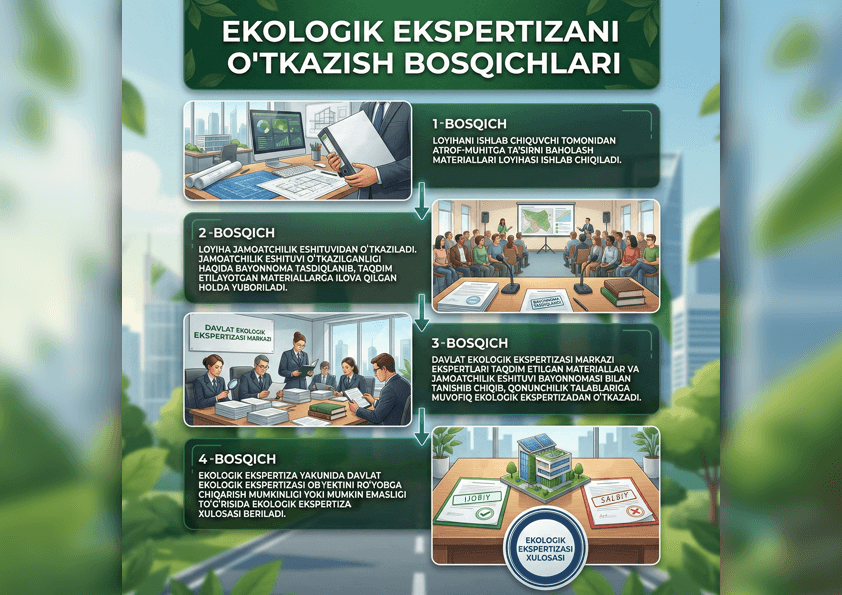
The given phrase translates into English as:
1. Preparation of environmental impact assessment (EIA) materials.
The organization developing the project studies the potential impact of the planned activity on the environment. Based on the analysis conducted, Environmental Impact Assessment (EIA) materials are prepared. The documentation assesses the impact of the project on the environment, public health, and the ecological condition of the territory, and also identifies measures to prevent, reduce, and compensate for possible negative consequences.
2. Conducting public hearings.
The prepared EIA materials are submitted for public discussion. During the public hearings, citizens, experts, and other interested parties express their comments and proposals regarding the project under consideration. Based on the results of the discussion, minutes of the public hearings are prepared, approved in accordance with the established procedure, and attached to the materials submitted for state environmental expertise.
3. Conducting the state ecological expertise.
Environmental experts of the Center for State Environmental Expertise review the submitted EIA materials, including the minutes of the public hearings, for compliance with the requirements of current legislation. During the state environmental expertise, the environmental safety of project implementation, its compliance with environmental protection standards, as well as potential environmental and social risks are assessed, with the presentation of measures to prevent or minimize them.
4. Issuance of the conclusion of the state ecological expertise.
Based on the results of the expertise, an official conclusion is issued on the admissibility or inadmissibility of project implementation. This conclusion serves as the legal basis for making a decision on the approval or rejection of the planned activity.