
Hazardous Production Facilities: The Safety Responsibility Behind the Numbers
2026-07-22 14:20:00 / News
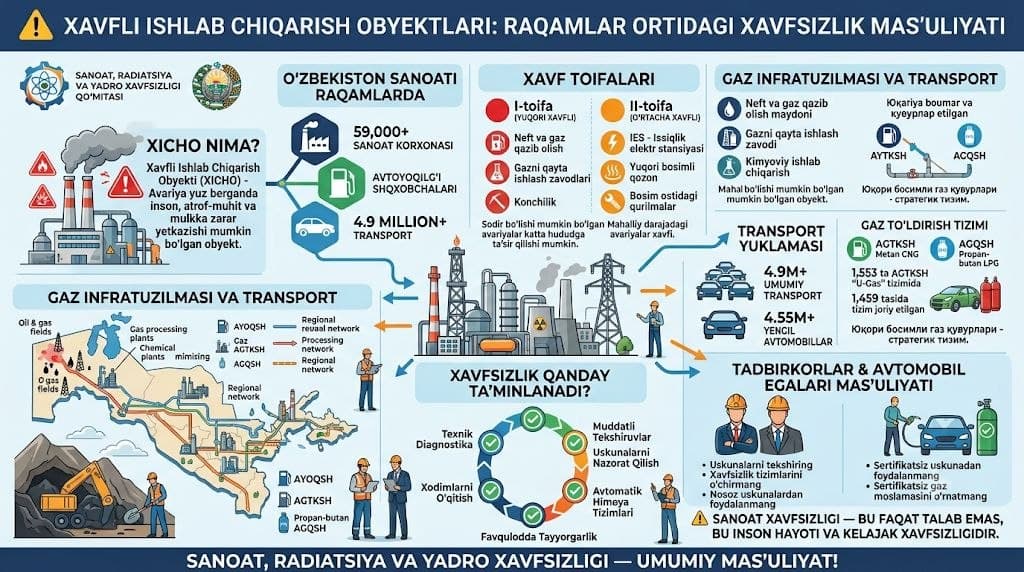
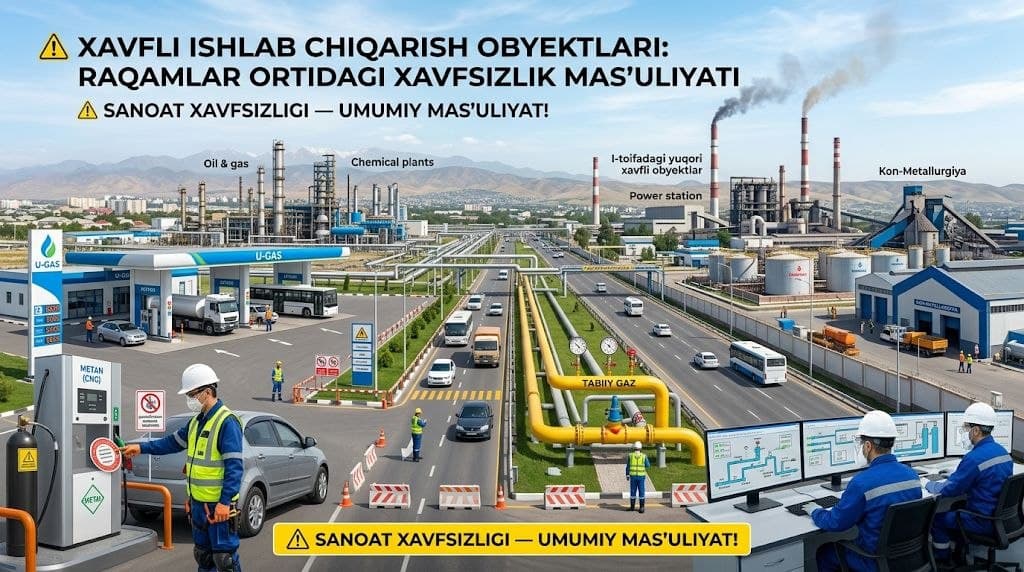
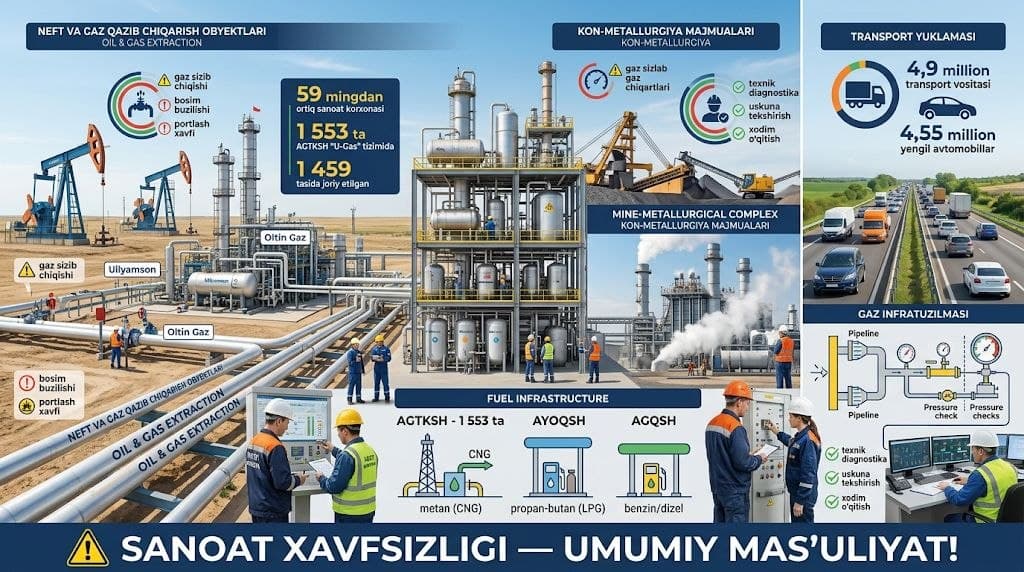
Behind these essential resources are complex technological processes, high-pressure equipment, large amounts of stored energy, and hazardous substances. Facilities operating under such conditions are classified as hazardous production facilities.
🏭 What Is a Hazardous Production Facility?
A hazardous production facility is an industrial site where an accident or equipment failure could endanger human life and health, damage property, or harm the environment. Such facilities are therefore required to operate under strict industrial safety regulations.
🇺🇿 Uzbekistan's Industrial Sector in Numbers
Today, Uzbekistan has:
🔹 more than 59,000 industrial enterprises, including:
✅ oil and gas facilities;
✅ chemical industry enterprises;
✅ mining and metallurgical complexes;
✅ energy facilities;
✅ mechanical engineering plants;
✅ construction materials manufacturers;
✅ food-processing and light industry enterprises.
However, not all of these facilities present the same level of industrial risk.
🔴 Category I Hazardous Facilities (High-Risk Facilities)
These generally include:
⛽️ oil and gas production facilities;
⛽️ gas processing plants;
🧪 chemical and petrochemical enterprises;
⛏️ mining and metallurgical complexes;
🔥 facilities handling explosive, flammable, or toxic substances.
Accidents at these facilities may affect large geographical areas and pose risks to significant numbers of people.
🟠 Category II Hazardous Facilities
This category includes:
⚡️ thermal power plants;
♨️ high-pressure boiler houses;
🔩 pressure equipment and pressure vessel installations;
⛽️ fuel storage and distribution facilities;
🏭 selected industrial manufacturing plants.
⛽️ Fuel Filling Facilities: A Large System with Significant Responsibility
Uzbekistan's vehicle fueling infrastructure consists of several sectors.
1️⃣ Fuel Filling Stations
These stations provide:
- gasoline;
- diesel fuel;
- other liquid petroleum products.
2️⃣ Compressed Natural Gas (CNG) Filling Stations
These facilities supply:
- Compressed Natural Gas (CNG / methane).
According to Resolution No. 315 of the Cabinet of Ministers dated June 18, 2026:
📌 1,553 CNG filling stations are registered within the U-Gas information system;
📌 1,459 stations have already been integrated into the system.
3️⃣ LPG Filling Stations
These facilities supply:
- Liquefied Petroleum Gas (LPG / propane-butane).
🚗 Vehicle Demand Continues to Increase
According to the National Statistics Committee:
🚘 Uzbekistan has more than 4.9 million registered motor vehicles.
Among them:
✅ over 4.55 million are passenger vehicles;
✅ passenger cars account for more than 92% of all registered vehicles.
This places considerable demand on the country's gas and fuel infrastructure.
🌐 Gas Infrastructure: A Strategic National System
Natural gas is delivered through:
- gas production facilities;
- gas processing plants;
- high-pressure transmission pipelines;
- regional gas distribution networks;
- industrial and residential supply systems.
High-pressure gas pipelines are among the most critical components of the nation's energy security infrastructure.
Primary risks include:
⚠️ gas leaks;
⚠️ pressure failures;
⚠️ fires and explosions;
⚠️ equipment malfunctions.
🛡 How Is Safety Ensured?
Industrial safety at hazardous production facilities is maintained through:
✅ technical diagnostics and industrial safety expert examinations;
✅ scheduled inspections of equipment;
✅ continuous monitoring of pressure equipment;
✅ maintaining automatic protection systems in proper working condition;
✅ personnel training and certification;
✅ preparedness for emergency situations.
🏢 Recommendations for Business Operators and Facility Owners
✔️ conduct technical inspections on time;
✔️ never disable safety systems;
✔️ do not use defective cylinders, pipelines, or equipment;
✔️ continuously improve personnel competence through training;
✔️ strictly comply with technological operating procedures.
🚗 Recommendations for Vehicle Owners
✔️ use only the type of fuel compatible with your vehicle's installed gas system;
✔️ have gas cylinders inspected within the prescribed inspection periods;
✔️ use only certified gas equipment;
✔️ if you detect a gas odor or equipment malfunction, immediately take appropriate safety measures.
📌 Conclusion
Today, Uzbekistan's industrial safety system encompasses:
🏭 more than 59,000 industrial enterprises;
⛽️ 1,553 CNG filling stations;
🚗 over 4.9 million registered vehicles;
🌐 thousands of kilometers of gas infrastructure operating as one integrated national system.
Within such a vast infrastructure, safety depends not only on technology but also on human responsibility, operational discipline, and a strong culture of industrial safety.
⚠️ Industrial safety is more than a regulatory requirement—it is the foundation for protecting human life and ensuring a safer future.