
⚛️ Hydrogen Explosion Protection at Nuclear Power Plants: Key Requirements and Regulations
2026-03-28 14:00:00 / News
These Regulations, approved by Resolution No. 41 of March 3, 2026, by the Committee for Industrial, Radiation and Nuclear Safety under the Cabinet of Ministers of the Republic of Uzbekistan, serve as an essential regulatory framework for ensuring safety at nuclear power plants.
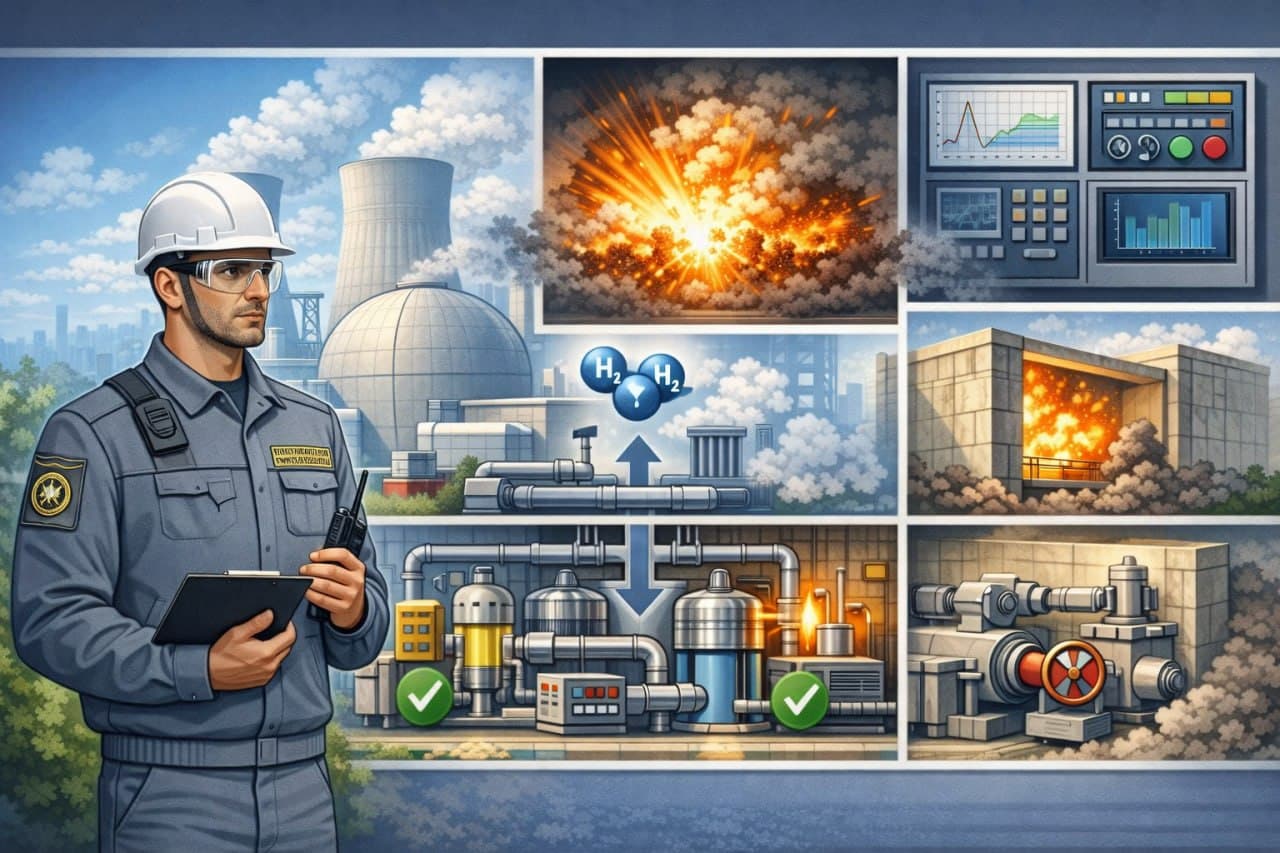
The document establishes requirements for preventing hydrogen explosions and mitigating their consequences during the design, construction, and operation of nuclear power plants equipped with water-water energetic reactors (VVER).
📌 Purpose and Importance
The Regulations aim to prevent the formation of explosive hydrogen mixtures, ensure the stability of technological processes, and maintain a high level of safety in emergency situations.
🧠 Key Definitions
The following key terms are defined:
- Operating organization — a legal entity responsible for managing nuclear facilities and ensuring their safe operation;
- Detonation — a high-speed explosion accompanied by a shock wave;
- Deflagration — a lower-speed combustion explosion process;
- Containment barrier — a protective structure limiting the spread of radioactive materials;
- Design-basis and beyond-design-basis accidents — different categories of accident scenarios.
🛡 Safety Requirements
The operating organization must:
- prevent the formation of explosive hydrogen mixtures during normal operation;
- avoid detonation and deflagration during accident conditions;
- ensure controlled deflagration in beyond-design-basis accidents only when safety systems are functioning.
⚙️ Key Measures
To prevent hydrogen explosions, the following measures are implemented:
- continuous monitoring of hydrogen concentration;
- ensuring equipment tightness and integrity;
- implementation of ventilation and gas removal systems;
- use of hydrogen recombination, combustion, or dilution systems.
🏗 Design and Construction Phase
The following are mandatory:
- identification of hydrogen generation sources;
- calculation of concentrations and parameters;
- placement of monitoring points and measuring devices;
- application of specialized protective structures.
⚠️ Causes of Hydrogen Formation
Hydrogen may be generated due to:
- water radiolysis;
- high-temperature reactions;
- chemical reactions (ammonia, hydrazine, etc.);
- metal corrosion.
🔧 Operation Phase
The operating organization must:
- develop operational procedures and instructions;
- continuously monitor technical conditions;
- conduct inspections after maintenance;
- ensure proper training of responsible personnel.
📡 Monitoring and Automation
- transmission of all data to central control rooms;
- operation of automatic protection and interlock systems;
- regular metrological verification of measuring instruments.
🔚 Conclusion
Hydrogen explosion protection at nuclear power plants is essential for:
- protecting human life and health;
- preserving the environment;
- ensuring the safe operation of strategically important facilities.