
Growth Partners for Uzbekistan: MDB and ECA Financing Solutions
2026-06-18 11:20:00 / News


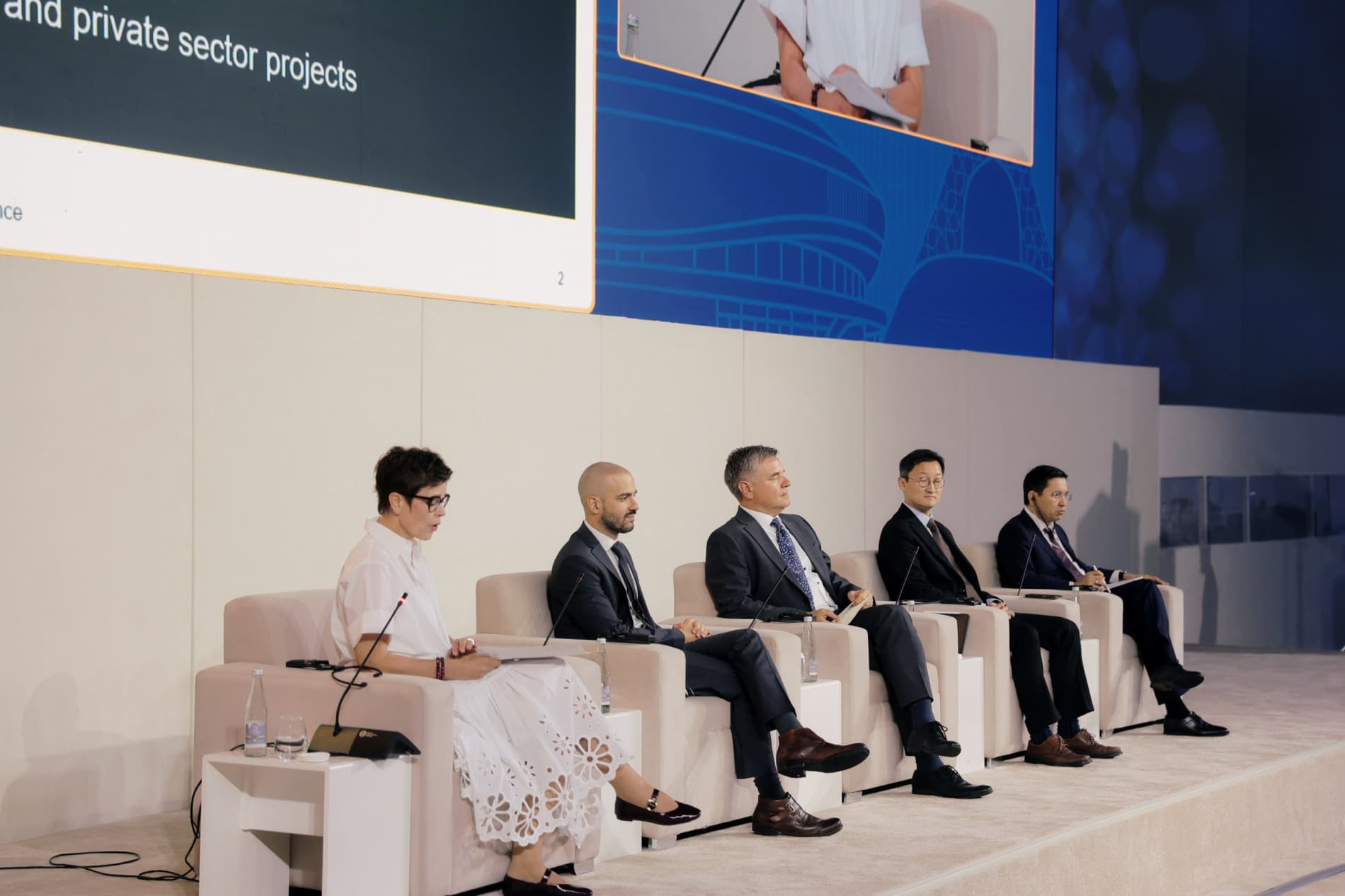


Uzbekistan’s growing appeal to international lenders and investors was in focus during the panel session “Growth Partners for Uzbekistan: MDB and ECA Financing Solutions”, held as part of the 5th Tashkent International Investment Forum.
Representatives of major financial institutions discussed the country’s increasing demand for long-term financing, the role of international guarantee mechanisms and new opportunities to attract private capital into key sectors of the economy.
The session focused on how multilateral development banks (MDBs) and export credit agencies (ECAs) can help attract international capital, expand access to long-term financing and support Uzbekistan’s growing investment needs. Participants noted that ongoing economic reforms, the expansion of the private sector and increasing demand for investment financing are making Uzbekistan an increasingly attractive destination for international lenders and investors.
The following international financial experts and banking sector executives participated in this practical dialogue platform:
- Katrin Eich — Global Head of Structured Export and Trade Finance, Managing Director at Commerzbank AG (Moderator)
- Thomas Baum — Head of Insurance and Risk Management Division at Euler Hermes Aktiengesellschaft
- Jaeyoung Jin — Head of Central Asia at the Multilateral Investment Guarantee Agency (MIGA)
- Sardorbek Usmanbekov — First Deputy Chairman of the Board at the National Bank of Uzbekistan (NBU) JSC
- Pavlo Stergard — Deputy Head for the Middle East and North Africa (MENA), Türkiye, and Central Asia at Bpifrance
Participants noted that Uzbekistan is increasingly drawing the attention of international financial institutions due to its ongoing economic reforms, expanding private sector and growing demand for investment financing.
Thomas Baum highlighted Uzbekistan as one of the fastest-growing markets in Euler Hermes’ portfolio. According to him, the agency has approved financing decisions worth approximately €2.7 billion for projects in Uzbekistan over the past 15 years.
“Uzbekistan is one of the few countries where our coverage volume is continuously growing,” – Baum said. He noted that German-backed financing has supported projects across a broad range of sectors, including textiles, mining, transport and energy. According to Baum, one of the main advantages of ECA-backed financing is the ability to secure long-term funding at competitive rates:
“The OECD reform now allows a standard loan tenor of 15 years. Door-to-door, it can be up to 18 years depending on the project. Uzbek companies often tell us that German equipment may be 30 percent more expensive than Chinese alternatives. Our task is to offset part of that difference through a more attractive financing offer. We are not just another headache-creating counterparty. We would like to become a partner”
Representatives of the World Bank Group highlighted Uzbekistan’s growing importance for international investors. Jaeyoung Jin, Head of Central Asia at the Multilateral Investment Guarantee Agency (MIGA), said the organization’s exposure in Uzbekistan has reached nearly $1 billion, driven largely by successful renewable energy projects and broader economic reforms:
“This is a very hot market for MIGA. For the next few years, we may issue more than $500 million annually here. As Uzbekistan’s economy grows, what becomes important is bringing private capital at scale. Otherwise, there is no way to meet the financing needs of a rapidly developing economy. We see ourselves not only as a guarantee provider, but also as a long-term partner for Uzbekistan.”
Representing French public investment bank Bpifrance, Pavlo Stergard described Uzbekistan as one of the most dynamic economies not only in Central Asia but across the wider Asian region. According to Stergard, the country is experiencing significant demand for investment in infrastructure, healthcare, transport, mobility, construction and industrial modernization. He noted that Uzbekistan’s ongoing reforms and the rapid development of the private sector are creating growing demand for long-term financing solutions. Bpifrance currently has around €400 million in outstanding operations in Uzbekistan, including financing and insurance projects involving both public and private sector partners.
Stergard also highlighted the bank’s interest in expanding cooperation with Uzbek companies through co-financing arrangements, supplier credits and flexible financing instruments designed to support large-scale investment projects.
Participants agreed that strengthening cooperation between Uzbekistan and international financial institutions will be critical for mobilizing private capital, financing strategic infrastructure projects and supporting the country’s long-term economic transformation.
The session demonstrated growing confidence among international lenders in Uzbekistan’s economic trajectory and underscored the country’s increasing role as one of the most attractive investment destinations in Central Asia.