
Transforming the Railway Sector and Developing New Logistics Corridors in Central Asia: Investment Opportunities and Regional Connectivity
2026-06-18 10:20:00 / News


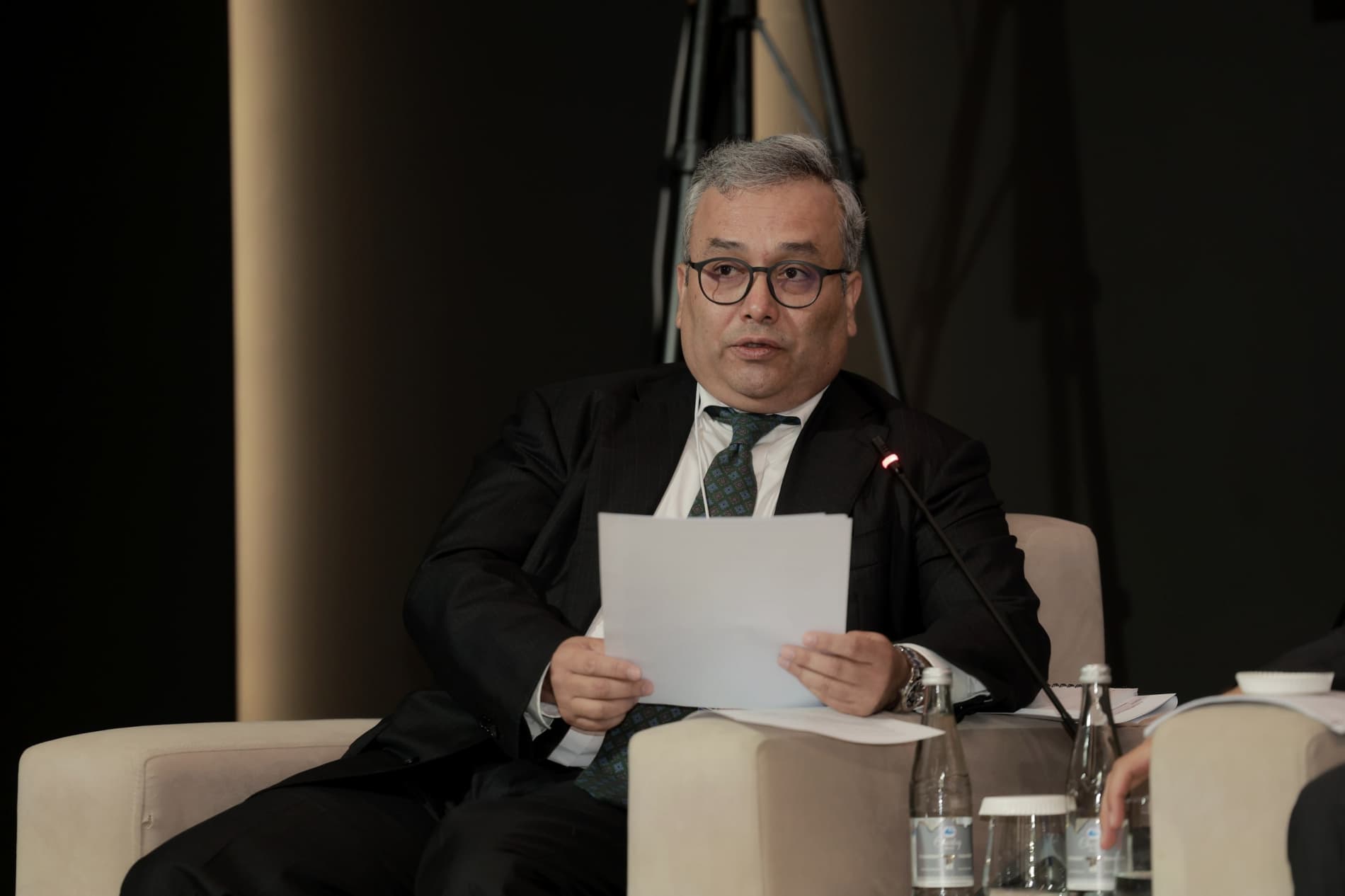


Within the framework of the Tashkent International Investment Forum, a major panel session dedicated to the topic "Transforming the Railway Sector and Developing New Logistics Corridors in Central Asia: Investment Opportunities and Regional Connectivity" was held, organized in cooperation with the international law firm Kinstellar.
The following leading transport industry professionals, international experts, and government officials participated in this strategic session:
- Dilshad Khabibullayev - Partner at Kinstellar international law firm (Moderator)
- Jasurbek Choriyev - Deputy Minister of Transport of the Republic of Uzbekistan
- Alexey Skatin - Senior Managing Director at the Eurasian Development Bank (EDB)
- Innokentiy Ivanov - Partner at Freshfields international law firm
- Petr Novotný - Chief Executive Officer (CEO) of Škoda Group
- Mansur Bustoni - Transport Sector Specialist, World Bank
- Roman Sorkin - President for Sales in Central Asia and the South Caucasus, Škoda Group
The session focused on the modernization of railway infrastructure, the development of international transport corridors, the attraction of investment, and the expansion of logistics capabilities across Central Asia. Participants noted that the region’s transport system is undergoing large-scale transformation, becoming a key driver of economic growth and regional integration.
According to Jasurbek Choriev, Deputy Minister of Transport of the Republic of Uzbekistan and Secretary General of TRACECA, Uzbekistan’s transport sector is demonstrating steady growth and is emerging as one of the main drivers of regional economic development. He emphasized that the ongoing changes extend beyond individual sectoral indicators, reflecting a broader transformation of the transport and logistics system across Central Asia.
“Today, Uzbekistan is demonstrating one of the highest growth rates in the aviation sector in the world, and this development is confirmed by data from international organizations, including ACI, ICAO, and the World Bank. Our strategy until 2030 calls for increasing the fleet to 180 aircraft, and this indicator is expected to be achieved much earlier,” he noted.
In addition, Choriev highlighted key indicators of large-scale infrastructure development, including the growth of tourist flows to 15 million people per year, the expansion of the aircraft fleet to more than 100 units, and ambitious plans for further capacity growth. He noted that the railway system accounts for approximately 90 percent of the country’s domestic and international freight turnover.
He also presented key parameters of ongoing and planned projects, including the electrification of the rail network to 70 percent by 2030 and the development of international transport corridors, with cargo volumes projected to increase to 20 million tons.
During the session, participants also discussed in detail the reform of Uzbekistan’s railway sector, the expansion of private sector participation, and the enhancement of the investment attractiveness of infrastructure projects, including the development of suburban rail connections and the integration of transport corridors with urban agglomerations.
As Mansur Bustoni, Transport Sector Specialist at the World Bank, noted, the key task is to establish a commercially sustainable model for Uzbekistan’s railway sector that can effectively attract both international financial institutions and private capital.
“Our approach is to transform the state railway sector into a commercially viable and financially stable enterprise where international financial institutions and private investors can work together with the state. For us, Uzbekistan’s railway system is not an option, but a critically important piece of infrastructure that ensures the country’s economic stability. We are already observing significant progress in reforms, including structural transformation, financial stability, and preparations for further investment attraction,” he emphasized.
Particular attention was paid to the development of suburban rail connections, including the pilot Tashkent–Chirchik route, which, according to the World Bank, could become one of the first successful examples of modern urban transport integration and a sustainable infrastructure financing model.
The session concluded with participants emphasizing that the development of modern transport infrastructure, the implementation of international logistics corridors, and the consistent advancement of sectoral reforms open up new opportunities for attracting investment, expanding regional cooperation, and strengthening Central Asia’s role as a key transport and logistics hub in Eurasia.