
Trade Realignment and Supply Chain Geography: Where Does Central Asia Fit?
2026-06-17 14:00:00 / News
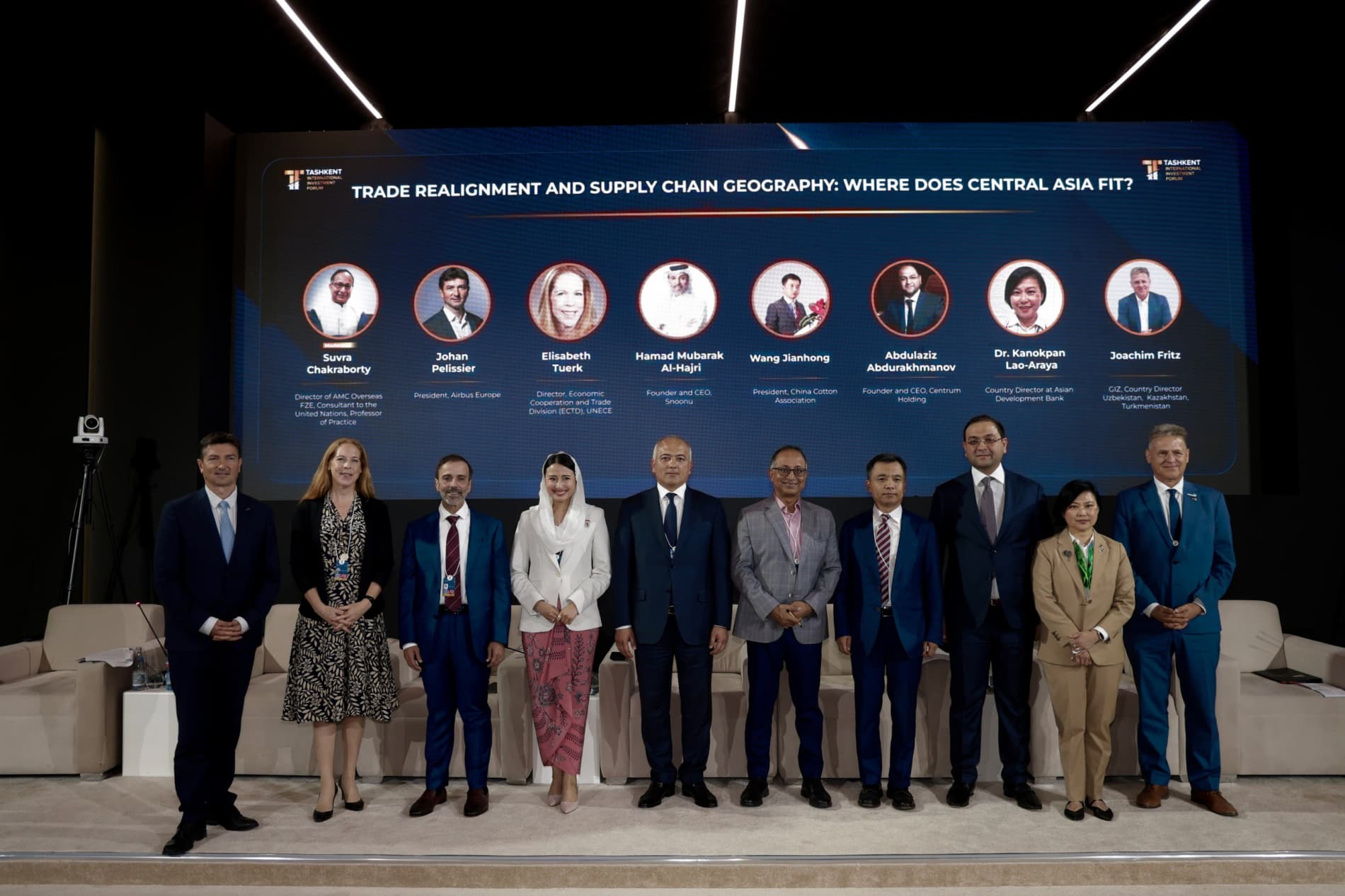


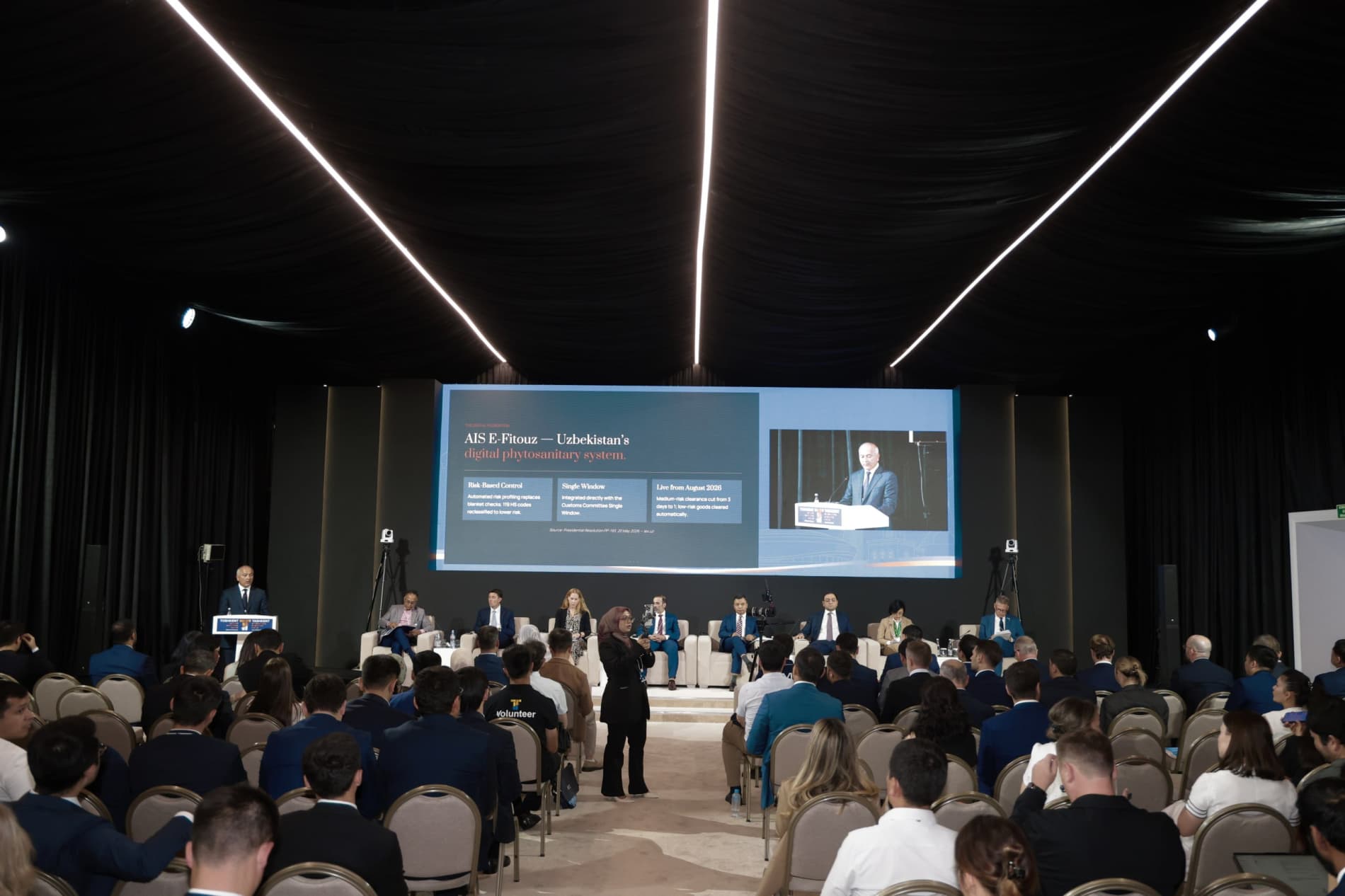


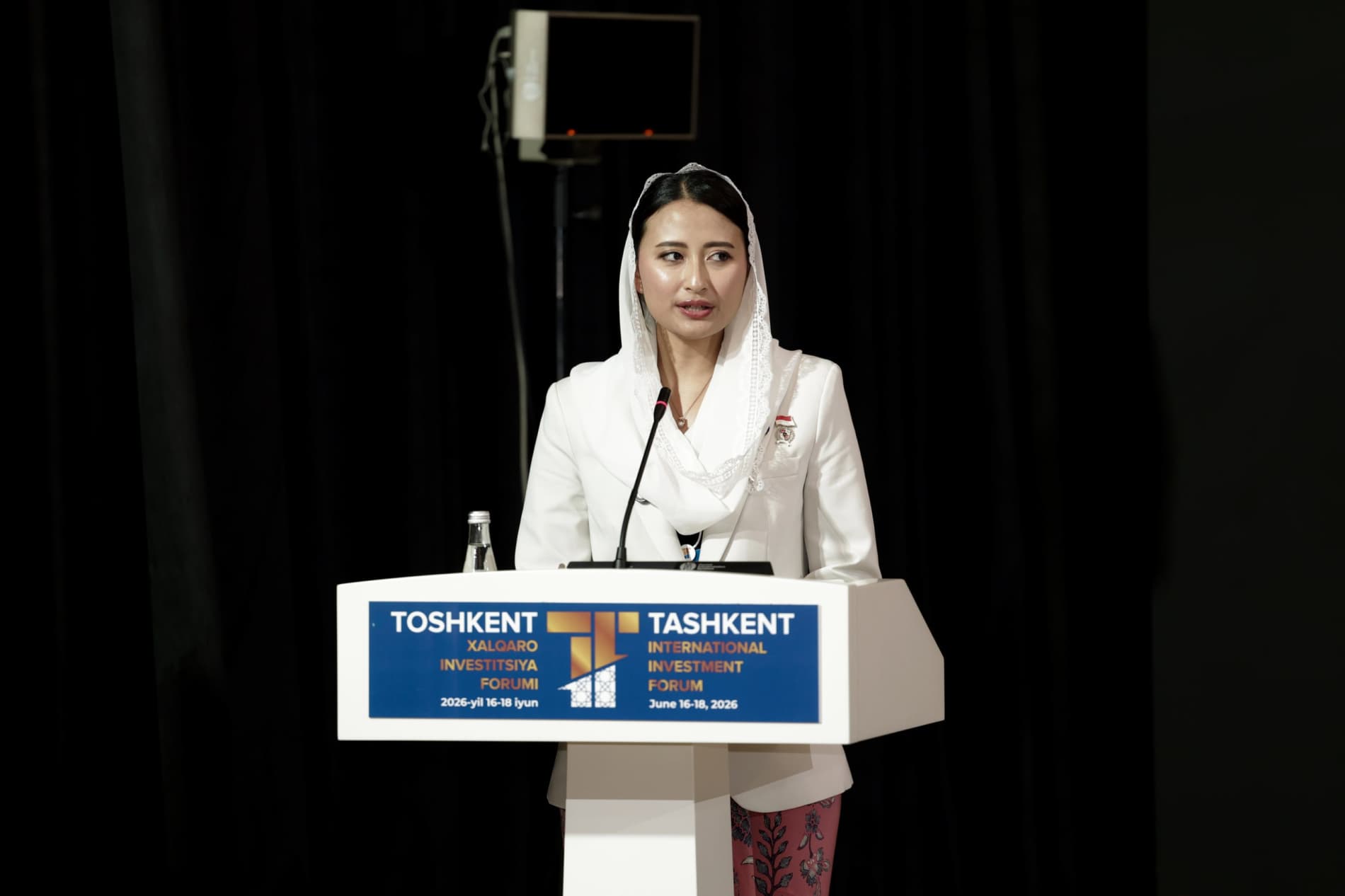
As part of the 5th Tashkent International Investment Forum, which opened on June 16, discussions continued on a range of pressing global issues. On June 17, the second day of TIIF 2026, a major panel session titled “Trade Realignment and Supply Chain Geography: Where Does Central Asia Fit?” brought together policymakers, international organizations, and business leaders to examine the evolving landscape of global trade and logistics.
The discussion focused on how geopolitical tensions, trade disputes, market fragmentation, and the relocation of production facilities closer to consumer markets are fundamentally reshaping global supply chains and trade flows.
The strategic panel featured the participation of leading international experts, government officials, and business executives, including:
- Suvra Chakraborty — Director at AMC Overseas FZE and Consultant to the United Nations (UN) (Moderator)
- Ibrokhim Ergashev — Deputy Minister of Investment, Industry and Trade of the Republic of Uzbekistan
- Elisabeth Tuerk — Director of Economic Cooperation and Trade at the United Nations Economic Commission for Europe (UNECE)
- Joachim Fritz — Country Director at the German Agency for International Cooperation (GIZ)
- Kanokpan Lao-Araya — Country Director for Uzbekistan at the Asian Development Bank (ADB)
- Johan Pelissier — President of Airbus Europe
- Wang Jianhong — President of the China Cotton Association
- Abdulaziz Abdurakhmanov — Founder and Chief Executive Officer of Centrum Holding
- Hamad Mubarak Al-Hajri — Founder and Chief Executive Officer of Snoonu
Speaking during the session, Ibrokhim Ergashev, Deputy Minister of Investments, Industry and Trade of Uzbekistan, noted that global trade routes and supply chains are undergoing profound transformation. He emphasized that Uzbekistan’s strategic location, expanding logistics infrastructure, and growing network of international transport corridors are positioning the country as one of the region’s most attractive destinations for investment.
“At a time when trade routes are shifting and supply chains are being reconfigured, Uzbekistan is emerging as one of the most attractive platforms in Central Asia for trade, logistics, and industrial investment,” Ergashev noted.
Dia Roro Esti Widya Putri, representing Indonesia’s Ministry of Trade, noted that the global trading system is being reshaped by geopolitical developments, technological progress, and changing investment flows. In her view, resilience in an increasingly complex world will be achieved not through isolation, but through diversification, innovation, and cooperation.
“The future of trade will not be determined solely by external circumstances. It will be shaped by the decisions we make, the partnerships we build, and the goals we pursue together,” she emphasized.
Kanokpan Lao-Araya, Country Director for Uzbekistan at the Asian Development Bank, emphasized that reliability, resilience, and risk management are increasingly becoming more important than cost considerations in global trade and supply chains. She noted that Central Asia is emerging not as a competitor to existing trade and logistics hubs, but as an important component of an increasingly diversified global supply network.
Participants also discussed how Central Asia is leveraging its strategic geographic position to strengthen its role as a key transport and logistics corridor connecting Europe, China, and South Asia.
During the discussions, Elisabeth Tuerk, Director of the Economic Cooperation and Trade Division at UNECE, highlighted that Uzbekistan stands out not only because of its strategic location and rich natural resources, but also because of its active role in developing and implementing international standards.
Abdulaziz Abdurakhmanov, Founder and CEO of Centrum Holding, noted that the ongoing transformation of global supply chains is creating new opportunities for Uzbekistan.
“Uzbekistan’s geographic location is a significant advantage, but the key challenge is turning that advantage into economic value. This can be achieved through the development of modern multimodal logistics infrastructure,” he said.
Another speaker, Hamad Mubarak Al-Hajri, Founder and CEO of Snoonu, stressed that Uzbekistan’s strengths extend far beyond its geographic location.
“We see tremendous potential in Uzbekistan. The country is home to hardworking, disciplined people with ambitious goals. For investors, human capital is one of the most important factors,” he said, highlighting the country’s skilled workforce and entrepreneurial potential.
The session concluded with a consensus that ongoing shifts in global trade and supply chains are creating new opportunities for Central Asia. Participants noted that with its strategic location, consistent economic reforms, expanding logistics capabilities, and competitive human capital, Uzbekistan is well positioned to become an increasingly important participant in these transformations and one of the region’s emerging centers of economic growth.