
«The Middle Corridor»: Capacity, Complementarity and the Economics of New Trade Routes
2026-06-17 11:50:00 / News
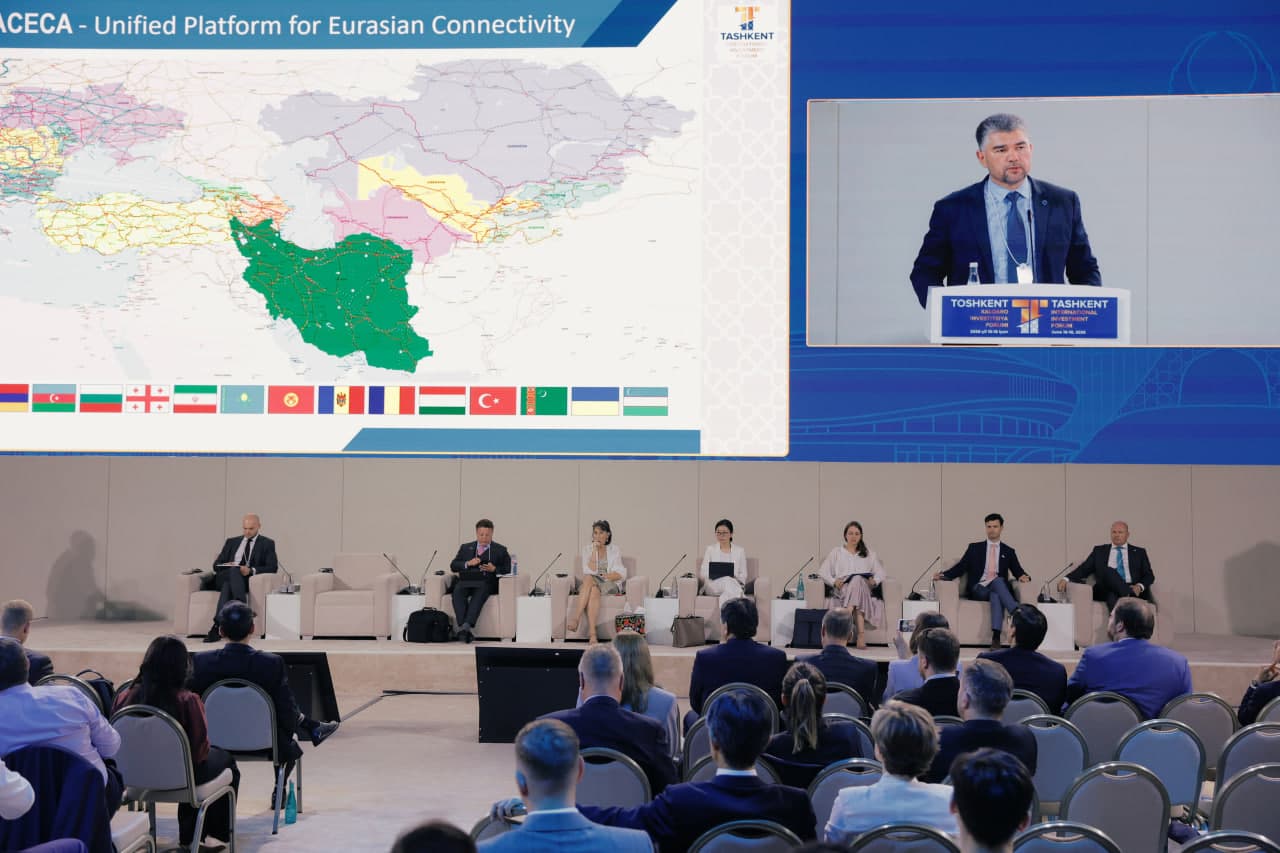


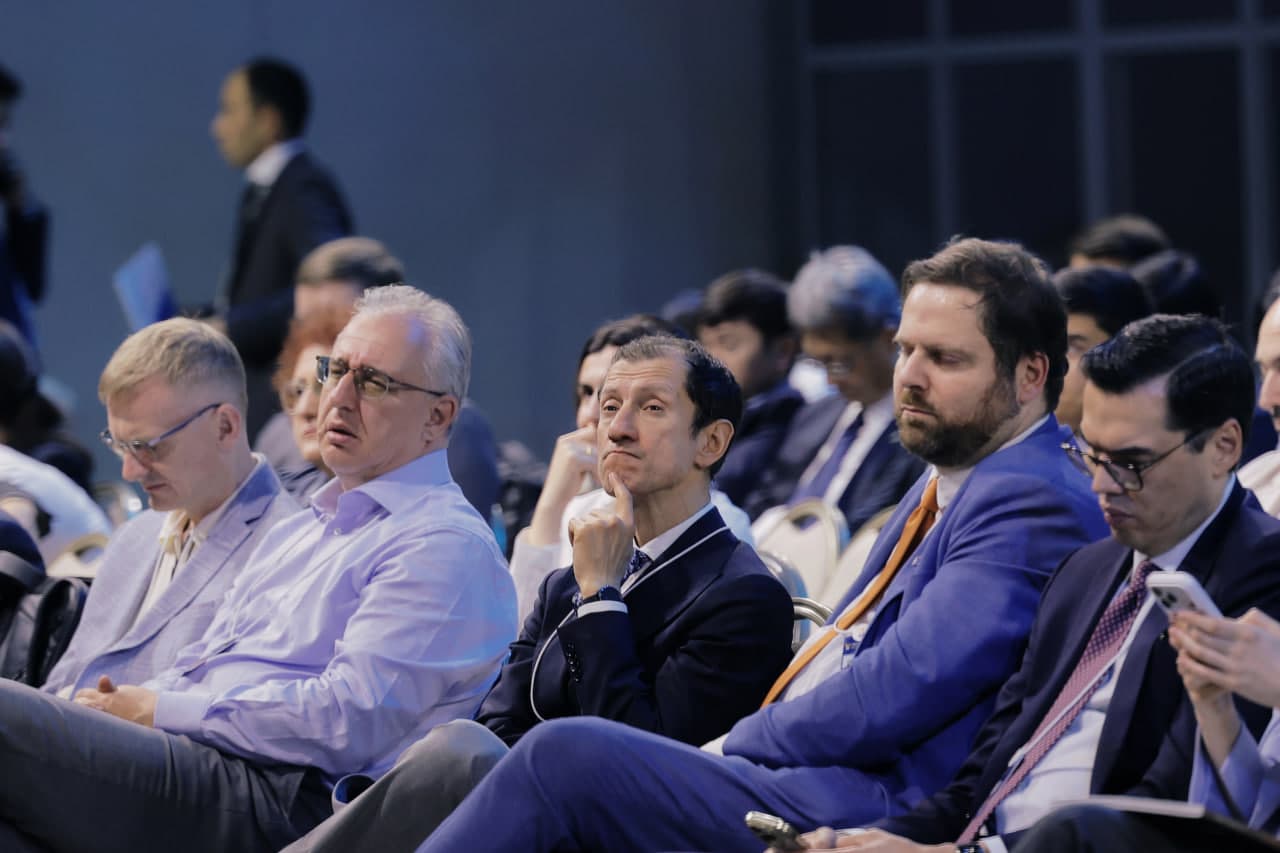


Within the framework of the 5th Anniversary Tashkent International Investment Forum, a major panel session dedicated to the future of global transport and logistics infrastructure was held on the topic “The Middle Corridor: Capacity, Complementarity, and the Economics of New Trade Routes.”
As emphasized during the event, the Trans-Caspian International Transport Route (“The Middle Corridor”) is acquiring immense strategic importance not only for the region but for the entire Eurasian continent. During the session, an in-depth analysis was conducted on increasing the logistic throughput capacity of this corridor, harmonizing tariffs among transit states, and developing modern multimodal infrastructure.
Furthermore, participants engaged in an active discussion regarding how to ensure the complementarity of core transit routes with alternative transport corridors. In particular, international experts comprehensively reviewed financing opportunities within the framework of the European Union's “Global Gateway” initiative, cross-border trade facilitation mechanisms, and the economic and practical aspects of shaping new transport connections. This strategic dialogue served as an essential platform for fully realizing the region's transit potential and elevating international trade relations to a new level.
The following leading international experts, executives of logistics companies, and representatives of international organizations participated in this prestigious strategic dialogue:
- Konstantin Prodayvoda — Partner at Boston Consulting Group (BCG) (Moderator)
- Darren Spinck — Managing Director at Janus Forum
- Andrew Bouffard — Vice President at CPCS
- Dave Van Den Bos — CEO of Ahlers Logistics
- Céleste Laporte Talamon — Policy Analyst, Eurasia Division at the Organisation for Economic Co-operation and Development (OECD)
- Winnie Wang Wei — Senior Infrastructure Specialist for Central Asia at the World Bank
- Charlotte Adriaen — Head of the Central Asia Unit at the European Commission's Directorate-General for International Partnerships (DG INTPA)
- Jasurbek Choriyev — Secretary General of the Transport Corridor Europe-Caucasus-Asia (TRACECA)
The panel discussion was moderated by Konstantin Prodayvoda, Partner at Boston Consulting Group (BCG). Opening the session, he noted that the Middle Corridor has evolved from a strategic concept into a rapidly developing transport route connecting Central Asia with global markets. According to him, cargo volumes along the corridor have increased nearly fivefold in recent years, reaching approximately 4.5 million tonnes in 2025. He also highlighted Uzbekistan’s growing contribution to the corridor’s development through investments in transport infrastructure, logistics facilities, and international connectivity.
Jasurbek Choriyev, Deputy Minister of Transport and Secretary General of TRACECA, spoke about the importance of strengthening regional cooperation and accelerating digital transformation across transport networks. He highlighted recent progress in reducing transit times, advancing digital solutions, and improving coordination among participating countries. Particular attention was paid to the TRACECA Single Transit Permit Agreement signed in May 2026, as well as initiatives aimed at mutual recognition of digital documents and the development of a regional digital transport ecosystem.
“Today, we view Uzbekistan as one of the regional digital hubs connecting East and West, North and South. As containerized East-West trade continues to expand and multimodal transport chains become increasingly integrated, regional hubs capable of facilitating trusted cross-border data exchange will become just as important as physical logistics infrastructure. The future competitiveness of transport corridors will depend not only on roads, railways and ports, but also on the ability to exchange information seamlessly across borders,” he stated.
Darren Spinck, Managing Director of Janus Forum, emphasized that the Middle Corridor has become a strategic necessity for global supply chains amid increasing geopolitical uncertainty and efforts to diversify trade routes. He noted that cargo volumes transported through the corridor increased by approximately 800 percent between 2021 and 2025, exceeding 4 million tonnes. According to him, Uzbekistan is uniquely positioned to transform itself from a landlocked country into a major commercial, industrial and logistics hub by developing infrastructure, processing industries and critical mineral value chains around emerging transport routes.
“The question is no longer whether trade will move across Eurasia. The question is where the value created by that trade will remain. Countries that invest not only in transit infrastructure but also in industrial capacity, logistics services and value-added production will be the ones that capture the greatest long-term benefits from these changing trade patterns,” he said.
Charlotte Adriaen, Head of the Central Asia Unit at the European Commission’s Directorate-General for International Partnerships, presented progress achieved under the European Union’s Global Gateway initiative. She noted that following extensive analytical work and consultations with international financial institutions, commitments totaling approximately EUR 10 billion were announced during the Investors Forum in Brussels, followed by additional commitments worth EUR 12 billion during the first EU–Central Asia Summit in Samarkand.
According to her, the European Union’s objective is not only to strengthen transport links between Asia and Europe but also to stimulate economic development, trade and regional cooperation throughout Central Asia and the South Caucasus.
“What we really want is that this is not only about goods being packed in one part of the world and shipped through the Middle Corridor to another. This corridor should increase trade between the regions, across the regions and for the regions. It should support economic development, create opportunities for businesses, strengthen connectivity and contribute to long-term prosperity throughout Central Asia and beyond,” she said.
Céleste Laporte Talamon, Policy Analyst at the OECD, presented findings from recent research involving more than 170 private-sector companies operating across Central Asia. She highlighted significant progress in infrastructure development, digitalization and regional cooperation, including the implementation of electronic customs systems and the TRACECA Single Transit Permit Agreement.
She also pointed to growing demand for modern logistics infrastructure, particularly warehousing and storage facilities, while emphasizing the importance of harmonized digital systems and coordinated border procedures.
“Being landlocked has long been seen as a challenge, but it is increasingly becoming an opportunity and a strong rationale for regional integration. The development of efficient transport corridors strengthens trade, supports economic diversification and contributes to greater stability and cooperation across the region,” she noted.
Andrew Bouffard, Vice President at CPCS, focused on the importance of predictability for both cargo owners and investors. According to him, the long-term success of the Middle Corridor depends on reliable transit times, transparent costs, regulatory harmonization and effective corridor-wide coordination. He presented estimates indicating that under a fully integrated development scenario, container traffic along the corridor could reach up to 1.4 million TEU annually by 2040, significantly exceeding current projections.
“Shippers want to know that when they commit cargo to a corridor, it is reliable, costs are transparent, there are viable options available, and systems work seamlessly across borders. We have to consider that the Middle Corridor is competing against the Northern Corridor in Russia, which, despite the sanctions, still generally offers a single-mode, single-country route that is difficult to compete with when we are talking about five, six or seven countries, a significant number of border crossings and different transshipment points. Therefore, we need to offer shippers a system, a service. We have to provide them with a corridor that is reliable, costs are transparent, there are choices available, and systems work seamlessly across borders,” he stated.
Dave Van Den Bos, Chief Executive Officer of Ahlers Logistics, shared the perspective of international logistics operators and customers using the corridor. He noted that businesses increasingly value reliability, visibility and transparency throughout the transport process. Particular emphasis was placed on digital solutions, cargo tracking systems and the growing role of artificial intelligence in forecasting delivery times and improving operational efficiency.
“The Middle Corridor is no longer a concept. It is becoming a key element of global supply chains. At the end of the day, however, what will determine its success is reliability. Customers need solutions today, not in the future. They need to know where their cargo is, when it will arrive and how efficiently it can move across borders. The more predictable the corridor becomes, the more attractive it will be for both businesses and investors,” he noted.
Throughout the discussion, participants agreed that the Middle Corridor is rapidly becoming one of the most important transport and trade routes connecting Asia and Europe. Experts emphasized that alongside infrastructure investments, future growth will depend on digitalization, regulatory harmonization, institutional cooperation and the development of logistics ecosystems capable of creating long-term economic value across the region.