Making Knowledge and Skills the Main Capital of Future Development — a Priority Task
2026-09-18 10:50:00 / News of ministry
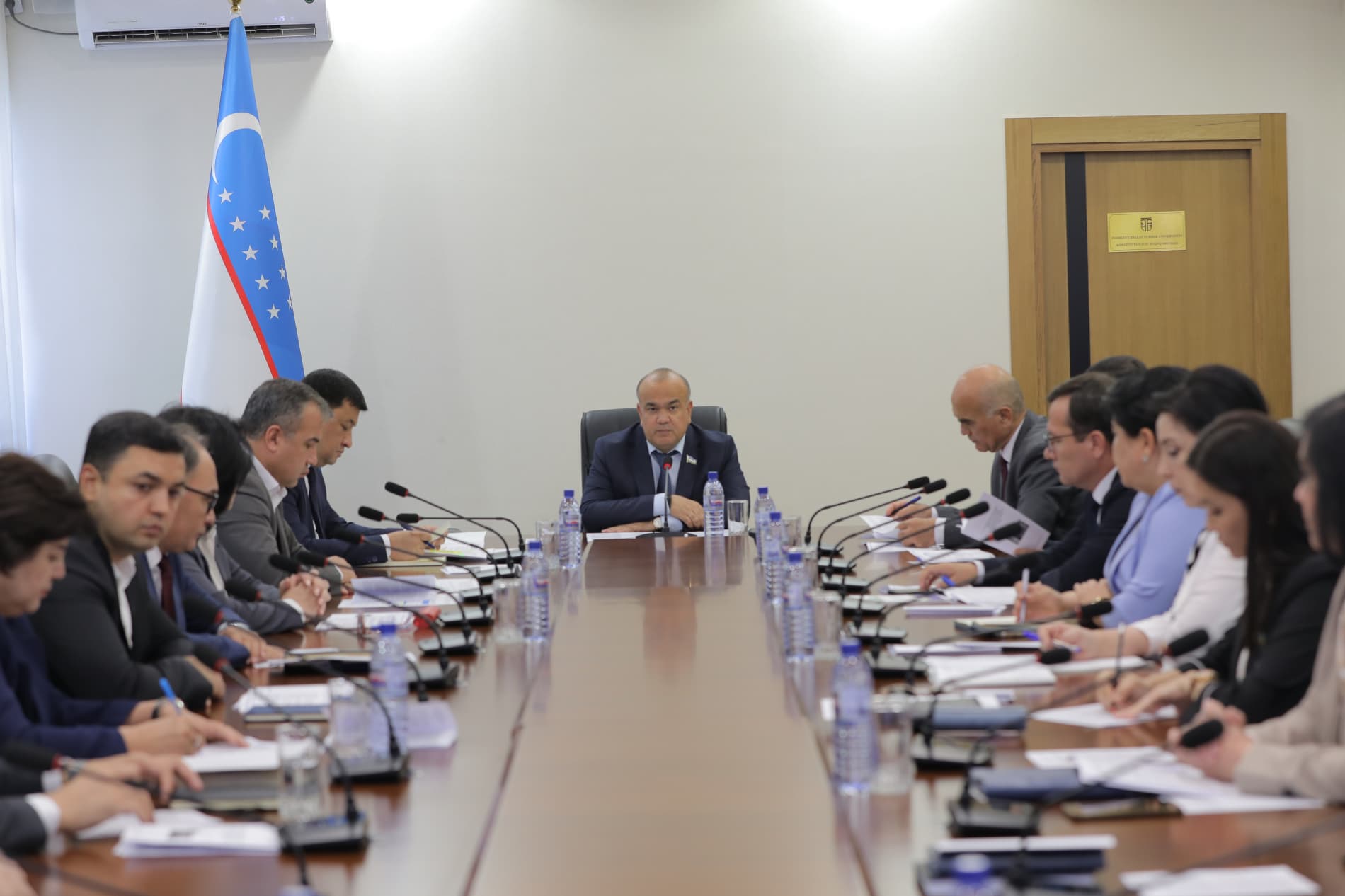
The event was attended by deputies, responsible representatives of the Ministries of Preschool and School Education and Higher Education, Science and Innovation, as well as their sectoral organisations, members of the Public Council, expert scholars, staff of the Institute for Parliamentary Research, and members of the Youth Parliament.
The discussions focused on improving knowledge and skills as an important factor in the country’s development, enhancing the quality of education, aligning educational programmes with labour market requirements, and guiding young people towards modern and highly demanded professions.
As noted, in the speech delivered by the President of the Republic of Uzbekistan at the ceremonial event dedicated to the 35th anniversary of the state independence of the Republic of Uzbekistan, making knowledge and skills the main capital of the country’s future development was put forward as the first national programme. This requires taking reforms in the education sector to a new stage and further improving the results achieved in terms of quality.
Significant results have been achieved in the education sector in recent years. Despite an increase of 8 million in the population, preschool education coverage has reached 78 percent, 1.5 million additional student places have been created in general education schools, and the network of Presidential, creative and specialised schools has been expanded. Currently, 1.6 million students are studying at higher education institutions.
During the discussions, it was emphasised that the main focus should now shift from quantitative indicators, such as education coverage, to educational outcomes. In this regard, graduates’ knowledge and skills, their acquisition of modern professions, ability to find a suitable place in the labour market, and continuous development of their professional potential were identified as important criteria.
From this perspective, systematising and improving legislation in the field of education was identified as one of the Committee’s key tasks. In particular, the issue of developing an Education Code was discussed in order to ensure legal continuity between all levels of education, harmonise existing legal norms, and eliminate legal gaps in the sector.
It was proposed that the Code should consolidate into a unified legal framework provisions concerning state policy in education, the rights and responsibilities of learners and teachers, the legal status of educational organisations, assessment of education quality, financing, and public-private relations.
It was emphasised that members of the Public Council, experts, scholars and representatives of civil society institutions should be broadly involved in the preparation of the draft Code, and that their proposals and views should be taken into account. It was also proposed to conduct an inventory of existing laws and subordinate legislation and eliminate outdated or duplicative provisions.
The roundtable also highlighted the need to align vocational education with labour market needs, expand dual education, improve the system for independent assessment and recognition of qualifications, and strengthen the participation of employers in the educational process.
Proposals were put forward to strengthen the legal status and social protection of teachers, support their professional development, ensure independent and objective assessment of education quality, and expand the necessary conditions for talented young people and inclusive education.
At the conclusion of the roundtable, proposals were formulated concerning the development of an Education Code, the systematisation of regulatory and legal documents in the education sector, the alignment of vocational education with the labour market, and the improvement of mechanisms related to education quality and teachers’ professional activities.
It was determined that the implementation of these tasks would be placed under parliamentary oversight by the responsible committee of the Legislative Chamber in cooperation with relevant ministries and agencies, the Public Council and experts.