A MAGICAL LAND IS NO LONGER A LEGEND — BUT A PARTNER
2026-02-24 11:10:00 / News of ministry
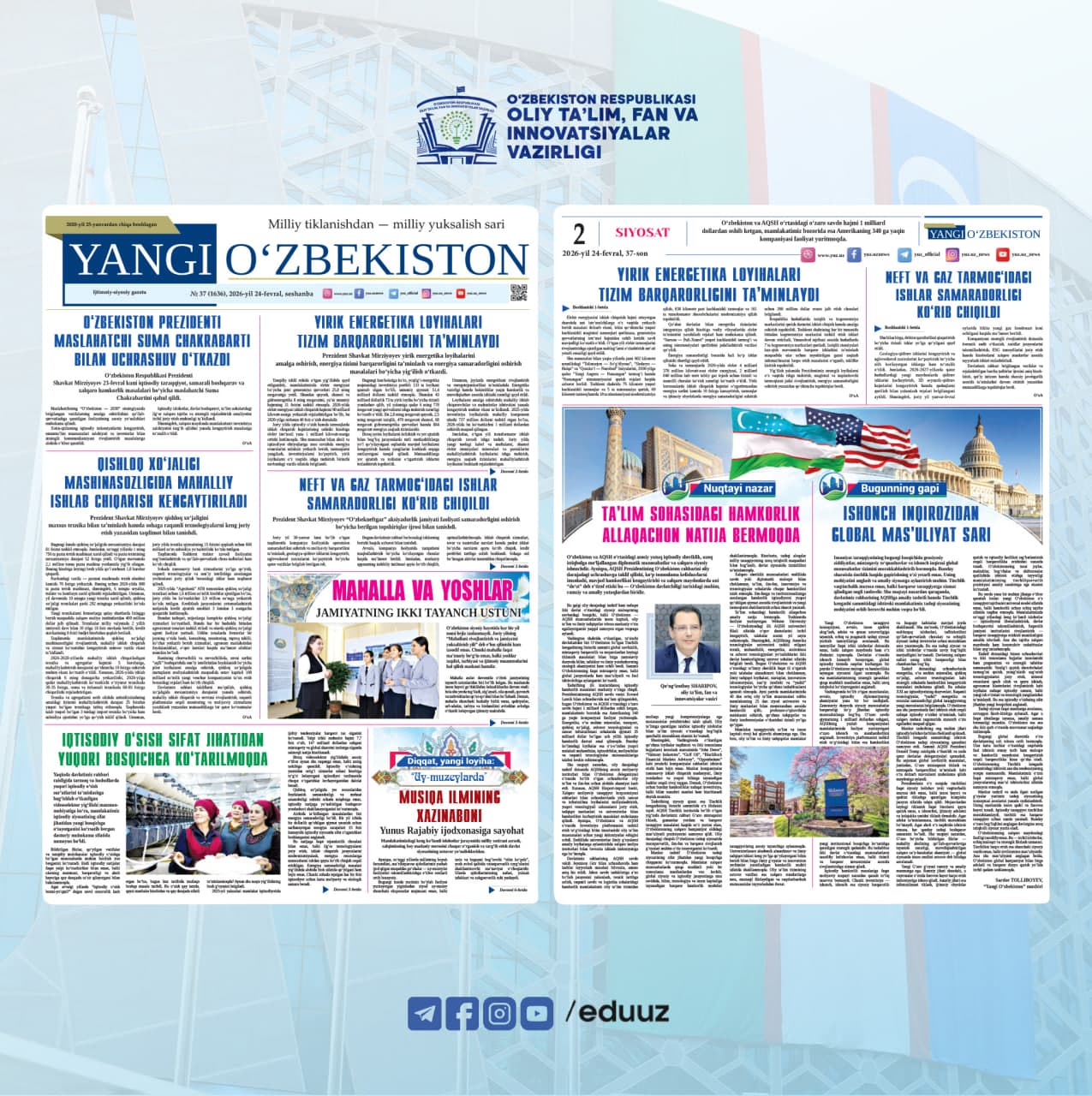
“America — a magical land.” For generations, this phrase symbolized a distant and powerful nation — like a star beyond reach. The United States represented scientific excellence, technological advancement, freedom, and opportunity. Studying or working there once seemed like an unattainable dream.
Today, however, the United States is no longer a legend. Legal pathways — education, employment, green card programs, and scientific initiatives — make engagement possible. From a state perspective, the real achievement lies not only in individual mobility but in strategic partnership, long-term diplomatic relations, and mutual political trust.
On February 18 of this year, President Shavkat Mirziyoyev paid a working visit to the United States at the invitation of President Donald Trump. The visit marked a new stage in bilateral relations, highlighting that human capital, higher education, and scientific research now occupy a central position in Uzbekistan–U.S. cooperation.
The first Peace Council Summit held in Washington, with Uzbekistan as one of its founding states, emphasized the strategic role of knowledge and science in global security and sustainable development. It demonstrated Uzbekistan’s growing role as an active and responsible participant in global affairs.
Economic cooperation became a key focus. Bilateral trade has exceeded $1 billion, with nearly 340 American companies operating in Uzbekistan. A three-year economic cooperation program worth $35 billion is being implemented in energy, critical minerals, transport, agriculture, IT, and industrial infrastructure. Such large-scale initiatives increase demand for highly qualified professionals.
Meetings with the U.S. Export-Import Bank and the U.S. International Development Finance Corporation created new opportunities for higher education institutions, including the establishment of a joint Investment Platform enabling universities to transform research into practical projects.
Educational cooperation is already producing tangible results. Webster University in Tashkent continues expanding its programs and student enrollment. The establishment of the American University of Technology strengthened collaboration in engineering, energy, architecture, and information technology.
More than 40 Uzbek higher education institutions cooperate with over 25 U.S. universities and research centers. Joint research, innovation labs, startups, artificial intelligence, and green technologies define the new stage of partnership.
Human capital development remains the decisive factor for national progress. Higher education must prepare independent, competitive professionals aligned with international standards.
Qo‘ng‘irotboy SHARIPOV
Minister of Higher Education, Science and Innovation
Republic of Uzbekistan