February 9 — Birth Anniversary of Poet, Thinker, and Statesman Alisher Navoi
2026-02-09 10:00:00 / News
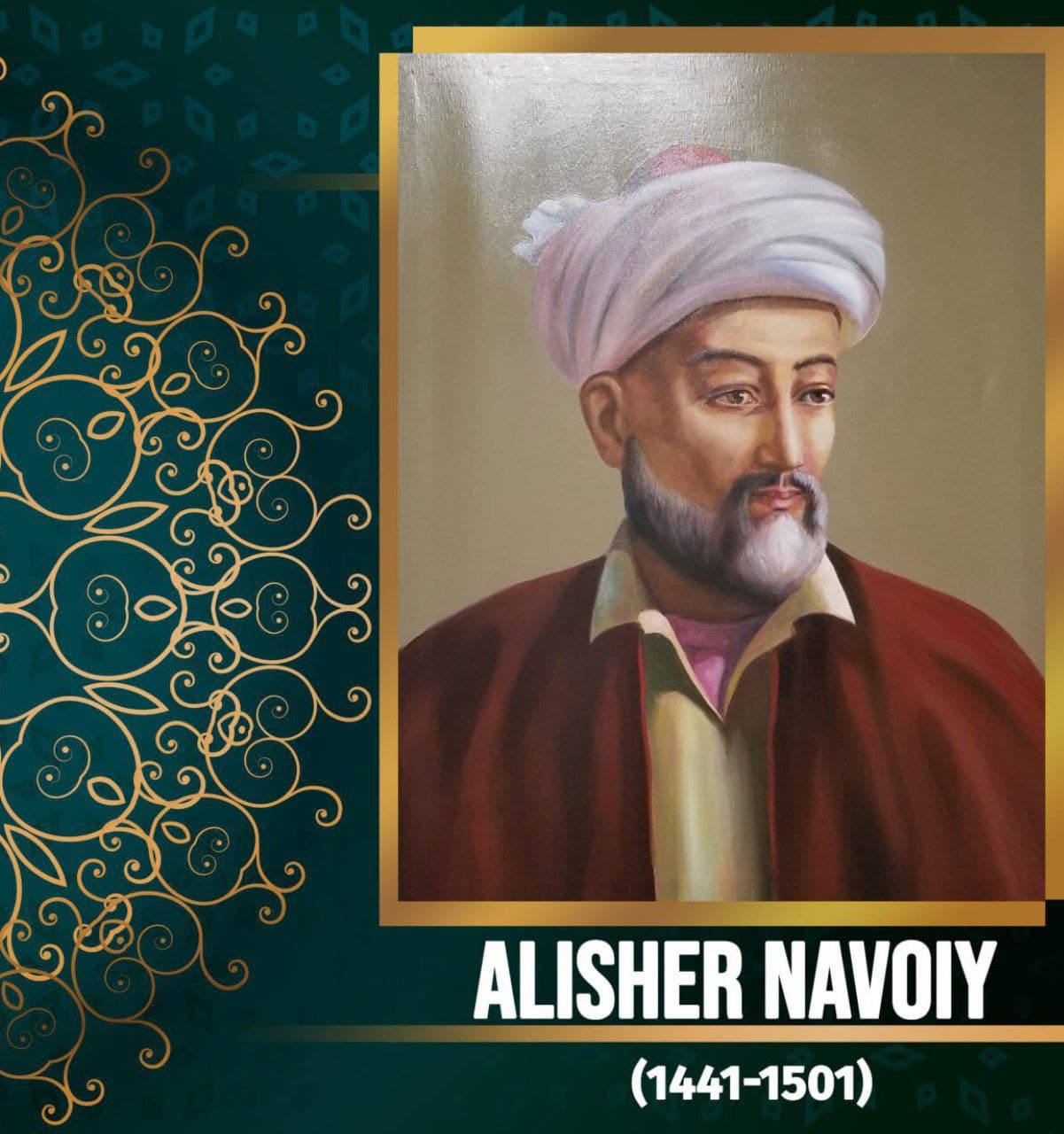
From childhood, Navoi was a close friend of Husayn Bayqara, the future ruler of Khorasan (Transoxiana). He began writing poetry at the age of 10–12. According to historian Khondamir, the famous poet Lutfiy met the young Navoi and highly praised his poetic talent.
Throughout his life, Navoi traveled across the Muslim East, met prominent figures of his time, and refined his literary skills. By 1464–1465, his admirers had already compiled his first poetry collection (divan), indicating his early fame. Due to internal conflicts among the Timurids, he was forced to live away from his native Herat until 1469.
In 1469, Husayn Bayqara captured Herat and became ruler of Khorasan, marking a new stage in Navoi’s life. He became actively involved in politics, was appointed Keeper of the State Seal, and later served as vizier. Through his position, he contributed significantly to cultural and scientific development.
Navoi financed the construction of numerous public works, including madrasas, mosques, inns, bathhouses, bridges, and Sufi lodges. However, court intrigues led to his dismissal, and in 1487 he was sent to govern Astrabad for two years. After returning, he declined further official posts but remained a trusted advisor to the ruler.
Later, Navoi devoted himself primarily to literature. Most of his major works were created during this period. Living during the final years of Timurid rule, his writings reflect the social and political concerns of his time. Between 1490 and 1501, he produced his most refined philosophical and scholarly works.
Navoi’s literary output was immense. His six epic poems total about 60,000 lines. Between 1483 and 1485, he composed his famous “Khamsa,” a cycle of five epics: “Hayrat ul-Abror,” “Farhad and Shirin,” “Layli and Majnun,” “Sab’ai Sayyar,” and “Saddi Iskandari.”
His “Khamsa” was the first major work of this genre in a Turkic language, demonstrating that such grand literature could be created in Turkic just as in Persian.
Navoi wrote in many literary genres and developed a unique style. His version of “Layli and Majnun” explores both earthly and mystical love. Sufi themes also appear in his other epics.
His works addressing rulers and governance conveyed ideas about the transience of power and the responsibilities of leadership. His “Khamsa” received high praise from contemporaries, including the renowned scholar Abd al-Rahman Jami, and became widely influential across Central Asia.
Navoi also wrote extensively in Persian, compiling his works in “Divan-i Fani,” containing about 3,150 ghazals. He authored scientific, linguistic, historical, and religious works, including “Muhakamat al-Lughatayn,” “Mezon al-Avzan,” and “Nasaim al-Muhabbat.”
His final major work, “Mahbub ul-Qulub” (1500), reflects his mature social and political views.
Throughout his life, Navoi combined literature with public service, contributing greatly to the social, economic, and cultural development of his country while promoting peace and harmony.
Navoi’s legacy is vast and diverse. His works have influenced Uzbek literature from the 15th century to the present day and remain a lasting source of inspiration.