President of Uzbekistan Proposes New Initiatives to Strengthen Cooperation Between Central Asia and Japan
2025-12-20 17:10:00 / News


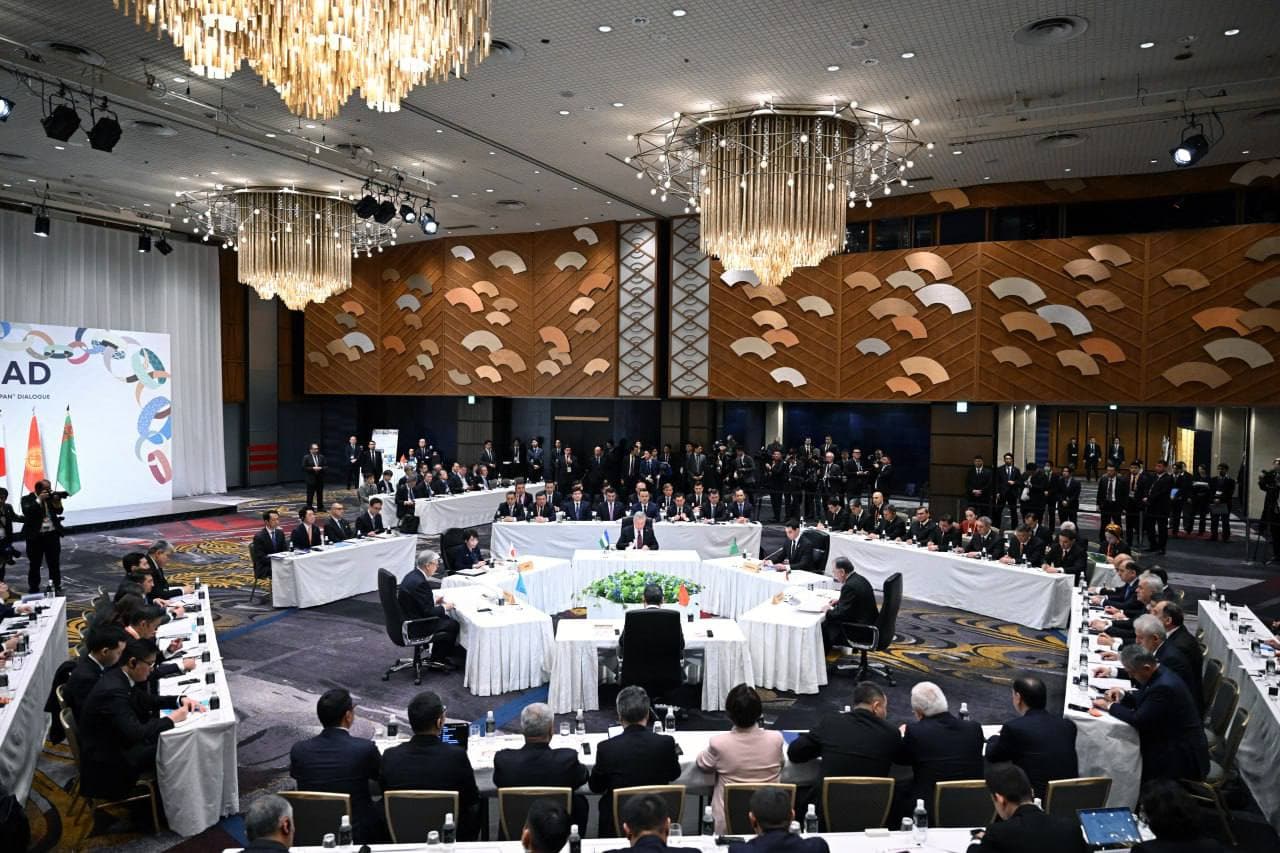


The event, chaired by the Prime Minister of Japan, Sanae Takaichi, was also attended by President Kassym-Jomart Tokayev of Kazakhstan, President Sadyr Japarov of the Kyrgyz Republic, President Emomali Rahmon of Tajikistan, and President Serdar Berdimuhamedov of Turkmenistan.
In line with the agenda, the leaders discussed prospects for expanding mutually beneficial cooperation in priority areas such as the "green economy," sustainable development, regional connectivity, and human resource development.
In his speech, the Head of State noted that 20 years ago, Japan was the first to initiate the "Central Asia Plus" dialogue format. Deep-rooted trade and cultural ties dating back to the Great Silk Road, along with shared traditions and family values, serve as a solid foundation for multifaceted cooperation.
President Mirziyoyev emphasized that Central Asian countries are interested in Japan’s broader and more active involvement in the region's development. The region's rich natural resources, its position at the crossroads of global transport routes, and the rapid growth of its economies create favorable conditions for collaboration.
Key initiatives proposed by Shavkat Mirziyoyev:
-
Biennial Summits: A proposal to hold summits at the head-of-state level every two years, with an offer to host the next meeting in Uzbekistan.
-
"Central Asia – Japan 2040" Strategy: Developing a comprehensive strategy to assist sustainable development and integrate the region further into global economic processes.
-
Expert Forum: Establishing a forum involving leading think tanks, with the inaugural meeting to be held in Tashkent next year.
-
Investment Fund: Creating a fund for infrastructure and industrial development, coupled with a regional platform for technology transfer and Japanese industrial parks.
-
Digital Hub: Establishing a "Central Asia – Japan" Digital Hub to cooperate on AI, the Internet of Things (IoT), and cybersecurity.
-
Transport and Green Energy: Attracting Japanese expertise and investment for high-speed rail, digitalization of transport corridors, and green energy projects. He proposed establishing a Regional Training Center for Renewable Energy in Tashkent.
-
Ecology and Seismic Safety: Launching joint programs for air quality improvement and climate action. Given Japan's expertise, he proposed opening a Regional Training Center in Tashkent to train engineers and rescue services in Japanese seismic safety standards.
-
Education and Youth: Hosting the first meeting of education ministers and a university rectors' forum in Uzbekistan next year, alongside a regional program for youth development.
Regarding international policy, the President highlighted the shared vision for a peaceful and stable Afghanistan, highly praising Japan’s consistent role as a leading donor in supporting the Afghan people.
At the conclusion of the summit, the Tokyo Declaration was adopted.