
Water security and regional trust: Uzbekistan’s practical initiatives
2026-10-15 10:05:00 / News
On 15 October 2026, Baku will host the Seventh Summit of the Conference on Interaction and Confidence-Building Measures in Asia (CICA). The Conference is a major multilateral platform that promotes dialogue, mutual confidence, security and sustainable development among Asian countries. Ahead of the Summit, water security is increasingly being viewed not merely as an issue of natural resource management, but as a strategic area for strengthening trust and practical cooperation among states.
Water: A Strategic Resource Requiring Trust
Rivers do not follow administrative borders. Water originating in mountainous areas often flows through several countries, while decisions taken upstream can affect communities, agriculture, energy systems and ecosystems downstream. Effective transboundary water cooperation therefore requires accurate accounting, information exchange, coordinated forecasting and due consideration of the interests of all parties.
This is particularly important for Central Asia. The Amu Darya and Syr Darya basins closely link the region’s water, food and energy security. Climate change is further exacerbating existing challenges. At the Samarkand International Climate Forum on 4 April 2025, President Shavkat Mirziyoyev noted that declining flows in the Amu Darya and Syr Darya could expose the countries of Central Asia to severe water scarcity by 2040.
Uzbekistan’s Approach: Making Water a Driver of Cooperation
In recent years, Uzbekistan has approached water not only as a matter of national resource management, but also as a key area of regional cooperation. The essence of this policy is to make water a factor of mutually beneficial cooperation and sustainable development rather than a source of disagreement.
At the Sixth CICA Summit in Astana in 2022, President Shavkat Mirziyoyev proposed consolidating efforts to address environmental protection and climate change, as well as establishing regular expert consultations on greening countries and supporting vulnerable ecosystems within the framework of the “Green Asia” concept. This approach remains consistent with the broader objective of addressing environmental and water challenges across Asia through cooperation.
Another important initiative advanced by Uzbekistan is the proposal to declare 2026–2036 the Decade of Practical Action for the Rational Use of Water in Central Asia. Uzbekistan has also proposed engaging Afghanistan in regional dialogue on the joint use of water resources in the Amu Darya basin, establishing a Regional Water Management Competence Center at the National Research University “Tashkent Institute of Irrigation and Agricultural Mechanization Engineers,” and organizing Water Week on a regular basis in the region.
The Aral Sea Experience: A Lesson in Shared Responsibility
Uzbekistan has compelling historical reasons to place water security high on the international agenda. The desiccation of the Aral Sea demonstrated the severe environmental and social consequences that can result when the long-term implications of water use are not adequately taken into account. This is why Uzbekistan’s position is based on the principles of shared responsibility, coordinated action and mutual trust rather than unilateral or short-term approaches to water resources.
In April 2026, Uzbekistan was designated to chair the International Fund for Saving the Aral Sea for 2027–2029. The President has identified a number of priorities, including strengthening the Fund’s institutional and legal framework, advancing the water, energy and environmental agenda, involving Afghanistan in regional cooperation, promoting a stronger water culture, and expanding cooperation with international financial institutions. These priorities are aimed at making transboundary water relations more open and predictable.
Accurate Accounting and Digitalization: The Foundation of Practical Trust
Trust in the water sector begins with reliable data. Without accurate information on how much water is available in rivers, reservoirs and canals, how much is delivered to users and how much is lost along the way, both effective management and equitable allocation become more difficult. For this reason, the digitalization of water accounting has become one of the priorities of Uzbekistan’s reforms.
Ten information systems have been developed across the sector and integrated into a Unified Water Management Platform. To strengthen the accounting and control of water resources, 13,305 “Smart Water” devices have been installed, together with 12,809 “Diver” devices in reclamation monitoring wells. In addition, 1,914 pumping stations have been equipped with water-metering devices, while 108 major water management facilities have been automated. Online systems for monitoring water levels and volumes are also being introduced at large reservoirs.
The main purpose of this digitalization is straightforward: to provide timely and accurate answers to three fundamental questions – where the water came from, where it was delivered, and how much was lost.
Water Conservation: From National Reform to Regional Impact
Uzbekistan faces particularly challenging water conditions: 80–85 per cent of the water resources used in the country originate outside its territory. Reducing losses within domestic networks, expanding the use of water-saving technologies and modernizing infrastructure are therefore not only economic priorities, but also matters of strategic importance.
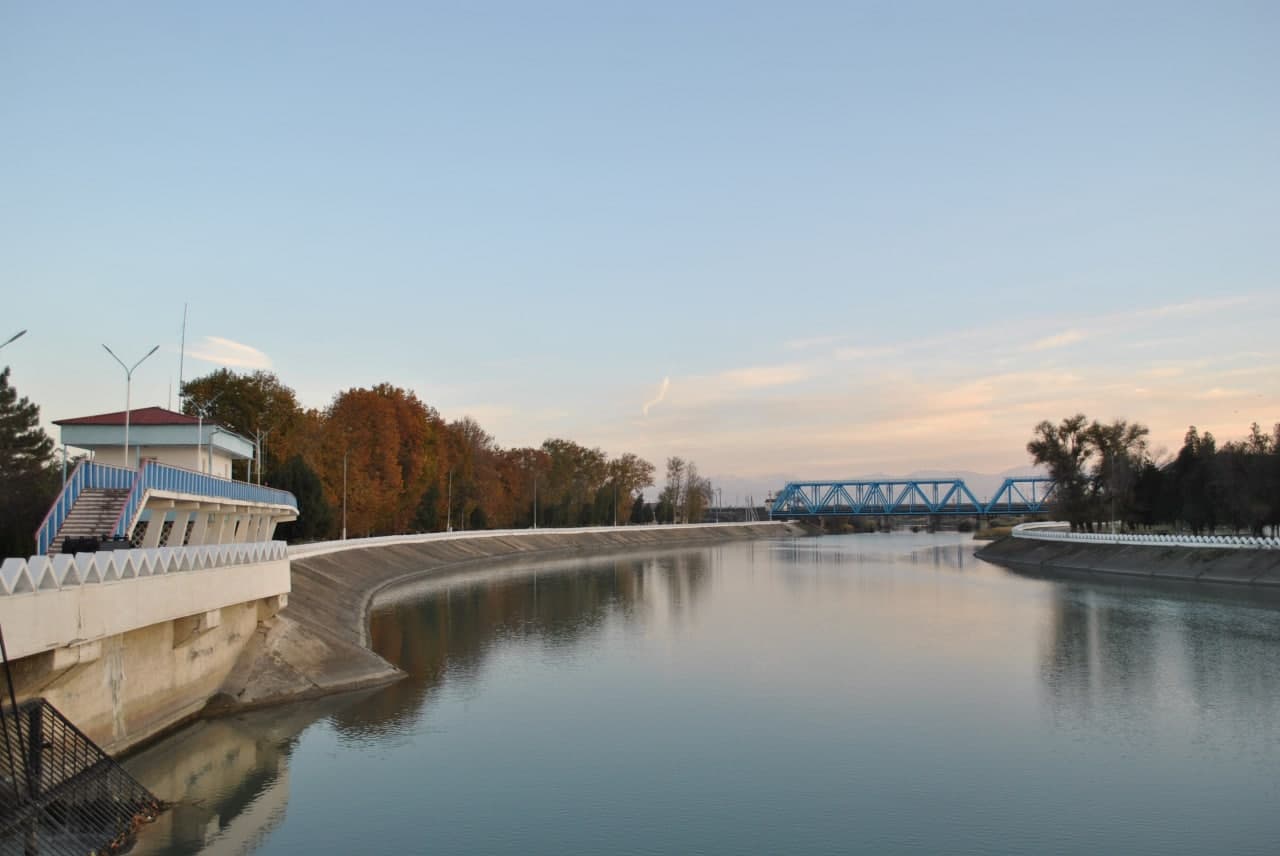
In 2017, water-saving technologies were used on just 28,000 hectares. By the end of 2025, their coverage had expanded to 2.6 million hectares, or nearly 60 per cent of irrigated land. Since the beginning of 2026, water-saving technologies have been introduced on an additional 640,000 hectares. At the same time, greater attention is being paid to reducing losses from the source to the end user through canal lining, the conversion of open networks to closed-pipe systems where appropriate, and the reconstruction of hydraulic structures.
In 2026, 4.1 trillion soums were allocated from the state budget for the construction and reconstruction of irrigation and land-reclamation facilities. During the year to date, 824 kilometres of canals have been lined with concrete. These figures are important, but they are not an end in themselves. The real measure of reform is the volume of water saved, the reliability of water supply, and the efficiency achieved from every cubic metre of water.
The Baku Summit: A New Agenda for Trust
The central purpose of CICA is to strengthen dialogue and confidence among its participating states. The 2002 Almaty Act set out the vision of a common and indivisible security space in Asia based on peace, freedom and prosperity. Today, CICA’s institutional development is entering a new stage, with a draft Charter aimed at strengthening the organization’s legal status scheduled for consideration at the Baku Summit.
The priorities of Azerbaijan’s chairmanship – connectivity, digitalization and sustainable growth across Asia – are closely linked to water security. Effective water management requires digital accounting and monitoring, while adaptation to climate change depends on information exchange, early-warning systems and joint forecasting mechanisms.
Seen in this context, Uzbekistan’s initiatives – cooperation under the “Green Asia” concept, the Decade of Practical Action for the Rational Use of Water, the engagement of Afghanistan in regional dialogue, regular Water Week events, professional training, digital water accounting and the broad introduction of water-saving technologies – all serve a common purpose: strengthening trust through practical cooperation.
In the twenty-first century, water security is determined not only by the volume of resources available to each country, but also by how wisely those resources are managed, how effectively losses are reduced, how reliable the underlying data are, and how well countries are able to respond jointly to shared risks. The Baku Summit will provide an important platform for discussing approaches aimed at making water a source of dialogue, efficiency and partnership rather than competition.
Trust in the water sector also provides a strong foundation for food security, ecological balance and economic stability. Therefore, open dialogue on water, accurate accounting, scientific cooperation and the wider use of modern technologies are becoming integral elements of the broader architecture of regional security.
Zokir Ishpulatov,
First Deputy Minister of Water Resources of the Republic of Uzbekistan –
Director of the Agency for the Operation of Water Management Facilities