
NEW SOCIAL PROJECT: RAINWATER HARVESTING AND WATER-SAVING IRRIGATION TECHNOLOGIES TO BE INTRODUCED
2026-09-20 20:30:00 / News
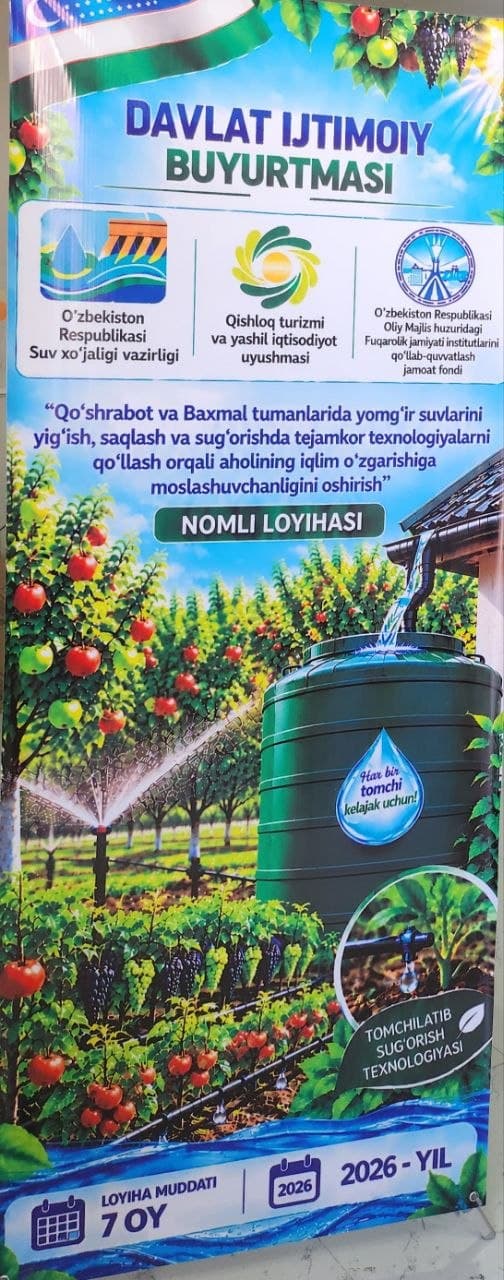
A tripartite agreement has been signed between the Public Fund for the Support of Non-Governmental Non-Profit Organizations and Other Civil Society Institutions under the Oliy Majlis of the Republic of Uzbekistan, the Ministry of Water Resources, and the Rural Tourism and Green Economy Association to implement the project titled “Enhancing the Population’s Resilience to Climate Change through Rainwater Harvesting and Storage and the Use of Water-Saving Irrigation Technologies in Kushrabat and Bakhmal Districts.”
A total of UZS 600 million has been allocated for the project, which is scheduled to be implemented over a period of seven months.
The project was selected as a winner by a decision of the Parliamentary Commission dated August 19, 2026. The Ministry of Water Resources serves as the state customer, while the Rural Tourism and Green Economy Association is responsible for implementing the social order.
The selection of Bakhmal and Kushrabat districts for the project is well justified. Both areas receive relatively high levels of precipitation, while at the same time experiencing shortages of irrigation water for household plots during the summer months. According to data from the Bakhmal meteorological station, average annual precipitation over the long term is 441 millimetres in Bakhmal and 389 millimetres in Kushrabat.
In particular, household plots in the Oyqor mahalla of Bakhmal District receive water from the Tangatopdisoy stream. From June onwards, the streamflow gradually decreases throughout the summer. A similar situation is observed in the Oqtepasoy stream, which supplies water to household plots in the Qiyqim mahalla of Kushrabat District.
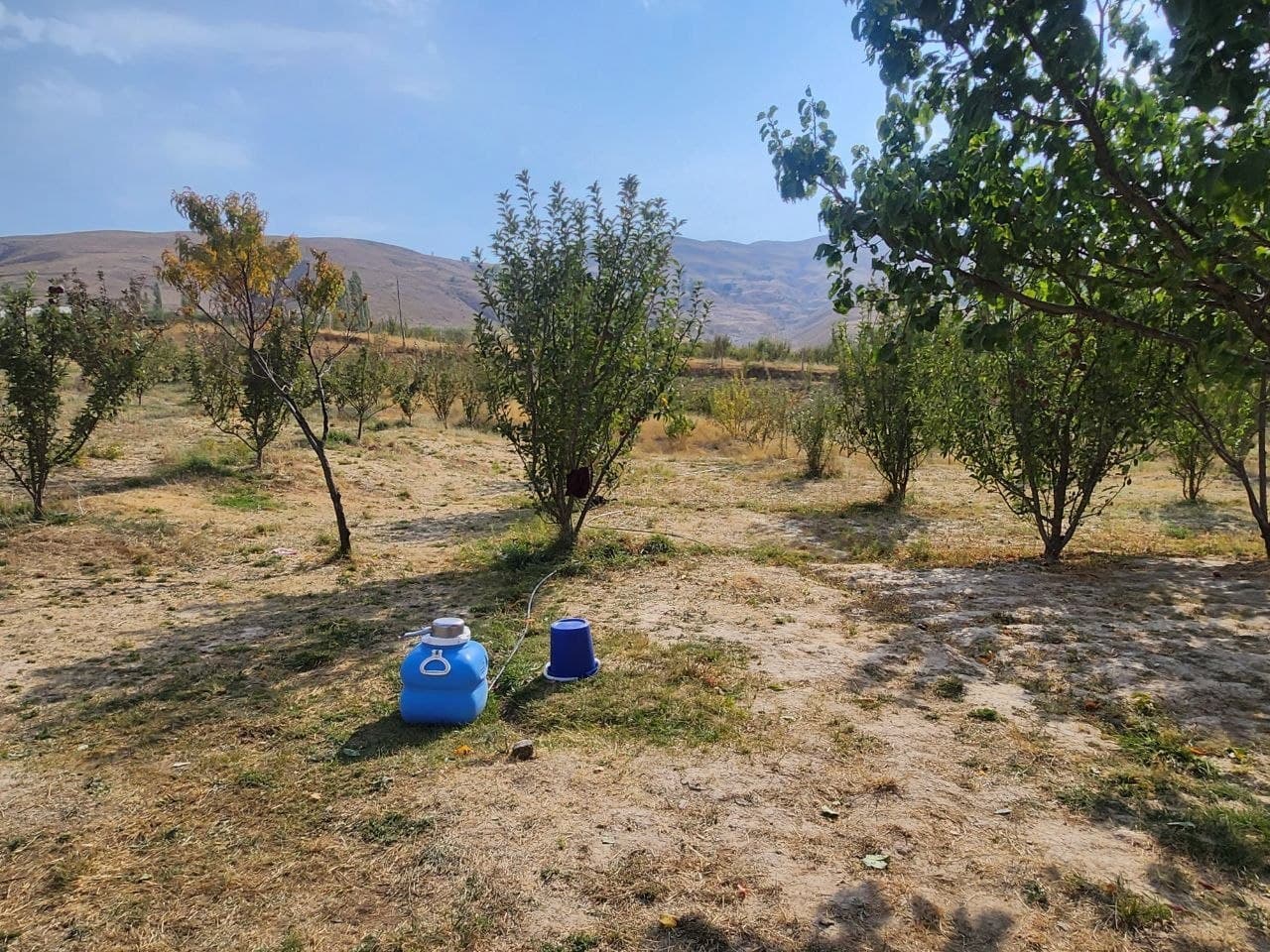
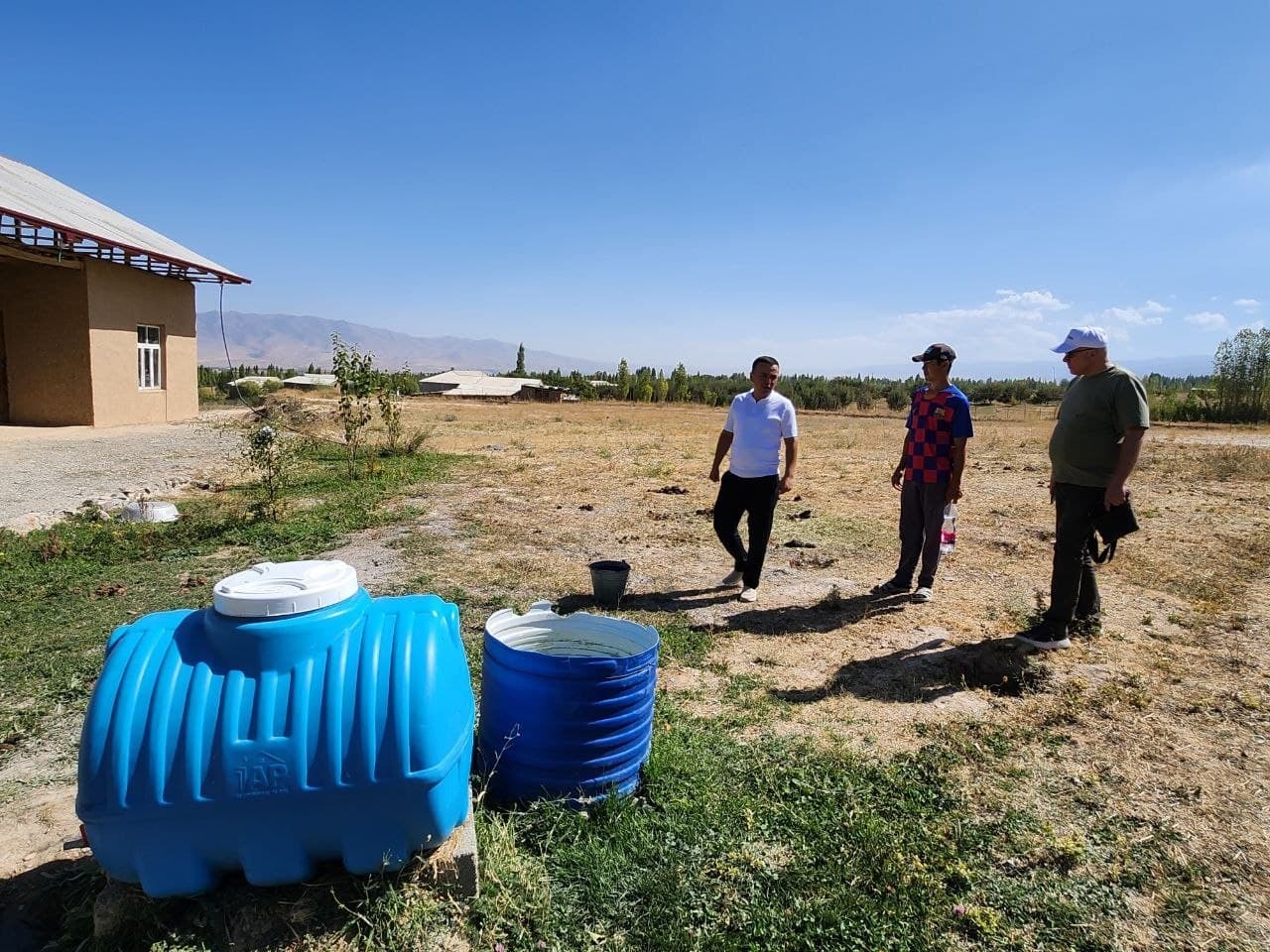
The project offers a simple and practical solution: harvesting rainwater during periods of precipitation, storing it in special tanks, and using it to irrigate household crops with water-saving technologies during periods of water scarcity.
At the initial stage, eight families in need from the Oyqor mahalla in Bakhmal District and eight families from the Qiyqim mahalla in Kushrabat District — 16 families in total — will be selected to participate in the project.
Their homes will be equipped with rainwater harvesting and storage systems, as well as water-saving irrigation systems for household crops. Participating households will be selected by the district Water Supply Service state institutions in cooperation with the relevant mahalla citizens’ assemblies.
According to estimates, a household with an average roof area of 100 square metres can collect up to 44 tonnes of rainwater in Bakhmal and 38 tonnes in Kushrabat annually. This amount could cover approximately 45–50 percent of the water required for drip irrigation of fruit trees on a 0.1-hectare household plot, 30–35 percent of the water needed for drip irrigation of vegetable crops, and 25–30 percent of the amount required for sprinkler irrigation.
If each household collects and uses an average of 40 tonnes of rainwater per year, the 16 households covered by the project could collectively harvest up to 640 tonnes of rainwater annually and use it to meet the irrigation needs of their household plots.
This is expected not only to reduce pressure on existing water sources, but also to help households make more efficient use of their land and generate additional income.
The initiative is also in line with the objectives set out in Presidential Decree No. PF-22 of February 16, 2026. Paragraph 208 of the State Programme provides for measures to improve the efficient use of household plots by promoting a culture of water conservation, raising public awareness of the benefits of modern water-saving irrigation technologies, and establishing demonstration sites.
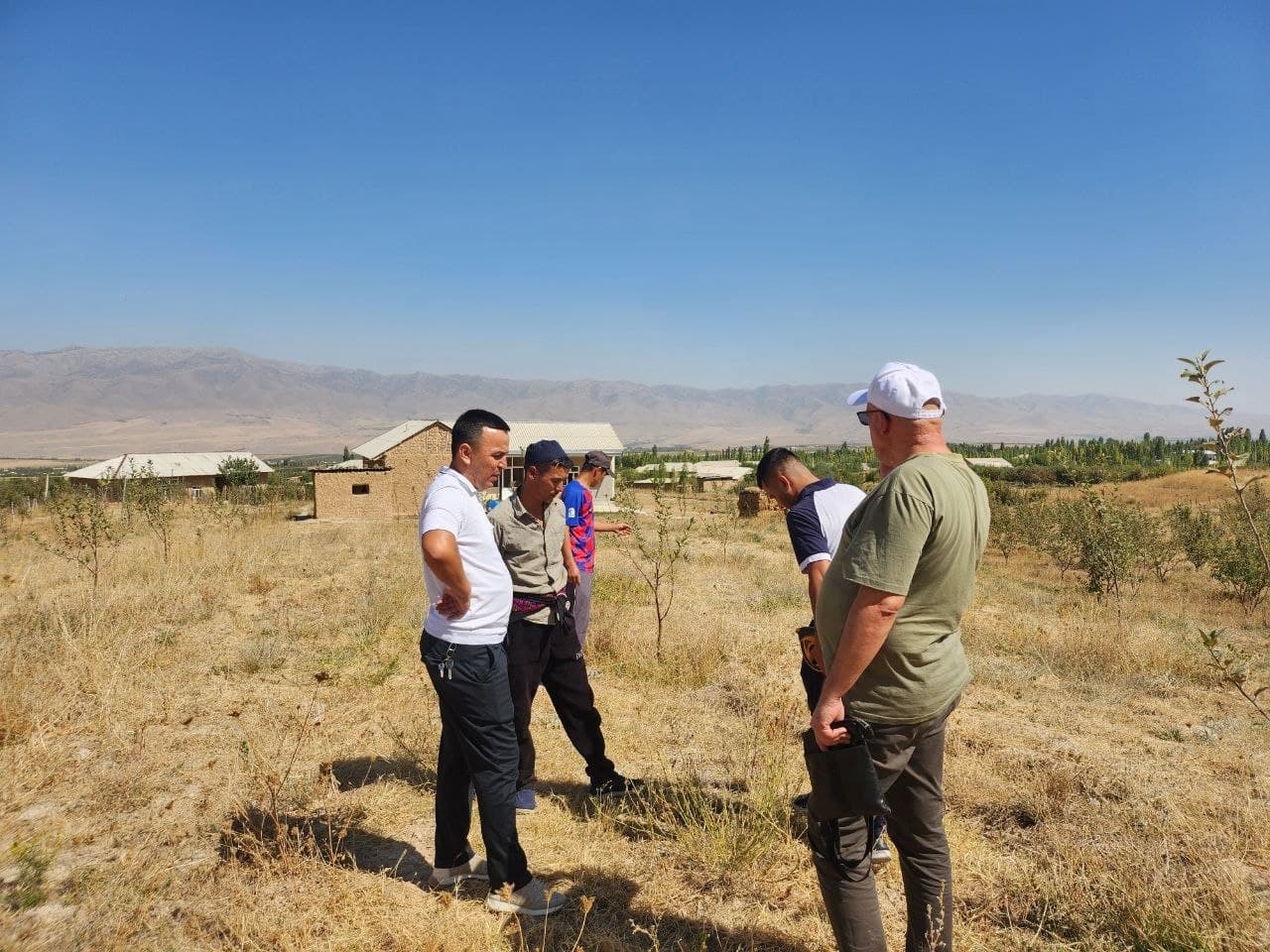
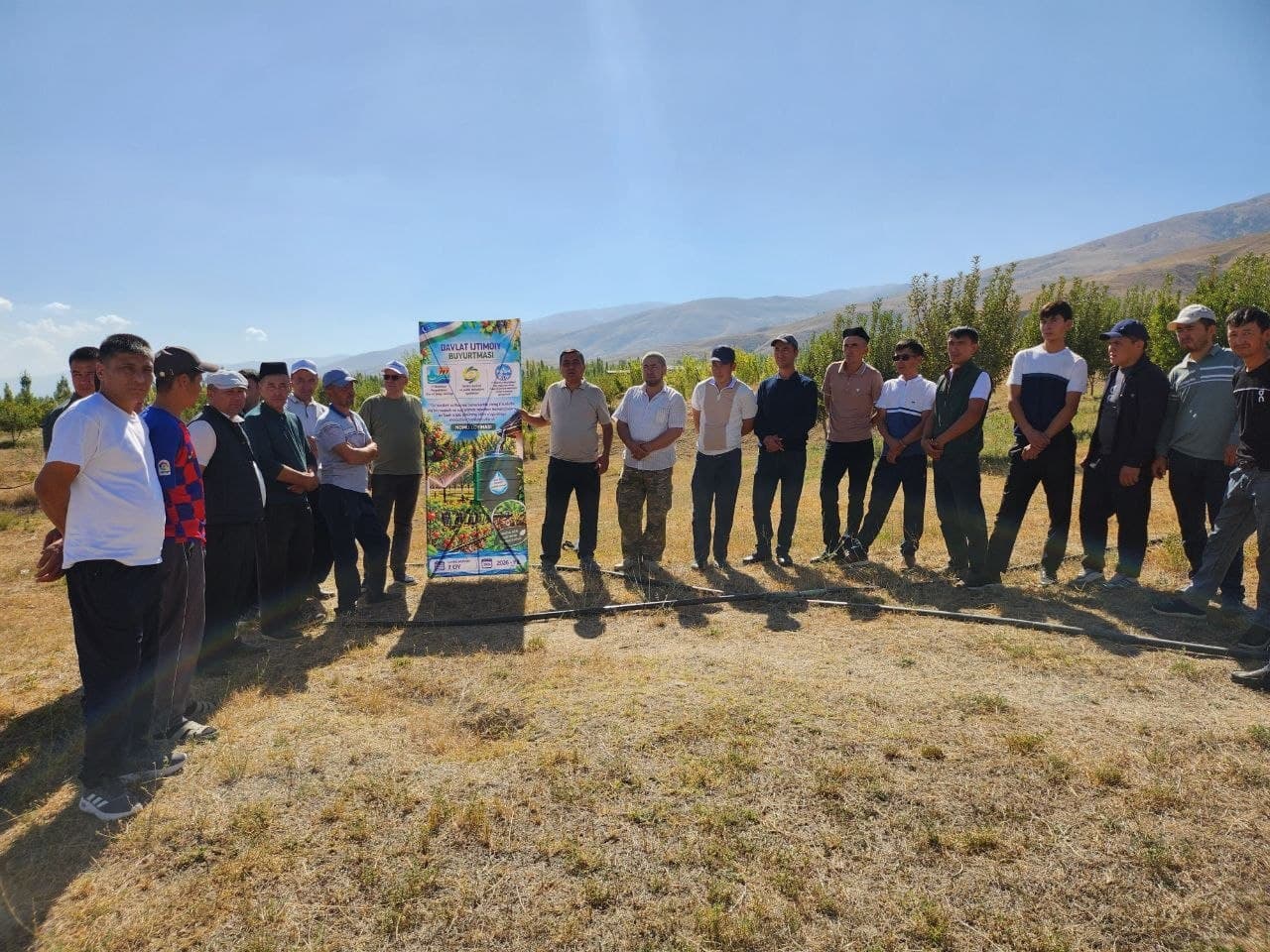
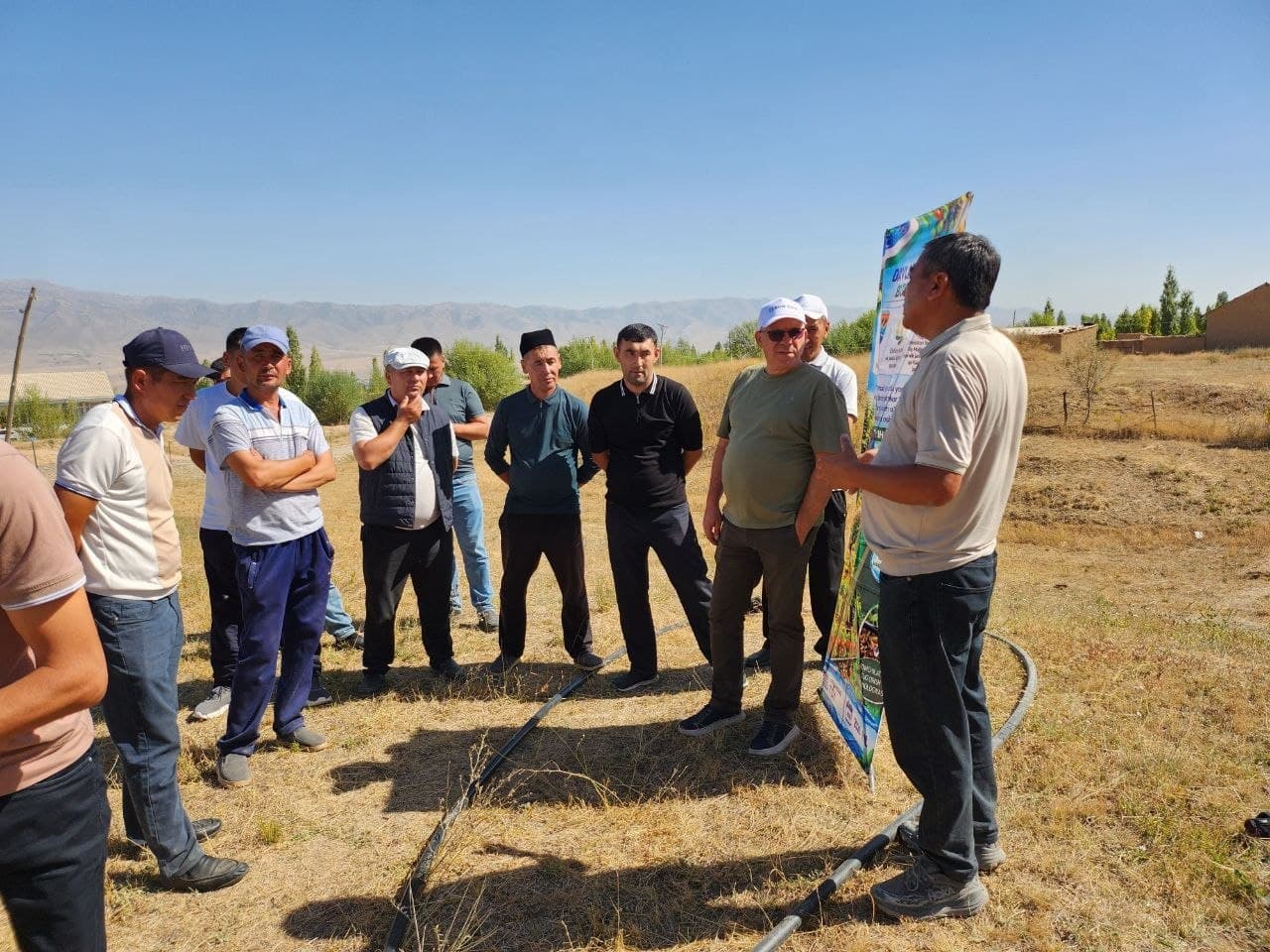
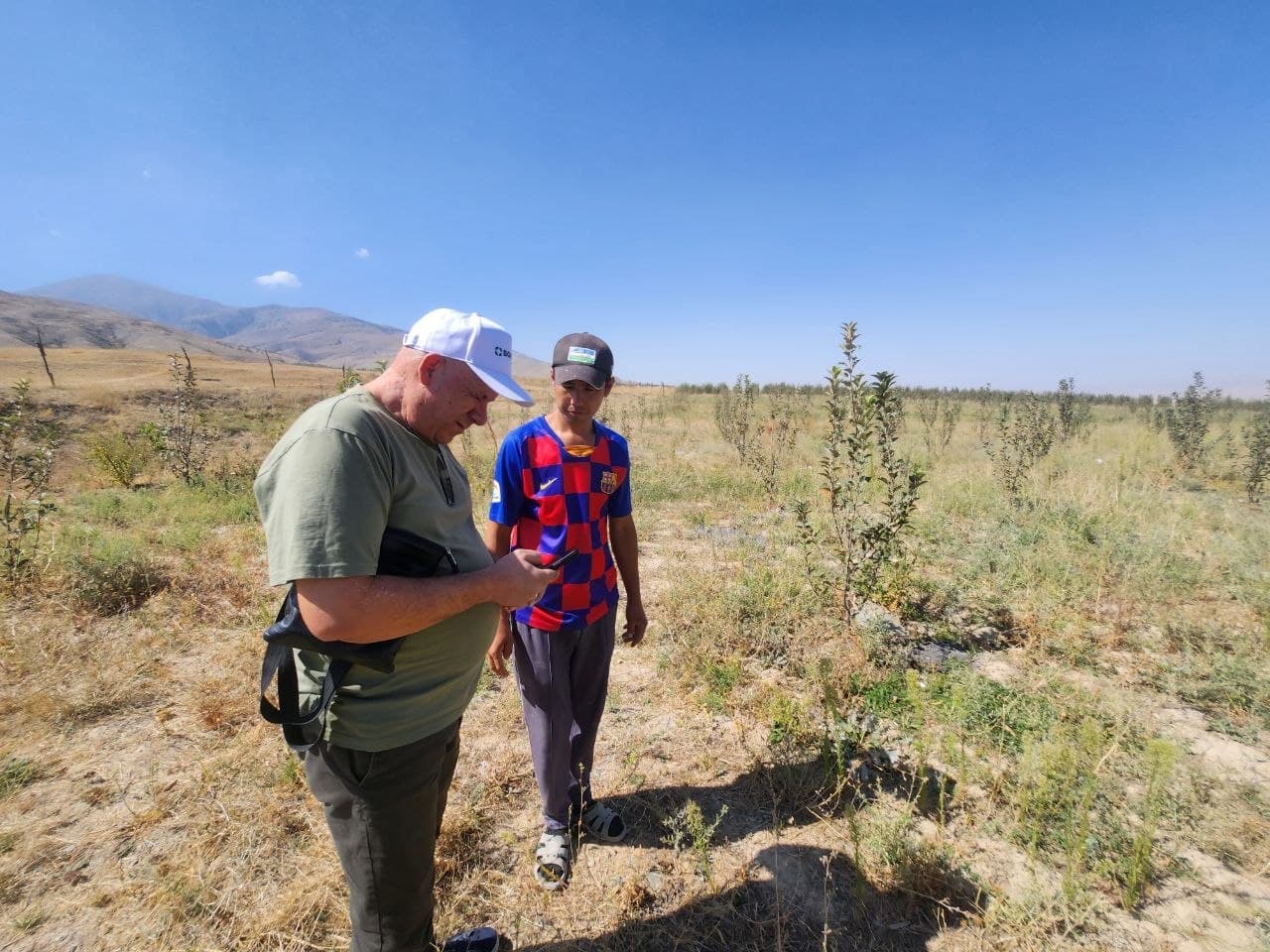
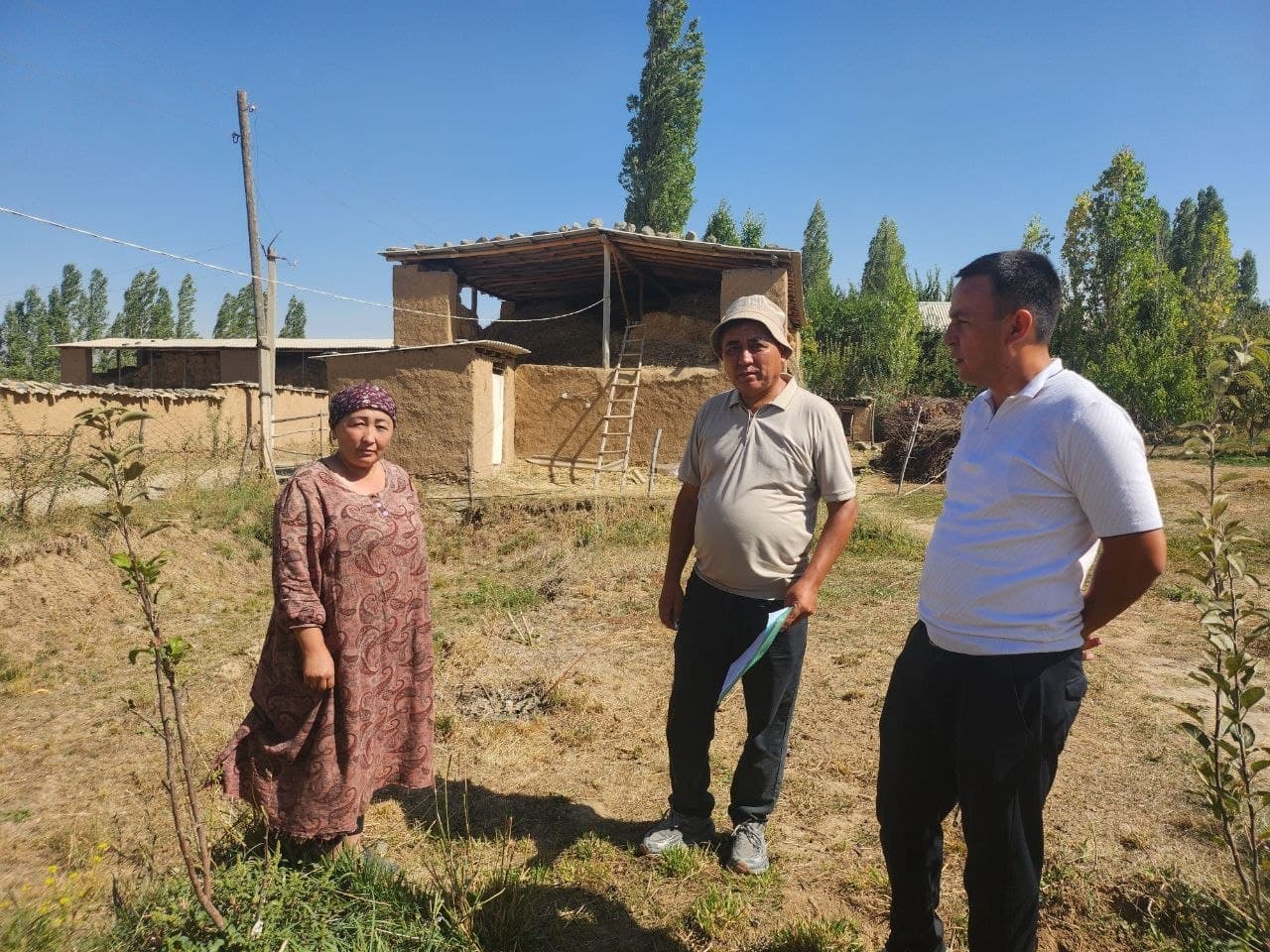
As part of these efforts, a practical seminar was held in the Oyqor mahalla of Bakhmal District to explain the purpose and significance of the state social order project.
The seminar brought together representatives of the Rural Tourism and Green Economy Association, water management specialists, experts from the Bog‘bon in vitro laboratory, and local residents.
Participants were informed that the project will establish practical demonstration sites showcasing how rainwater can be treated not simply as a natural resource that flows away unused, but as an additional source of water that can be harvested, stored, and used efficiently when needed.
Information Service of the Ministry of Water Resources of the Republic of Uzbekistan