
Uzbekistan–South Korea: New Horizons in Water Cooperation
2026-09-14 10:05:00 / News
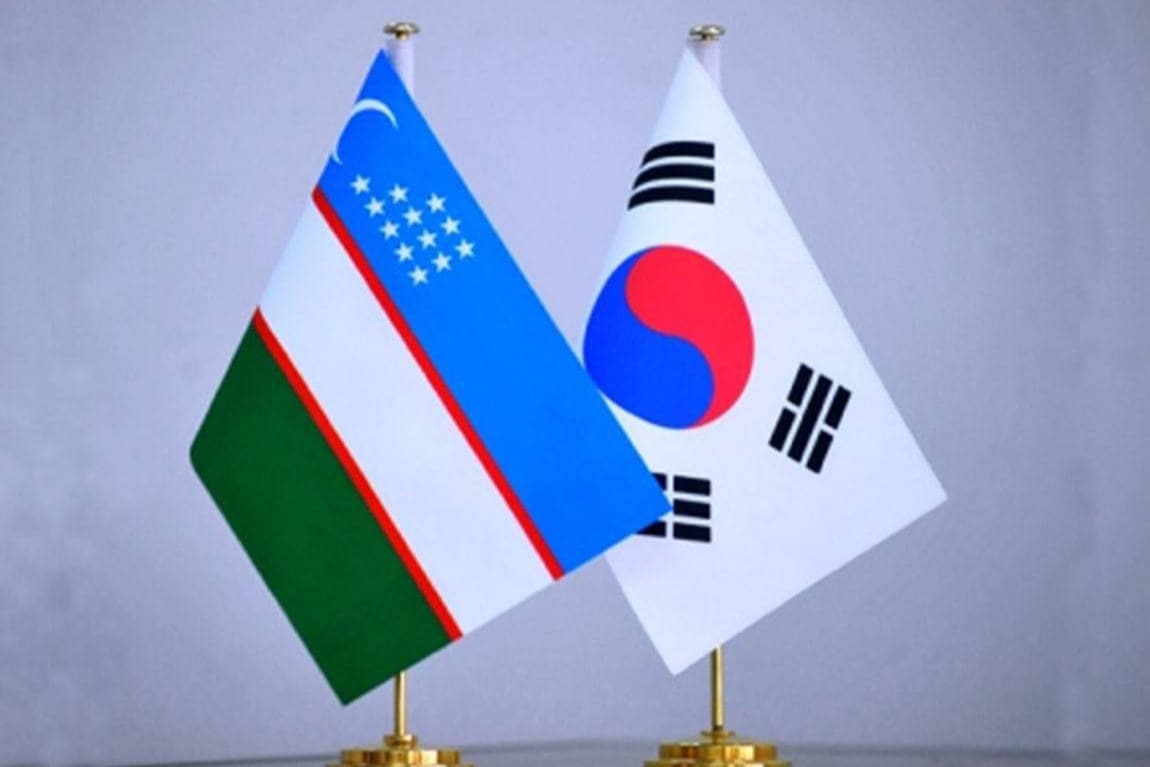
In this context, the consistently developing cooperation between Uzbekistan and South Korea in the water management sector is becoming one of the most promising areas of relations between the two countries.
The exchange of delegations, mutual visits, expert dialogues, joint projects, and professional development and training programs play an important role in this.
In particular, in 2025, a delegation led by Yoon Seok-dae, CEO of the Korea Water Resources Corporation (K-Water) and Secretary General of the Asia Water Council (AWC), visited our country. On May 25–26, 2026, within the framework of the Fourth High-Level International Conference on "Water for Sustainable Development" held in Dushanbe, Republic of Tajikistan, the Minister of Water Resources of the Republic of Uzbekistan, Shavkat Khamraev, met with Ms. Kim Hyo-eun, Special Envoy for Climate and Environment of the President of South Korea. During the talks, they discussed the introduction of innovative approaches to the water sector and the intensification of practical experience exchange.
South Korea's K-Water is a state-owned corporation with extensive experience in integrated water resource management, the construction and modernization of reservoirs and canals, supplying water to the public and industry, conducting scientific research, and training qualified personnel. Representatives from the Ministry of Water Resources of the Republic of Uzbekistan have visited K-Water Corporation on several occasions to study the Korean experience.
The Asia Water Council was founded in 2015 at the initiative of South Korea. Today, the Council, which brings together more than 170 members from 26 countries, serves to develop water-saving technologies and support scientific research in the field of water management. Uzbekistan joined this council in 2025.
Regarding the practical outcomes of the water management cooperation between Uzbekistan and South Korea, it is worth highlighting the "Master Plan and Pilot Project for Integrated Water Resources Management in Uzbekistan based on Information and Communication Technologies," which was implemented through a grant from the Korea International Cooperation Agency (KOICA).
As part of a project implemented from 2016 to 2018, "Smart Water" devices, which enable online monitoring of water flow, were installed at 61 major water management facilities, along with 15 small weather stations and surveillance cameras. Additionally, a Water Resources Monitoring Center was established. This has expanded the capacity for real-time monitoring of water movement and volume, assessing the situation at facilities, and making management decisions based on precise data.
The next significant area of cooperation involves implementing the "Development of the Master Plan for Agricultural Water in Uzbekistan" project with the Korea Rural Community Corporation (KRC) under Korea's Official Development Assistance (ODA) program.
This grant project, with a total value of US$8 million, scheduled to be implemented over 48 months, from 2027 to 2030. Its primary objective is to develop a Master Plan for the sustainable use and integrated management of water resources in agriculture, as well as to introduce modern water management solutions in the Boyovut district of the Sirdaryo region.
The pilot project involves concreting irrigation networks in the Boyovut district, introducing digital devices for water measurement and management processes, and automating hydraulic structures. The modern solutions implemented here can be widely applied to other regions of our country in the future.
Additionally, training sessions, seminars, and educational courses will be organized in Uzbekistan and South Korea to enhance the professional capacity of industry specialists.
As part of the project preparations, the Korean delegation conducted field research in Uzbekistan in August and October 2023. The Ministry's proposals for the concreting, digitalization, and automation of canals in the Boyovut district were studied and approved by the Korean side. The project was approved by the internal commission of the Ministry of Agriculture, Food and Rural Affairs of the Republic of Korea, and the allocation of an $8 million grant under the ODA program was approved.
Today, effective water management requires the precise accounting of every cubic meter. How much water is available at the source? How much enters the canal? How much is lost along the way, and how much ultimately reaches the consumer?—monitoring this data in real time is a fundamental requirement of modern management.
From this perspective, one of the most important prospects of the partnership between Uzbekistan and South Korea is the transition from installing individual devices to creating a unified digital water ecosystem.
In the future, it is advisable to integrate data from reservoirs, hydro-units, canals, pumping stations, hydrological monitoring stations (hydroposts), and reclamation observation wells onto a single platform. Using artificial intelligence, it will be possible to forecast water demand, predict changes in water flow, and implement automatic warning systems for malfunctions or excessive losses.
However, even the most modern equipment and software will not yield the expected results without a qualified specialist to operate them. Therefore, human capital must be at the center of the Uzbekistan-South Korea water partnership.
In this regard, joint seminars and professional development programs are regularly organized. For instance, from July 20-24, 2026, an international training seminar was held in the Republic of Korea on integrated water resource management, reducing losses in water supply systems, wastewater treatment and reuse, and the introduction of modern digital technologies in water management.
Specialists from the Center for Digitalization and Monitoring of Water Management and the Central Dispatch Department participated in the training program.
During the seminar, participants studied South Korea's experience in the rapid collection, processing, and analysis of data for water resource management, the remote monitoring of water facility operations, and making management decisions based on digital data.
Participants were shown the potential of using technologies based on Digital Twin technologies, artificial intelligence, automated monitoring, and data analysis in the water resource management process.
The Uzbekistan-South Korea water cooperation is not limited to just the exchange of technologies. It is a new development model that fosters a responsible approach to natural resources, a joint search for solutions to the consequences of climate change, the training of qualified personnel, and the well-being of the population.
Because cooperation on water conservation is, ultimately, cooperation for a more sustainable future.
Shukhrat Suyunov,
Head of the Information Service, Ministry of Water Management