
THE TRIP TO TURKEY PROVED TO BE RICH IN VIVID AND MEMORABLE EXPERIENCES
2026-01-29 10:10:00 / News
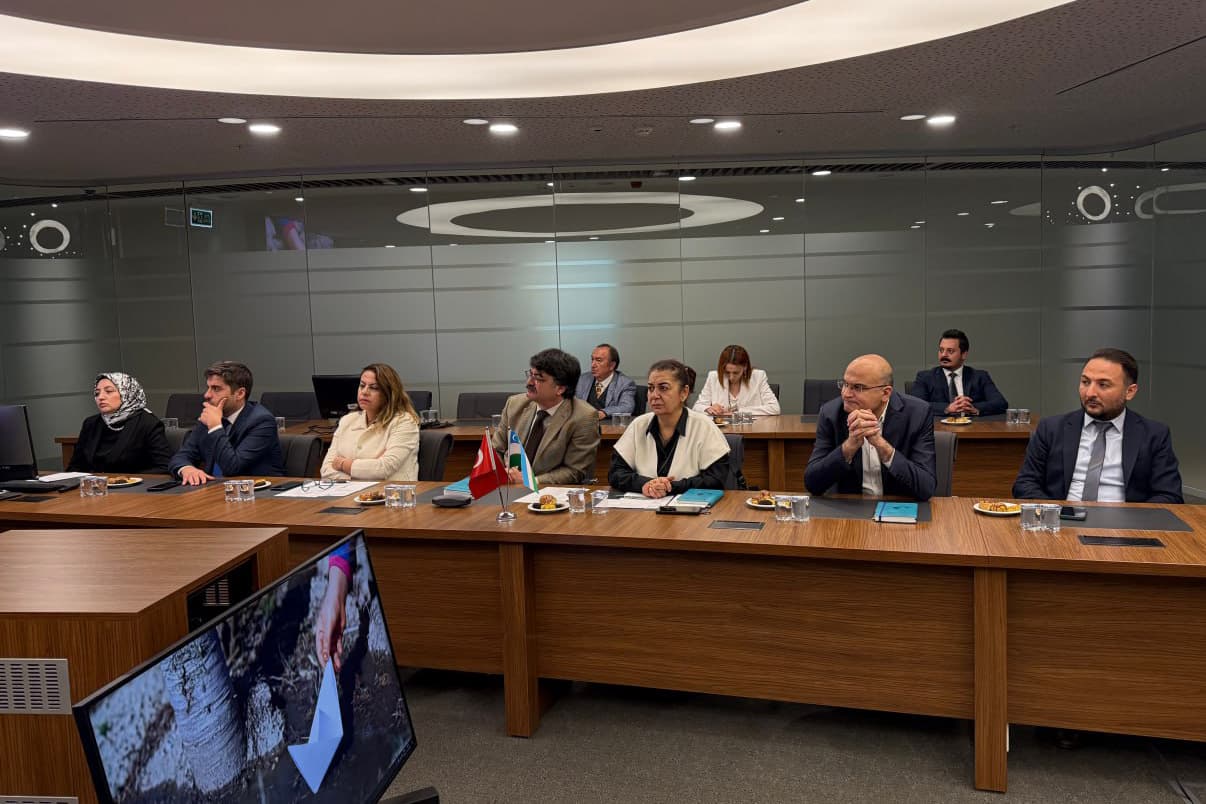
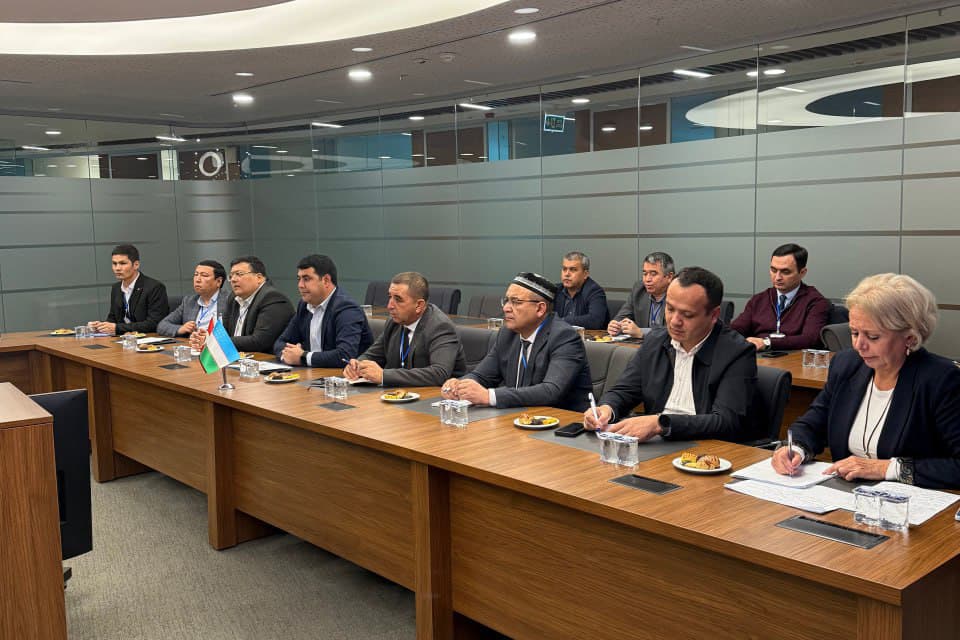
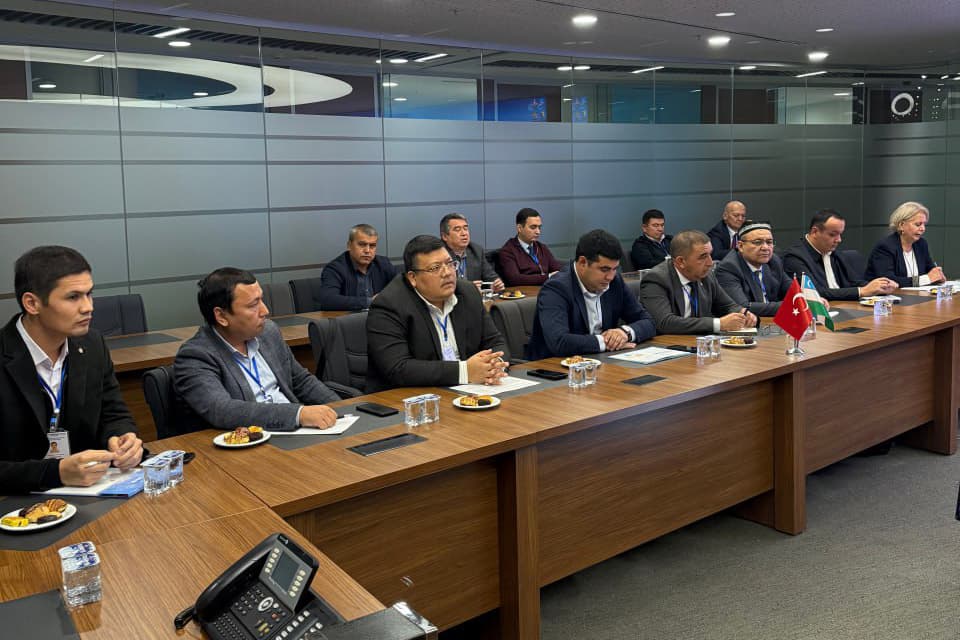
A delegation comprising specialists from the Ministry of Water Resources of the Republic of Uzbekistan and its subordinate organizations undertook a study visit to Turkey.
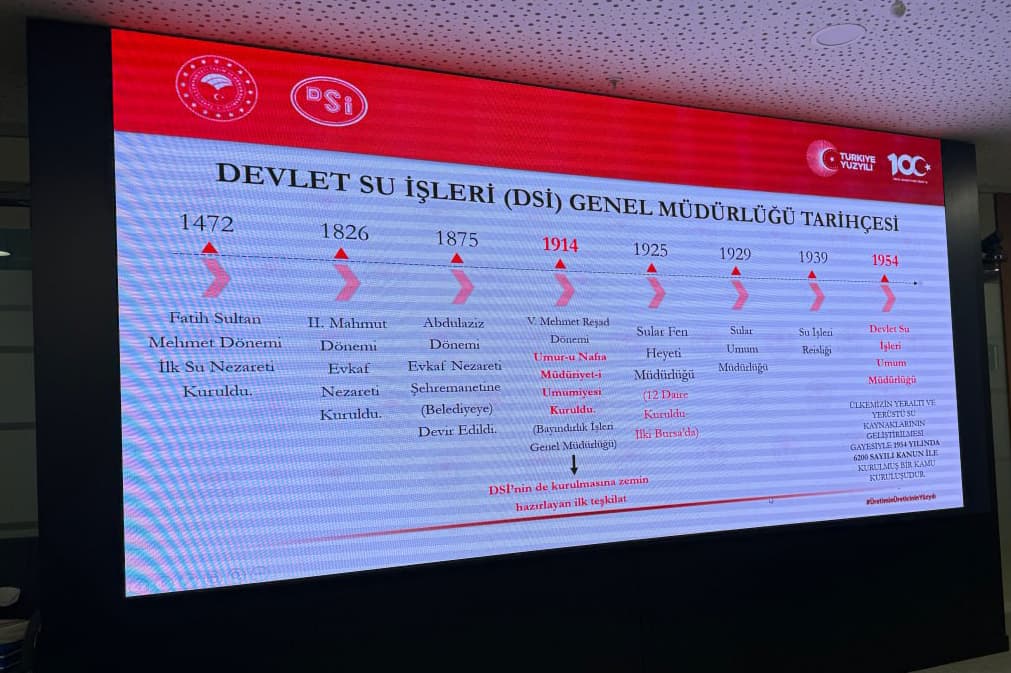
During the visit, a series of meetings was held at the General Directorate of State Hydraulic Works of Turkey. Negotiations took place with the Deputy Head of the Department of International Relations, Dr. Özlem Şelol, as well as with heads of relevant departments and water resources experts. Presentations were delivered focusing on water resources management and strategies to enhance the efficiency of water use in Turkey.
Turkey’s annual volume of water resources utilized amounts to 61.7 billion cubic meters, of which 48.7 billion cubic meters are allocated to irrigation. Drinking water supply accounts for 6.3 billion cubic meters, while a further 6.7 billion cubic meters are used for industrial purposes.
In addition, meetings were held with representatives of the General Directorate of Agricultural Research and Policies of the Ministry of Agriculture and Forestry of Turkey. This institution is responsible for the development of new technologies, innovations, and the formulation of agricultural policy. With a history spanning more than 130 years, it is regarded as one of Turkey’s oldest scientific centers. According to Ms. Şule Küçükçüşkün, a coordinator at the General Directorate, approximately 70 percent of all information on the country’s agriculture is generated by this institution.
Within the structure of the General Directorate, 49 research institutes are currently operating. In the field of crop production in particular, scientific research is conducted on crops grown for industrial and food purposes, fodder crops for livestock farming, as well as plants used for health-related and medicinal purposes.
Research activities and scientific studies are also carried out on issues related to soil salinization, the level of mineralization, and the salinity of groundwater and surface water resources.
Scientific centers operate in more than 50 cities and districts across Turkey. The total number of staff amounts to approximately 6,700 employees, over 2,500 of whom hold academic degrees and scientific titles.
During the presentations, information was also provided on initiatives in water conservation, the rational use of water resources, the development and implementation of resource-efficient technologies in agriculture, as well as on new research projects and ongoing studies in this field.
As part of the visit, members of the delegation also held meetings and discussions in the cities of Şanlıurfa, Gaziantep, and İzmir.
One of the most memorable highlights of the trip was a visit to one of the country’s most renowned hydraulic engineering structures — the Atatürk Dam.
The Atatürk Dam and the reservoir bearing the same name are located in the central part of Turkey and were constructed on the Euphrates River. The reservoir covers an area of 515 square kilometers and has a total storage capacity of 48.7 billion cubic meters, of which an average of approximately 11 billion cubic meters of water is utilized annually.
Construction of the dam began in 1983 and was completed in 1990. The dam has a height of 169 meters and a length of 1,820 meters. A hydropower plant with an installed capacity of 2,400 MW has also been built at the site.
According to Mr. Faruk Bedlek, Deputy Head of the Atatürk Dam, the reservoir water is used for electricity generation, drinking water supply, fisheries, and irrigation.
The dam is equipped with six spillway gates, which operate in a fully automated mode. The maximum discharge capacity reaches 1,500 cubic meters per second. The reservoir provides irrigation for 21,000 hectares of agricultural land in the region.
There are five dams along the Euphrates River, of which the Atatürk Dam is the third. All dams and major hydraulic structures are under state ownership and control.
Members of the delegation visited the dam and the reservoir, engaged in discussions with Turkish specialists, familiarized themselves with their practical experience, and received detailed answers to their questions.
In Şanlıurfa, the delegation also became acquainted with the operation of the “Yaylak” irrigation system. This system was constructed in 2004 and receives water from the Atatürk Dam reservoir. Through two tunnels with a diameter of four meters, water is pumped from the dam and lifted in three stages: 22 meters at the first stage, 30 meters at the second stage, and 60 meters at the third stage. The total number of pumping units amounts to 86.
The distance between each stage ranges from 15 to 20 kilometers, with water conveyed between stages via open canals. Notably, each stage is equipped with storage reservoirs, from which water is delivered to end users through closed pipelines by gravity flow. As a result, the irrigation system is located on mountain slopes above the agricultural lands, ensuring efficient water distribution through natural pressure.
The Yaylak irrigation system, located near the city of Şanlıurfa, is fully automated. The system was constructed using state funding and is operated under the supervision of the General Directorate of State Hydraulic Works of Turkey.
Its operational costs are financed through fees paid by water users. Farmers have fully transitioned to sprinkler and drip irrigation and receive water directly at their fields through hydrants. As the system is closed, open irrigation channels (ditches) are not used.
In Turkey, water pricing varies depending on the type of irrigation system: closed systems are charged on a per-hectare basis, while open systems are charged based on volumetric consumption (per cubic meter). In this case, since water is supplied through a closed system, the cost is calculated according to the area of irrigated land.
According to Mr. Fehmi Taş, an engineer of the system, the annual cost of irrigating one hectare amounts to 37,000 Turkish liras, which is approximately USD 880.
The irrigation season begins in March and continues until October. In the absence of drought during the winter period, no water abstraction takes place, and the pumps are not operated.
Another distinctive feature of the system is that during the irrigation season, farmers may draw water at any time convenient to them and in any required volume. The only condition is that payment for the anticipated volume of water must be made in advance.
As water is stored in reservoirs, the pumps are activated only when necessary, specifically when the water level in the basins falls below the established threshold.
The Yaylak irrigation system serves 16,000 hectares of agricultural land and has approximately 7,000 water users.
In addition, members of the delegation visited the Faculty of Agriculture of Harran University in the city of Şanlıurfa. The delegation was received by the Dean of the Faculty, Professor Ahmed Yılmaz, together with members of the university’s academic staff.
The faculty enrolls 5,500 students. Specialist training is provided in seven fields, including soil science, crop production, agricultural machinery, and other related disciplines. Degrees awarded by the faculty are recognized in European countries.
Presentations were delivered on the global state of water resources, the impacts of climate change, as well as on various water-saving technologies applied in Turkey.
The General Directorate of the Provincial Water Association of Nizip is located in the city of Gaziantep. The Euphrates River serves as the main source of water for the region. The total irrigated area amounts to 100,000 hectares, of which 90,000 hectares are pistachio orchards and 10,000 hectares are olive groves.
Water is abstracted from the river through two canals with lengths of 15 and 24 kilometers. From the canals, water is pumped into reservoirs and subsequently delivered directly to the fields through closed pipelines.
All 100,000 hectares are irrigated through a closed irrigation system. The total length of the closed irrigation network reaches 330 kilometers.
The construction of irrigation networks up to the boundaries of consumers’ land plots is financed by the state, while operational and maintenance costs are covered by the Water Association’s funds.
As the irrigation system is closed, water users are charged on a per-hectare basis according to the area of irrigated land. Payment for water is made in advance, and the hydrants operate in a fully automated mode, opening and closing automatically.
In this region, there are approximately 3,000 water users.
The Head of the Provincial Water Association’s General Directorate is appointed by the General Directorate of State Hydraulic Works. Operational and maintenance costs are covered by fees collected from water users, while the Water Association independently determines its staffing levels based on its own budget.
During discussions with the Association’s management, members of the Uzbek delegation gained detailed insight into operational expenditures, as well as the respective responsibilities of the Water Association and the water users.
In the city of İzmir, a meeting was held with Smart Moe’s, a company specializing in the development of digital technologies for irrigation systems. The delegation was introduced to a technology capable of determining soil composition, salinity levels, and moisture content. The collected data are transmitted online in real time to a centralized database. The technology has an operational lifespan of 10 years and is provided with a two-year warranty and free maintenance services.
The company’s primary objective is to minimize the human factor through the advancement of technological solutions in the water management sector.
Also in İzmir, the delegation became acquainted with the activities of Baylan, a company engaged in the production of water flow meters. Founded in 1992, the company employs approximately 1,100 people and manufactures water meters of various specifications, including those designed for closed irrigation systems. Baylan’s products are exported to more than 90 countries worldwide, including Uzbekistan.
A distinctive feature of these devices is that they are ultrasonic meters, capable of measuring water consumption with exceptionally high precision — down to every single drop. When installed on irrigation network hydrants, such meters enable remote monitoring of water usage volumes, significantly enhancing control and efficiency.
Members of the delegation visited the production facilities, familiarized themselves with the technological processes, and reviewed the overall operations of the enterprises.
Overall, the trip was intensive and rich in meetings. Specialists from Uzbekistan became acquainted with numerous innovations in the sector, broadened their professional knowledge, and gained memorable impressions of Turkey.
Sh. Suyunov,
Head of the Information Service
Ministry of Water Resources