
Textile Revolution in Uzbekistan: How the Country Is Becoming a New Manufacturing Hub for Global Brands
2025-08-25 18:00:00 / News
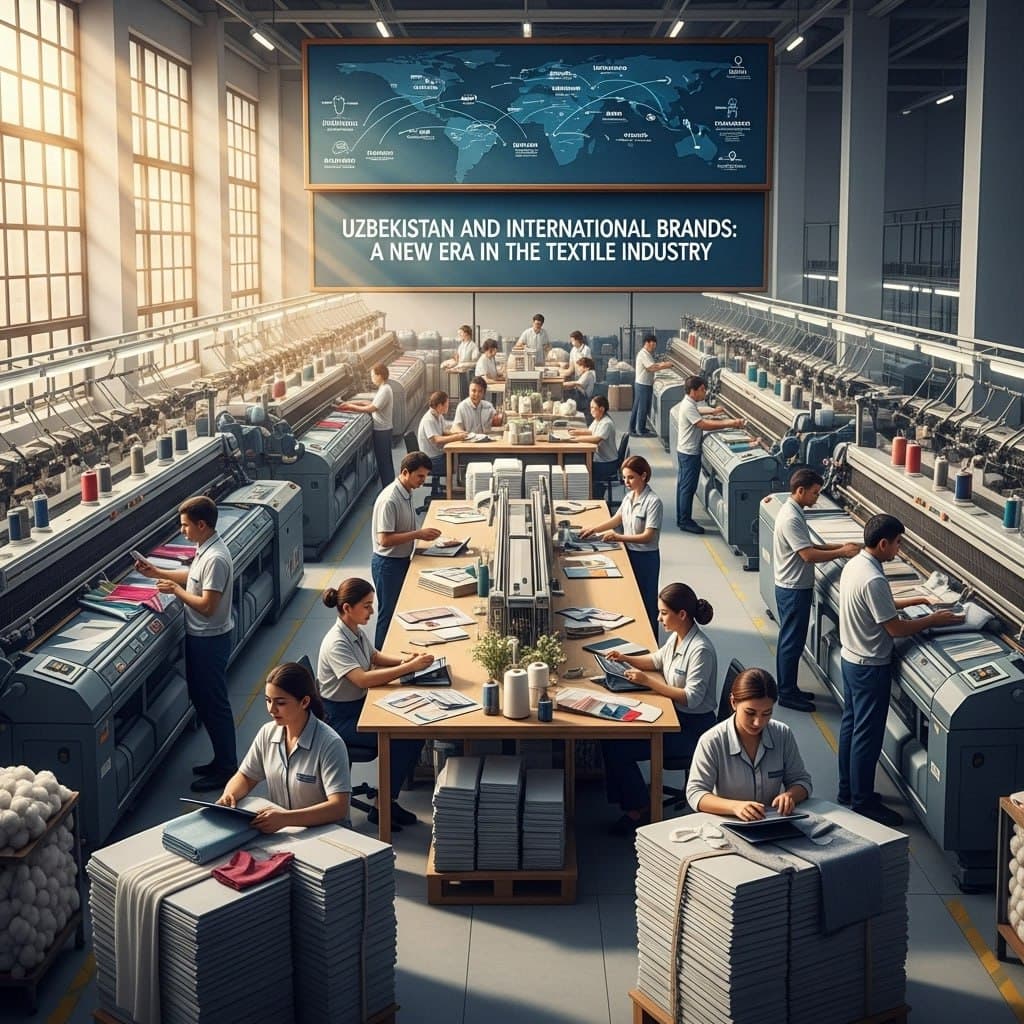
A new ambitious player is emerging on the global textile industry map. Uzbekistan, long known as a supplier of high-quality cotton, is now rapidly transforming into a powerful manufacturing hub for internationally renowned brands. This transformation is not just a shift in economic strategy, but the outcome of a deliberate policy aimed at industry modernization, attracting investments, and integrating into global supply chains. Dozens of local enterprises are already producing garments for giants such as LC Waikiki, The North Face, and Inditex, proving that Uzbek textiles are no longer just about raw materials, but also about quality, technology, and reliability.
Scale of Cooperation: Figures and Brands
As of today, 66 enterprises in Uzbekistan are directly collaborating with international brands. Among them are such well-known companies as LC Waikiki, Prof Max, Terranova, Defacto, and the German brand Murk GmbH & Co KG Mens Fashion.
The growth dynamics are impressive: over the past three years alone, partnerships have been established with more than 80 international brands. This list includes globally recognized names such as The North Face, Engelbert Strauss, Collins, Carrera Jeans, KIABI, Disney, and Inditex (the parent company of Zara, Bershka, and others).
This cooperation is not concentrated in one region but spans the entire country. Leading in the number of enterprises working with international brands are: Namangan region — 13 enterprises, Tashkent city — 10, Tashkent region — 8, while Fergana and Samarkand regions each host 7. The combined annual production capacity of these enterprises exceeds 850 thousand tons of textile products, underscoring the country’s serious industrial potential.
Notable examples include:
-
Uztex Group LLC (Khorezm region): with an annual capacity of 160,000 tons, it produces for LC Waikiki, Terranova, Gloria Jeans, and Auchan.
-
Navbahor Textile Cluster (Navoi region): manufactures 135,000 tons annually in partnership with the French brand GEMO.
-
Global Textile LLC (Fergana region): produces 62,000 tons of knitwear for the French retail chain Kiabi.
Economic Impact: Exports, Investments, and Employment
Collaboration with global brands brings not only prestige but also tangible economic benefits. In 2024, these enterprises produced 273,000 tons of goods worth 12.9 trillion Uzbek soums. Out of this, 40,100 tons of finished products, valued at USD 435.4 million, were exported. Notably, exports account for 42% of their total production, a clear indicator of high competitiveness in international markets.
This direction also plays a significant role in job creation. More than 37,500 jobs have been generated at these enterprises, contributing to social stability across the regions.
Future Plans: A New Stage of Development
Uzbekistan has no intention of slowing down. Within the framework of the 2025 investment program, 20 additional production lines are scheduled to be launched. This will expand annual production capacity by:
-
33 million units of ready-made garments and knitwear;
-
600,000 sq. m of finished fabrics;
-
25,000 tons of knitted fabric.
Implementation of these projects is expected to bring an additional USD 73 million in exports, attract USD 84 million in foreign investments, and create over 4,200 new jobs.
Conclusion
Uzbekistan’s textile industry is undergoing a period of profound transformation. The shift from raw material exports to the production of branded finished goods is already yielding results: exports are rising, jobs are being created, and advanced technologies and quality standards are being introduced. If current trends continue, Uzbekistan has every opportunity in the coming years to secure its place as a reliable and important link in the global fashion supply chain, standing alongside the recognized leaders of the industry.