
Sea Breeze Uzbekistan at Charvak: Transparency, Benefits, and International Best Practices
2025-08-06 15:15:00 / News
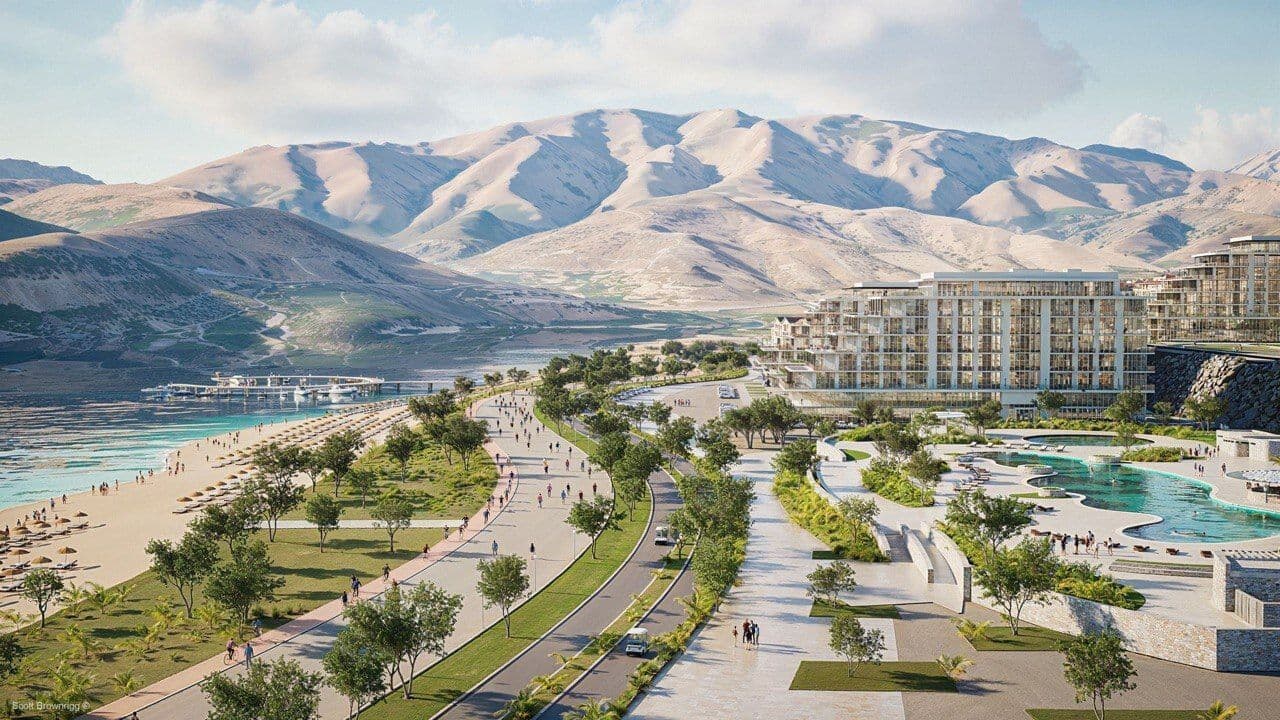
The Sea Breeze Uzbekistan project at Charvak has sparked active public debate. Some fear it may harm the environment, infringe on citizens’ interests, or place a burden on the state budget. We have analyzed the key concerns and prepared answers – in plain language, backed by international examples.
Why Sea Breeze?
Charvak is a tourism gem. That’s why it was crucial to find a strong investor capable of implementing the project not hastily, but at a high level – with schools, hospitals, sewage systems, parks, and job creation.
Agalarov Development proposed a $5 billion investment, along with the construction of social infrastructure, environmental solutions, and phased implementation under government oversight.
Why was everything given to a single investor?
A single developer ensures unified architecture, a cohesive sewage system, transport links, landscaping, and accountability.
If the land had been divided among multiple developers, it could have led to disputes, disorder, and difficulties in oversight.
Example:
In Saudi Arabia, The Red Sea Project was also entrusted to a single operator – to preserve the environment and maintain consistency.
Where is the money coming from? What about debt?
The project is entirely private-funded. No budget money is involved. The investor assumes all financial risks.
Loans are raised on commercial terms, and there is absolutely no increase in public debt.
However, the government retains strict oversight at all stages – from environmental compliance to financial transparency and social impact.
Example:
This is how Sani Resort in Greece was built – not a single cent from the budget, yet it delivered major economic benefits.
Does the investor have relevant experience?
Yes. Sea Breeze in Azerbaijan is a world-class resort with hotels, concerts, restaurants, and modern landscaping.
The company has also delivered large-scale projects in Moscow and the Moscow region.
Example:
Like Kerzner, which built Atlantis in Dubai and later expanded into China – a successful model scaled internationally.
Why is the rental fee only 17 billion UZS?
The rate was deliberately reduced to symbolic levels as an investment incentive.
In return, the investor will pay a $240 million infrastructure fee – exceeding the land’s market value.
This is the first time such a fee has been introduced in the Tashkent region.
The funds will be used for sewage systems, roads, bridges, and water treatment plants.
Over $100 million will be reinvested into further development and modernization.
Example:
In Mexico and Vietnam, large investment projects often enjoy zero rent in the initial years – to attract capital and jumpstart development.
Can land plots be resold? Is this speculation?
No. The land remains state-owned.
Sublease is only allowed within the framework of the master plan, e.g., for the construction of international hotels.
If the terms are violated, the agreement is annulled and the land returns to the state.
Example:
On Saadiyat Island in the UAE, similar conditions apply – government oversight, a strict master plan, and subleasing allowed solely for project-related purposes.
Why was construction allowed before final project documentation?
This is legally permitted in exceptional cases.
The decision was made by the government with rigorous oversight mechanisms:
The General Prosecutor’s Office monitors the process, and an interagency task force led by a Deputy Prime Minister has been established.
Example:
Marina Bay Sands in Singapore was built in a similar way – in stages, with plans refined along the way to save time while maintaining full control.
What about the environment?
Discharge of wastewater into Charvak is strictly prohibited.
The investor is building a sewage system at its own expense.
A ring sewer system will be connected to treatment facilities in Chirchik.
This system will significantly enhance the infrastructure capacity of surrounding areas.
In addition, trees will be planted, energy-efficient technologies introduced, and environmental monitoring carried out at all stages.
Example:
In Albania, a similar project not only avoided harm but actually improved the ecological situation in the region.
Why is the government building the roads and utilities?
Public infrastructure (such as roads and bridges) is typically built by the state – because it benefits not only tourists but also local residents.
Important: the investor reimburses these costs through the $240 million infrastructure fee.
Example:
That’s how facilities were built for Dubai Expo and the NEOM project in Saudi Arabia – public infrastructure funded by the government, private assets funded by investors.
What does society gain from this project?
- Thousands of new jobs
- Schools, healthcare, roads
- Influx of tourists and foreign currency
- Growth in tax revenue and the national budget
- Greener environment, environmental safeguards, and a long-awaited sewage system for Charvak
Conclusion
The Sea Breeze Uzbekistan project:
- Requires no budget funding
- Creates a new regional growth hub
- Is implemented with international standards and government oversight
- Fully complies with environmental and urban development regulations
This is a unique opportunity for Charvak to become a year-round destination for tourism, employment, and high-quality living – in line with the world’s best resort practices.
M. Rakhimjanov
Deputy Head of Department
Ministry of Investments, Industry and Trade of the Republic of Uzbekistan