Holiday Greetings to the People of Uzbekistan
2026-10-21 18:00:00 / Holidays
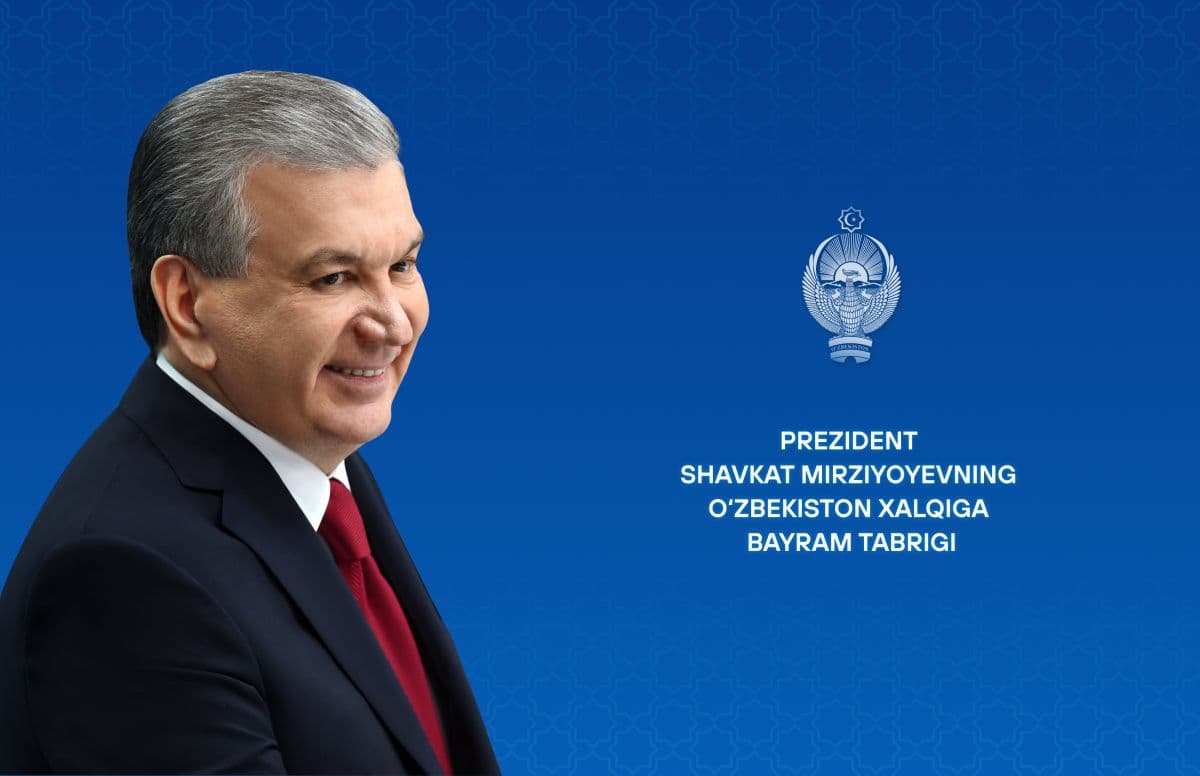
I sincerely congratulate you, our entire people, our compatriots abroad, and all friends of the Uzbek language on the Uzbek Language Day, celebrated on October 21.
Our native language, one of the oldest and richest languages in the world, is a great legacy of our ancestors.
The noble idea we have put forward, “O‘z” — “one’s own, belonging to oneself” — also applies to our language, and we will continue to put it into practice. I am convinced that this idea will give new strength to our native language, which nourishes our souls and hearts, enabling us to communicate freely with the world, acquire modern knowledge, and enhance the spirituality of our people.
Through language, a person understands themselves and expresses their love for their family and other people. Language embodies a people’s memory, knowledge, experience, dreams, and aspirations. These are precisely the aspects we place at the forefront when speaking about the value and significance of the state language.
Inspired by the richness of their native language, our outstanding ancestors created immortal works in science and literature, capturing in them their profound thoughts about the human soul and the life of society. Today, we face the responsible task of continuing these traditions and enriching the capabilities of our language with new knowledge, technologies, and creative works.
Uzbekistan, where representatives of different nations and ethnic groups live as one family and work together to build a new life and the future of the country, is our common Motherland. The state language, serving as a means of communication among citizens, enables their active participation in public life, and this certainly brings joy to us all.
At the same time, we fully understand that an important foundation of friendship and harmony in society is respect and consideration for every person’s native language and cultural values. Therefore, in our country, efforts to support the development of the Karakalpak language and other languages are closely interconnected with the creation of favourable conditions for learning Uzbek.
Knowing the state language undoubtedly opens the way to new knowledge and opportunities and strengthens a person’s sense of belonging to our shared present and future. That is why it is particularly important to treat people who have only recently begun learning Uzbek with sincerity and goodwill and to support their aspirations.
We must create even more favourable conditions for our young people to think and create in Uzbek, while also mastering foreign languages and keeping pace with positive changes taking place around the world. The art of translation plays a particularly important role in this regard. Through translation, we introduce our compatriots to masterpieces of the world’s intellectual heritage and present ideas and works in our state language to other peoples.
Examples of dialogue based on linguistic translation include areas of cooperation such as the “Uzbek Studies Programme” at the University of Oxford. We must also pay special attention to encouraging Uzbek language teachers abroad, increasing the interest of researchers and students, and providing them with high-quality literature and educational resources.
Dear compatriots!
The place of language in our lives depends primarily on how effectively it is used. When a child can express their thoughts clearly in the language, a student can study complex subjects in it, and a citizen can easily understand the meaning of an official document, we see the results of our efforts to develop the language.
In this regard, education must focus primarily on students’ ability to read, comprehend, express their thoughts, and write correctly. Undoubtedly, there is a significant difference between learning Uzbek as a native language and learning it as the state language. This must be taken into account when updating textbooks and teaching methods.
Life experience shows that the quality of teaching, children’s literature, libraries, and modern educational tools increase interest in the language. Sincere conversations within the family, reading books together, and paying attention to children’s questions are also important parts of this process. It would be fair to say that concern for language development also lies at the heart of the reading culture that has become a nationwide movement in our country and the considerable attention devoted to it.
It is important for government institutions to set an example in this regard. Laws, resolutions, instructions, and responses to citizens’ appeals must be written in grammatically correct, clear, and understandable language. Citizens should not face unnecessary difficulties in understanding their rights and responsibilities. Respect for the state language must also be reflected in the high quality of public services.
Another important task is to expand opportunities for making full use of modern scientific sources and presenting the results of new research in Uzbek. There is a significant need for reliable literature, high-quality translated texts, and electronic resources in medicine, engineering, economics, and other fields.
Cooperation among our respected scholars, linguists, translators, and specialists is essential in this area. When selecting terminology, attention must be paid to the accuracy and clarity of the ideas being conveyed and their compliance with international scientific standards. Dictionaries must also accurately reflect the actual development of the language and new knowledge.
Another pressing task is to expand opportunities for the full use of Uzbek in today’s digital environment. To this end, selecting high-quality written texts and speech samples, developing electronic dictionaries, and improving translation and editing tools are particularly important.
Technologies that convert spoken language into text and text into audio materials should make education, work, and everyday life more convenient for people. The development of such resources must comply with copyright and personal data protection requirements.
In line with the principles of the inclusive society we are building, particular attention should be paid to ensuring that persons with disabilities have access to these opportunities.
The quality of artificial intelligence technologies used for content in the state language should be assessed primarily by how precise and useful their assistance is to people.
In matters of writing and spelling, convenience in reading, writing, and accessing information must also be the main criteria. Decisions in this area should be based on scientific principles, dialogue with the public, and practical preparation. The compatibility of education systems, publishing houses, and digital platforms, as well as the needs of different generations, must be comprehensively taken into account.
Taking this opportunity, I express my sincere gratitude to the scholars and researchers, teachers and translators, literary figures and journalists, publishers, and information technology specialists who work tirelessly for the development of our native language. I extend special appreciation to our compatriots and friends abroad who are studying the Uzbek language with love and dedication.
Let us all cherish and carefully preserve our native language, making a worthy contribution to enhancing its standing in the world, further increasing its prestige, and expanding its role in international dialogue!
Once again, I congratulate you, dear compatriots, and wish you good health, peace, prosperity, and success.
Happy Uzbek Language Day!
Shavkat Mirziyoyev, President of the Republic of Uzbekistan