Germany's Social Welfare System Has Changed: What Do the New Rules Mean for Uzbek Citizens?
2026-07-27 16:40:00 / News
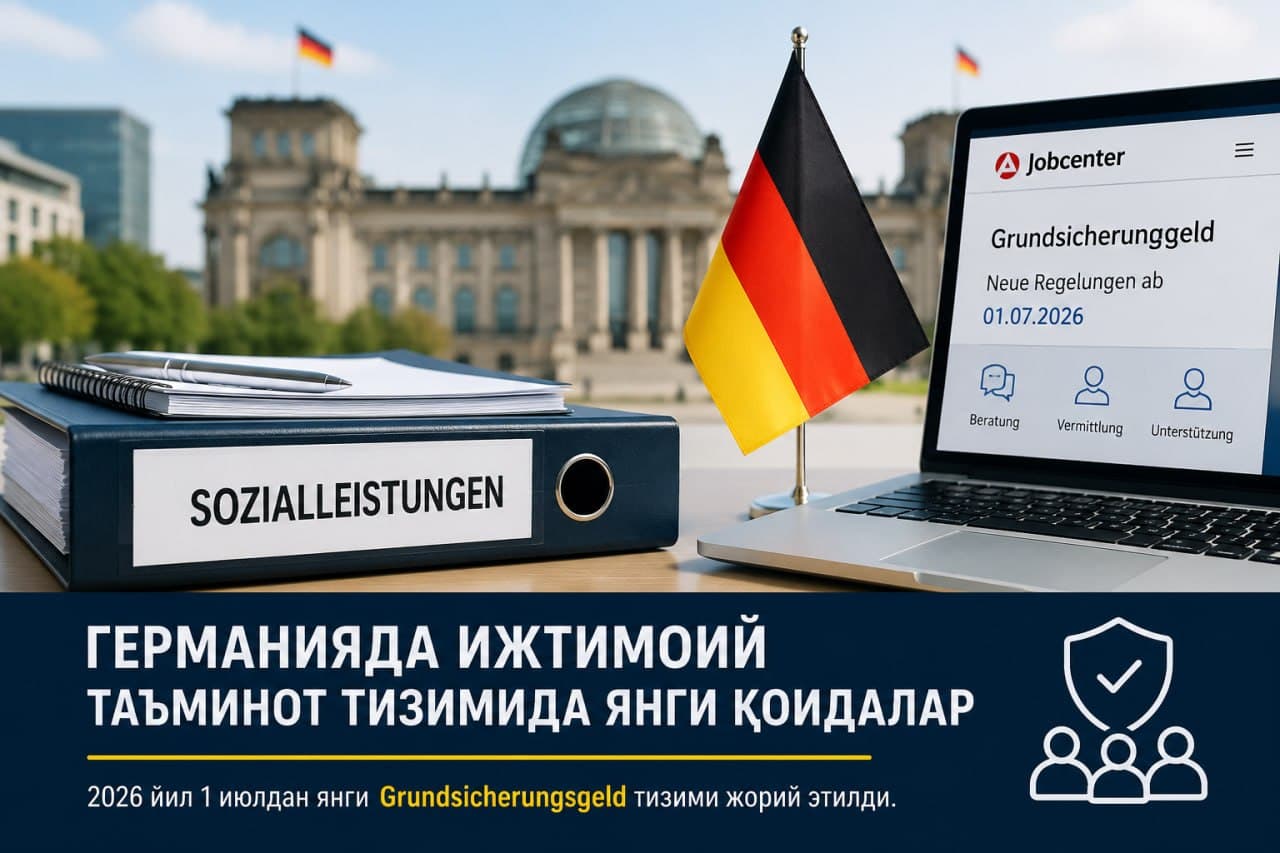
From 1 July 2026, the Bürgergeld benefit for working-age individuals has been replaced by a new Grundsicherungsgeld (Basic Social Security) system. The new framework is designed to help employable people return to work as quickly as possible, while treating state financial support as a temporary safety net.
Who is affected by the new rules?
The reforms primarily apply to people receiving social assistance through the Jobcenter after becoming unemployed, foreign nationals who lost their jobs after working in Germany, self-employed individuals with insufficient income, young people seeking employment after completing education or an Ausbildung programme, and parents who temporarily left the labour market to care for their children.
At the same time, individuals who are officially employed under an employment contract, foreign workers legally employed under a work visa who have not applied for social benefits, EU Blue Card holders, and highly qualified professionals with stable incomes will generally be affected only if they become unemployed.
Key changes
Under the new system, the primary objective of the Jobcenter is no longer to enrol individuals in various training courses but to help them return to employment as quickly as possible. Unjustified refusal of suitable job offers or failure to comply with established requirements may result in reduced social benefits or, in some cases, complete suspension of payments.
In addition, applicants' bank accounts, savings, and other assets will be assessed from the very first day of the application process. Several previous exemptions have been abolished to ensure that government support is provided only to those who genuinely need financial assistance.
The reforms also introduce new obligations for parents caring for children. Once the protected period ends, they will be expected to actively seek employment, participate in vocational training, integration programmes, or German language courses.
Special attention is also being given to young people by facilitating their faster integration into the labour market. Graduates of German universities, participants who have completed Ausbildung programmes, and other employable young people will be supported in finding employment more quickly. Retraining and professional development programmes will continue to be available where necessary.
What should Uzbek citizens in Germany pay attention to?
Experts advise Uzbek citizens living and working in Germany to respond promptly to letters and appointments issued by the Jobcenter, attend scheduled meetings, carefully consider job offers, immediately report any changes to their address or contact details, continue learning the German language, and submit all required documents on time. It is also essential not to conceal information regarding employment contracts, income, or financial assets.
What does this mean for Uzbek citizens?
Citizens of Uzbekistan planning to work in Germany should be aware that access to state social assistance is now subject to stricter conditions than before. If they become unemployed, they must actively cooperate with the Jobcenter, comply with all applicable requirements, and provide complete information about their financial resources and assets. The main objective of the new system is not to keep individuals on long-term social benefits but to support their rapid return to employment.
Conclusion
This reform represents one of the most significant recent changes in Germany's labour market and social welfare policy. It is intended to improve employment outcomes while ensuring that public financial support reaches those who genuinely require assistance. Therefore, Uzbek citizens already working in Germany or planning to do so are strongly encouraged to familiarise themselves with the new regulations, understand their rights and responsibilities, and fully comply with German legislation.