By 2030, the share of "green" government procurement will reach 30 percent
2025-06-18 17:00:00 / СМИ о нас
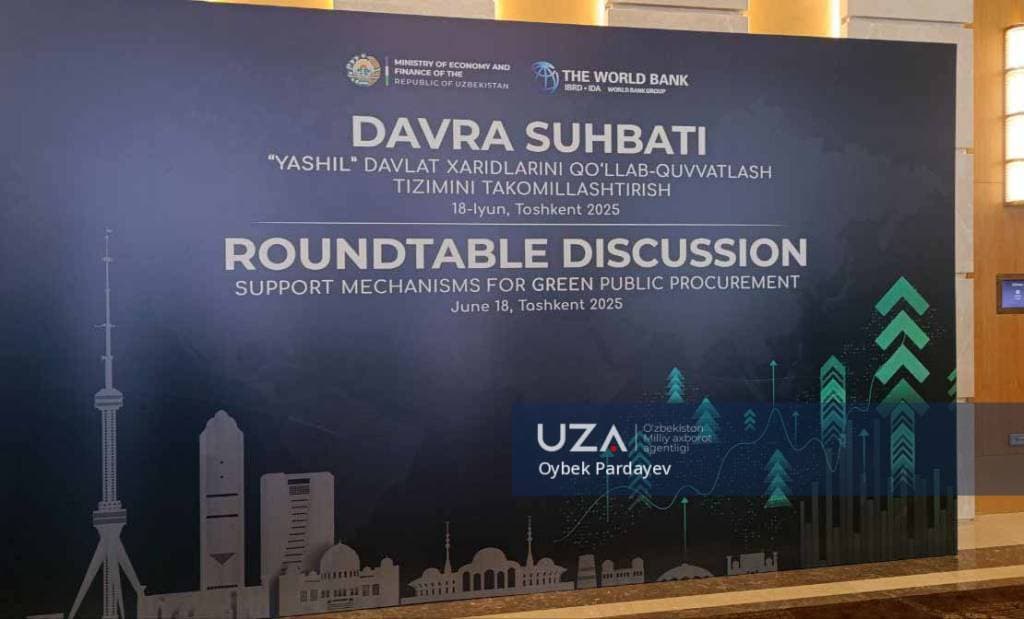
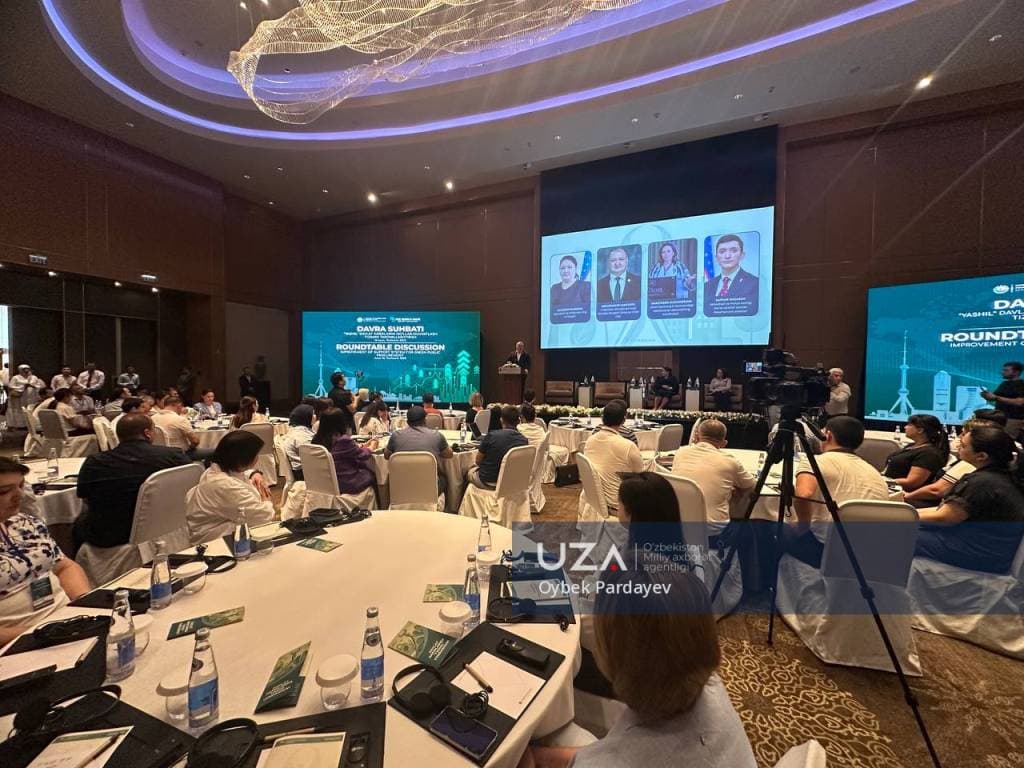
The event, organized in cooperation with the Ministry of Economy and Finance and the World Bank, was attended by industry officials, local and foreign experts, and entrepreneurs
Deputy Minister of Economy and Finance Gulnora Rakhimova, Chairman of the Executive Committee of the Central Council of the Ecological Party of Uzbekistan Abdushukur Hamzayev, World Bank Program Coordinator in Uzbekistan Anastasia Alexandrova, and others emphasized that measures aimed at encouraging support for environmentally friendly products in public procurement, increasing the share of products made from recycled materials, and protecting the environment are a requirement of our time
It is worth noting that Uzbekistan has taken steady and consistent steps towards a "green" economy. The international community highly appreciates our country's efforts in this direction. It was highlighted that the comprehensive reforms carried out in recent years are being implemented based on consistency and a pragmatic approach. In this process, environmental protection, ensuring social stability, and adaptation to climate change have been identified as priority tasks.
According to Sarvar Nazarov, Director of the State Procurement Policy Department at the Ministry of Economy and Finance, shaping the public procurement system based on "green" principles is not only crucial for environmental protection but also an essential component of effective and forward-looking economic policy.
"The current implementation of mechanisms for selecting eco-friendly products, adopting 'green' technologies in production, and considering environmental impact during the procurement process is a testament to this approach. To this end, a concept for a unified voluntary labeling system is being developed and adapted based on international best practices. For the successful implementation of these reforms, it is necessary to continuously enhance the knowledge and skills of specialists working in the field of public procurement. By introducing 'green' procurement practices, we not only contribute to environmental sustainability but also encourage local manufacturers to operate in compliance with international standards. This, in turn, fosters the development of a healthy competitive environment in the domestic market," said S. Nazarov.
During the roundtable discussion, reforms being implemented by the government to align the public procurement system with ecological principles, current approaches, and future plans were deliberated. Representatives of international financial institutions shared advanced foreign experiences and innovative approaches to addressing environmental issues.
As noted by Anastasia Alexandrova, the World Bank's program coordinator in Uzbekistan, the Development Strategy for 2022-2026 sets the goal of reducing greenhouse gas emissions by 35 percent. Additionally, practical measures for the transition to a "green" economy have been approved.
- Among the issues discussed at the round table, the sphere of public procurement is of particular importance. This sector's share in the economy is significant - accounting for about 20% of Uzbekistan's gross domestic product. If sustainable development criteria in this area are not taken into account, serious obstacles may arise in the transition to a "green" economy. Therefore, starting in 2024, within the framework of amendments to the law on public procurement, a mechanism has been introduced for selecting not only the cheapest offers but also socially and environmentally acceptable options. This serves to harmonize economic, social, and environmental interests in decision-making during tenders. Uzbekistan has chosen the right direction in this process. For example, in 2022, the practice of "green" procurement was practically non-existent. However, by 2024, this figure has reached 20 percent, and by 2028 it is expected to exceed 25 percent. By 2030, it is planned to increase this share to 30 percent. Currently, we have established close cooperation with the government within the framework of special programs focused on "green" energy, "green" transport, efficient use of irrigation and water, and reduction of climate risks. "This is crucial for ensuring the country's environmental and economic stability," said A. Alexandrova.
According to expert analysis, this roundtable discussion proved to be an effective platform for mutual dialogue and exchange of practical experience among participants. The initiatives and proposals put forward at the event represent an important step towards developing a "green" economy in Uzbekistan and improving the public procurement system based on sustainable development criteria.