J.P. Morgan: Uzbekistan’s Soum-Denominated Sovereign International Bonds Included in the Prestigious GBI-EM Index
2026-08-08 16:40:00 / News of ministry
J.P. Morgan, one of the world's leading investment banks, has announced that the Republic of Uzbekistan's soum-denominated sovereign international bonds will be included in the Government Bond Index - Emerging Markets (GBI-EM) effective 30 September 2026.
For reference: In 2026, Uzbekistan placed three-year sovereign international bonds equivalent to USD 1 billion (UZS 12.2 trillion) at a rate of 12.25% (an average of 14 basis points below the domestic financial market).
The issuance was recorded as the largest local-currency transaction in Central and Eastern Europe, the Middle East and Africa over the past 15 years.
Uzbekistan is currently the only CIS country whose local-currency sovereign bonds are being included in the GBI-EM Index.
Significance and Composition of the GBI-EM Index
GBI-EM is one of the world's leading indices tracking emerging-market local-currency government bond markets and is used by international investors managing more than USD 300 billion in assets to inform their investment decisions.
For reference: The index currently includes 20 emerging-market countries, 13 of which are investment grade.
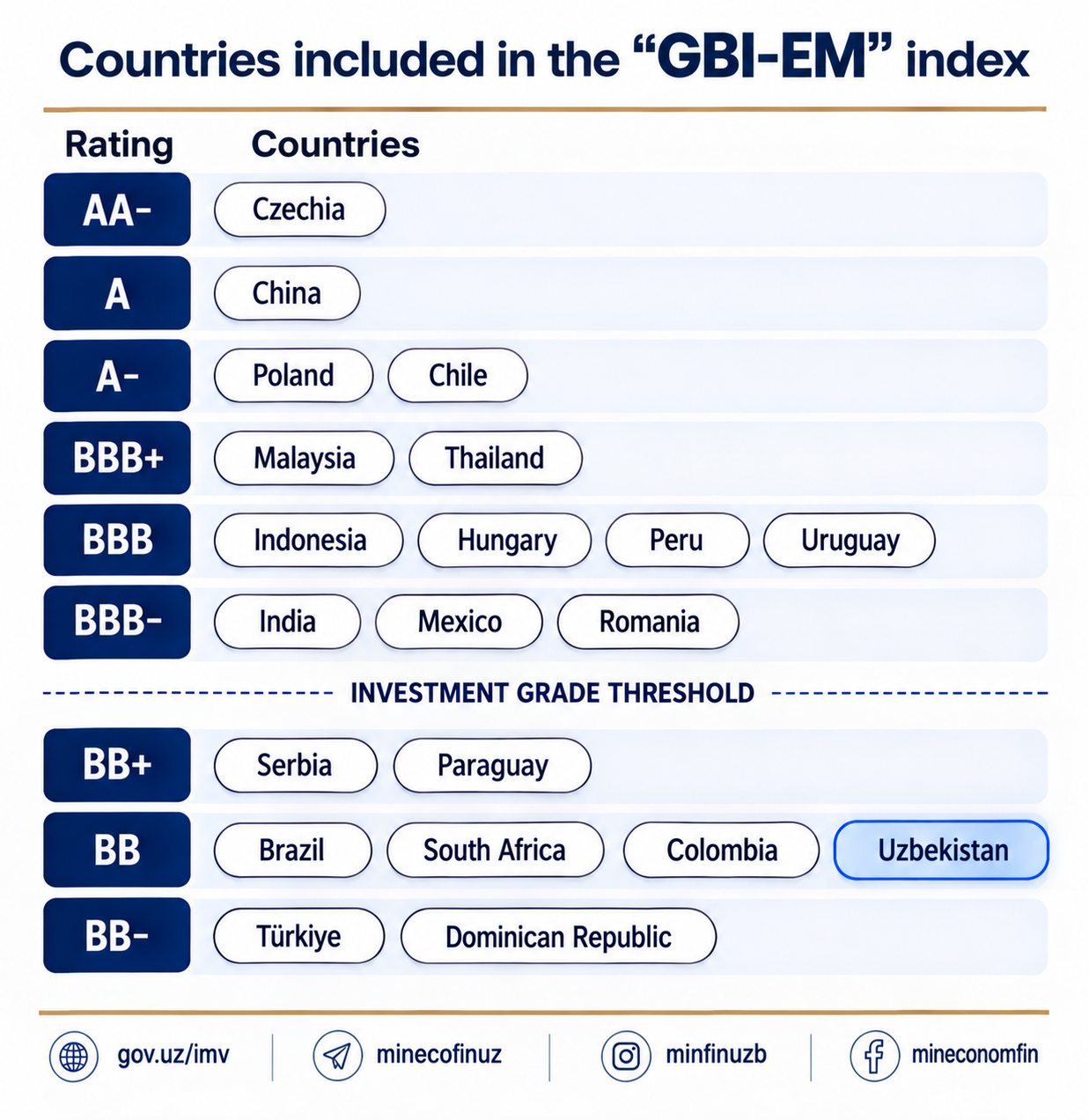
Inclusion in the GBI-EM Index signals growing confidence among international investors in Uzbekistan's economy and is expected to help broaden the investor base and lower borrowing costs when raising funds from external sources.
For reference: Following the inclusion of Paraguay's local-currency sovereign international bonds in the GBI-EM Index, borrowing rates for issuers in that country declined by up to 1%.
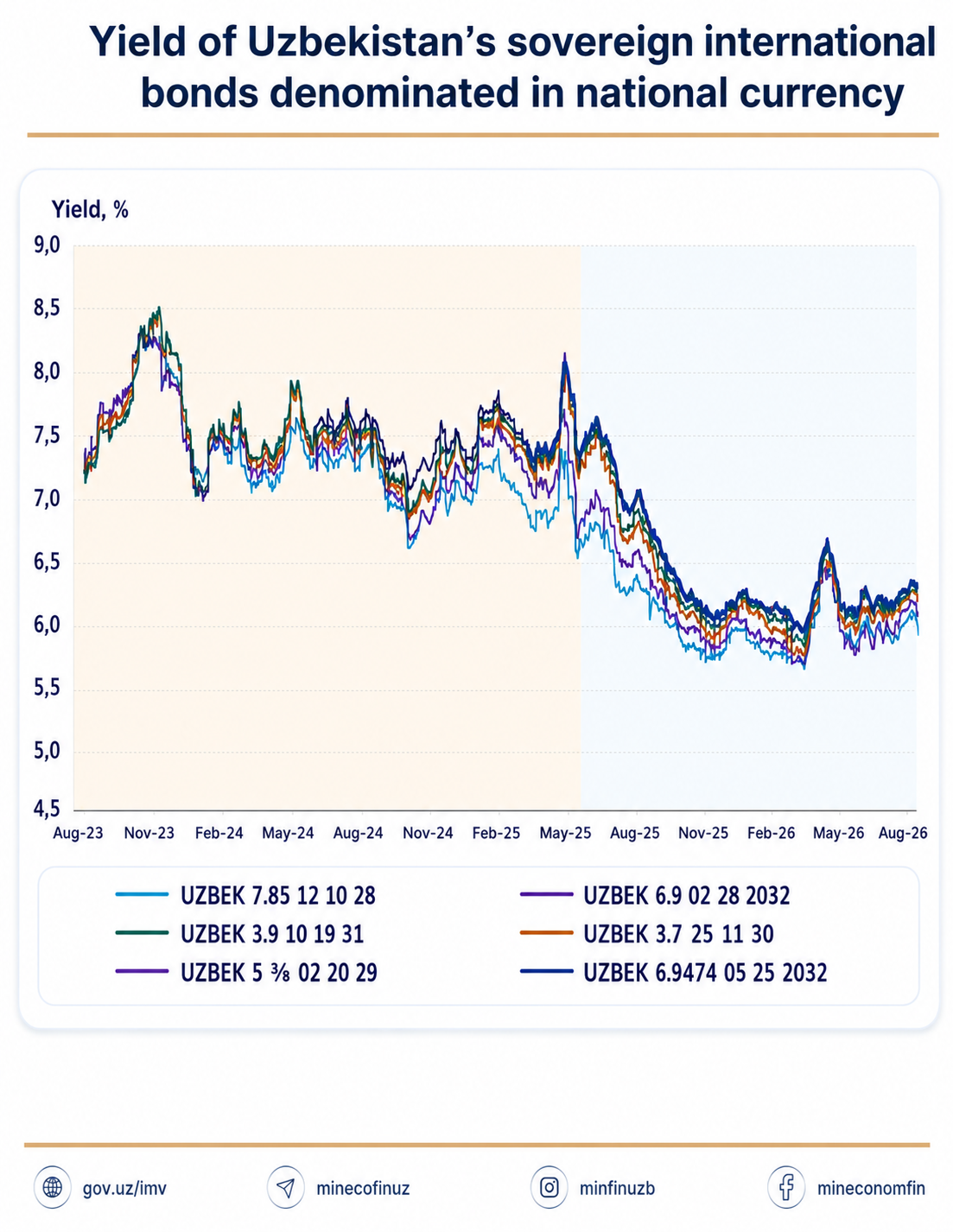
Uzbekistan's inclusion in the GBI-EM Index is an important practical outcome of the systemic reforms being implemented under the leadership of the President of the Republic of Uzbekistan and expands opportunities to raise funding in local currency, reduce foreign-exchange risks and diversify investments.
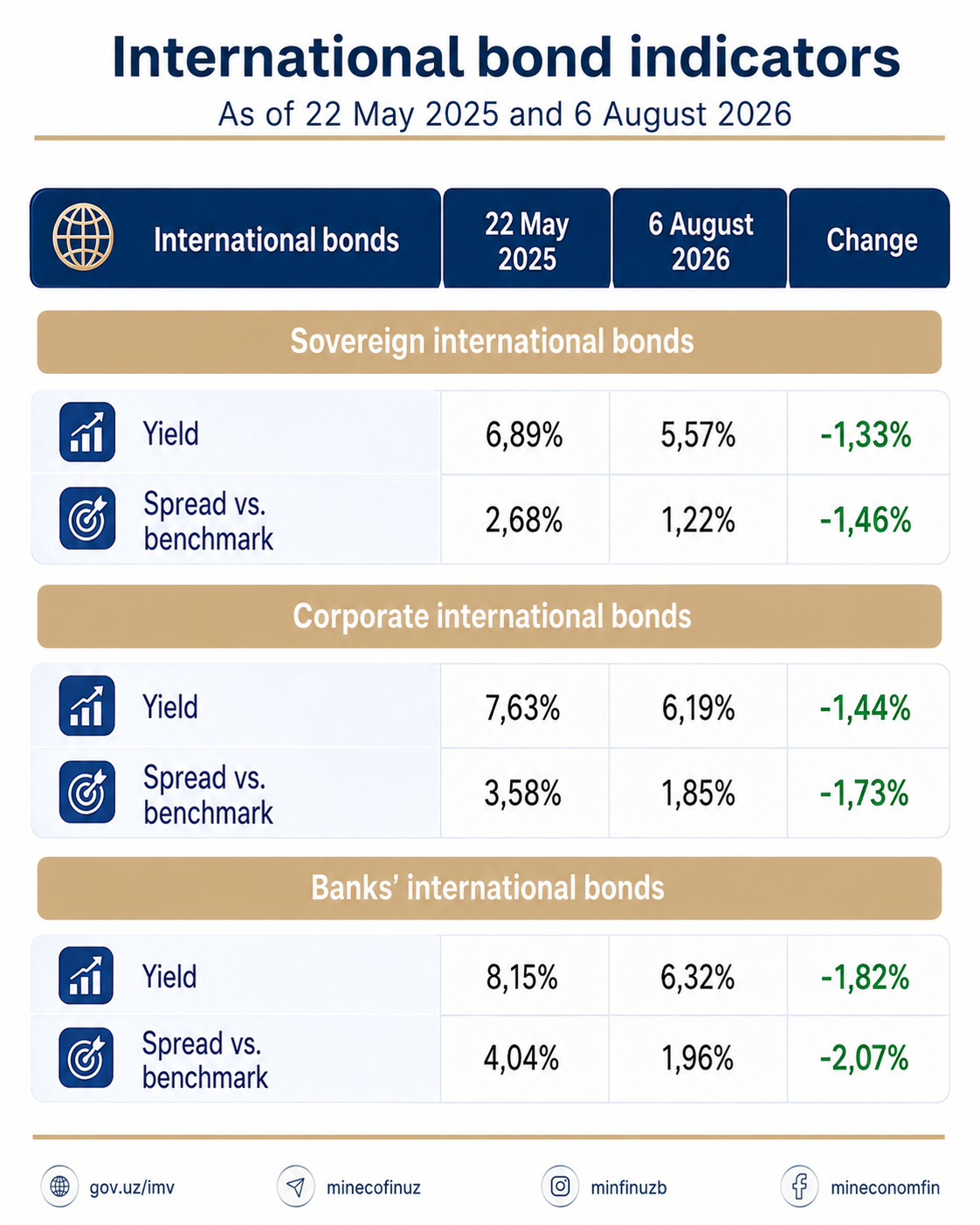
Notably, Uzbekistan's sovereign credit rating was upgraded several times during 2025-2026. In particular:
Fitch Ratings upgraded Uzbekistan's sovereign credit rating from BB- to BB on 26 June 2025 and, on 3 June 2026, revised the Republic's rating outlook from Stable to Positive;
S&P Global Ratings revised the outlook on Uzbekistan's sovereign credit rating from Stable to Positive on 23 May 2025 and, on 21 November 2025, upgraded the Republic's credit rating from BB- to BB;
Moody's Ratings revised the outlook on Uzbekistan's sovereign credit rating from Stable to Positive on 13 June 2025 and, on 25 June 2026, upgraded the rating from Ba3 to Ba2.
In their reports, international rating agencies positively assessed Uzbekistan's consistent policies aimed at strengthening macroeconomic stability, sustainable and diversified economic growth and improved fiscal indicators.
In particular, they highlighted stronger budget discipline, the maintenance of public debt at sustainable levels, rising international reserves, and mechanisms for managing the government's contingent liabilities (including those under PPP projects and unguaranteed liabilities of state-owned enterprises).
International rating agencies have recognized the increased resilience of Uzbekistan's economy to external shocks, improvements in governance quality and the contribution of these developments to strengthening investor confidence in the reforms being implemented in Uzbekistan.
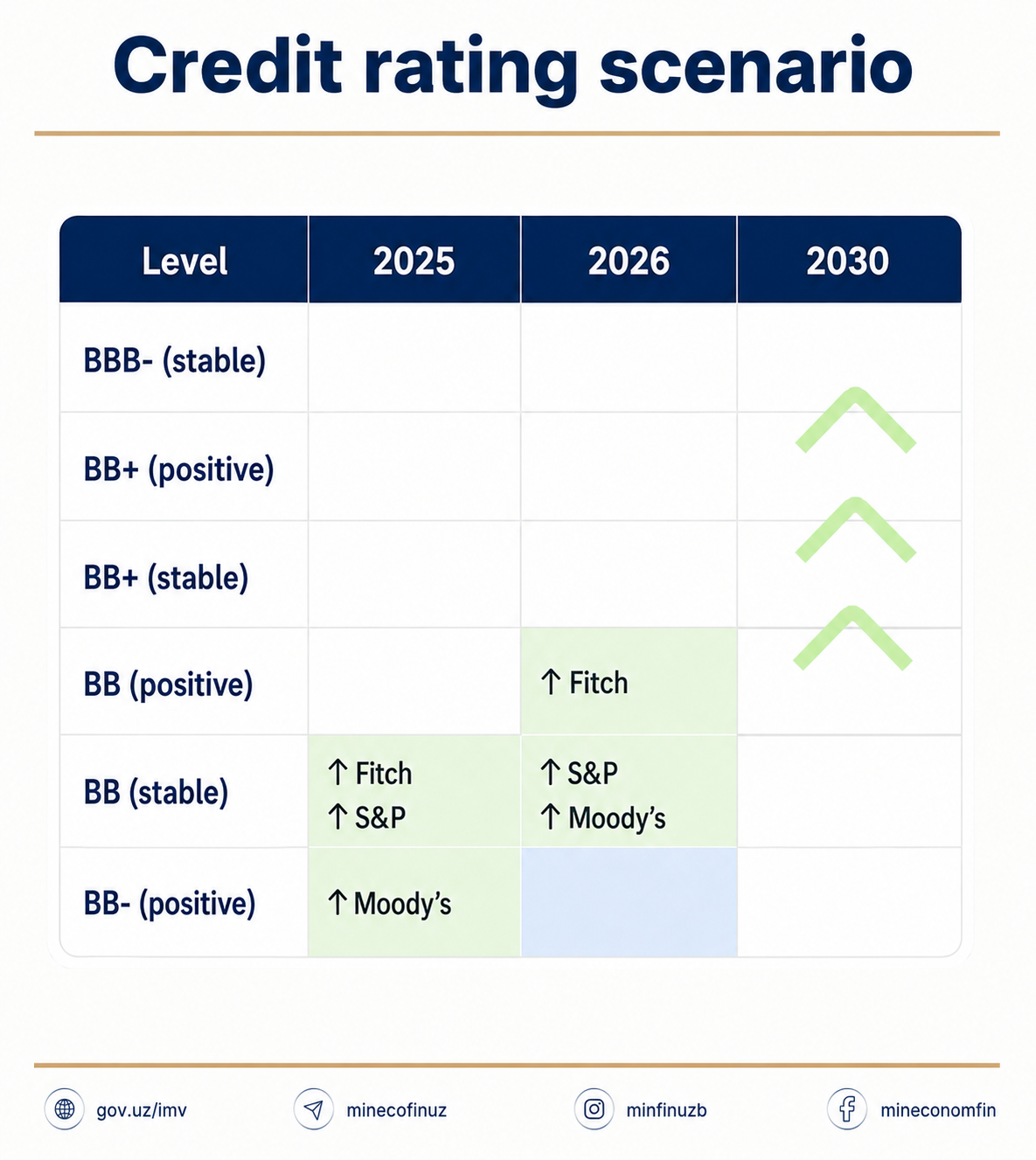
Local-Currency Government Bond Market
In recent years, measures have been implemented to develop the government securities market in line with the Medium-Term Public Debt Management Strategy.
Specifically, the weighted-average interest rate on government securities declined from 17.1% in 2022 to 12.6% in the first half of 2026 (-4.5%), while the weighted-average maturity increased from 1.5 years to 2.35 years.
Lower interest rates are helping optimize financing costs in domestic financial markets, while longer maturities are reducing refinancing risks.
Notably, in the first half of 2026, medium-term government treasury bonds accounted for 69% of issuance and 63% of secondary-market trading. This indicates the growing importance of medium- and long-term financial instruments in domestic financial markets.
Within the public debt portfolio, increasing the share of government treasury bonds to 9% and the share of local-currency debt to 12.2% is helping diversify funding sources and reduce foreign-exchange risks.
At the same time, measures are being taken to establish, in line with international standards, the infrastructure required to attract international investors to domestic financial markets.
In particular, the launch of custodian services by Raiffeisen Bank International in the Uzbekistan market in 2026 is creating the infrastructure needed to expand foreign investors' access to local securities and to organize asset safekeeping and settlement processes in accordance with international practice.
Further development of market infrastructure, broadening of the investor base, and greater attractiveness of domestic government securities to international investors will help mobilize the financial resources needed to support sustainable economic growth on favorable terms.
PR and Communications Department
Ministry of Economy and Finance