
Investment Projects Being Implemented in the Field of Waste Management
2026-04-30 17:50:00 / News
The sector currently handles an annual waste volume of 15 million tons (2025), with a growth rate of 2–3% and service coverage reaching 88%. There are also 4,000 waste collection points and 4,500 units of special-purpose equipment available.
Service Provision and Payment Procedure
Waste is collected by operators from subscribers’ households through a signal-based collection method and transported to waste collection points. From there, it is taken to transfer stations, where it is sorted and then delivered to eco-industrial zones and waste-to-energy plants for recycling or incineration. The remaining waste is disposed of at landfills. All these processes are monitored through the Agency’s unified electronic billing system.
The centralized digital management system contains data on sanitation enterprises, geographic boundary information of territories, subscriber data, online applications received via the mobile application, and the locations of waste collection points.
In 2026, 28 Transfer Stations Will Be Built
Each station will have a daily capacity to receive between 500 and 1,500 tons of waste. As a result, the distance to plants will be reduced by 30–40%, fuel consumption will decrease by 20–30%, transportation costs will be reduced by 25–35%, and logistics efficiency will improve with a service radius of 20–50 km.
Waste-to-Energy Plants
The projects will be implemented in 2025–2027. The total value of 6 projects in Tashkent, Kashkadarya, Samarkand, Fergana, Andijan, and Namangan regions amounts to USD 933 million. To date, USD 244.5 million has been disbursed.
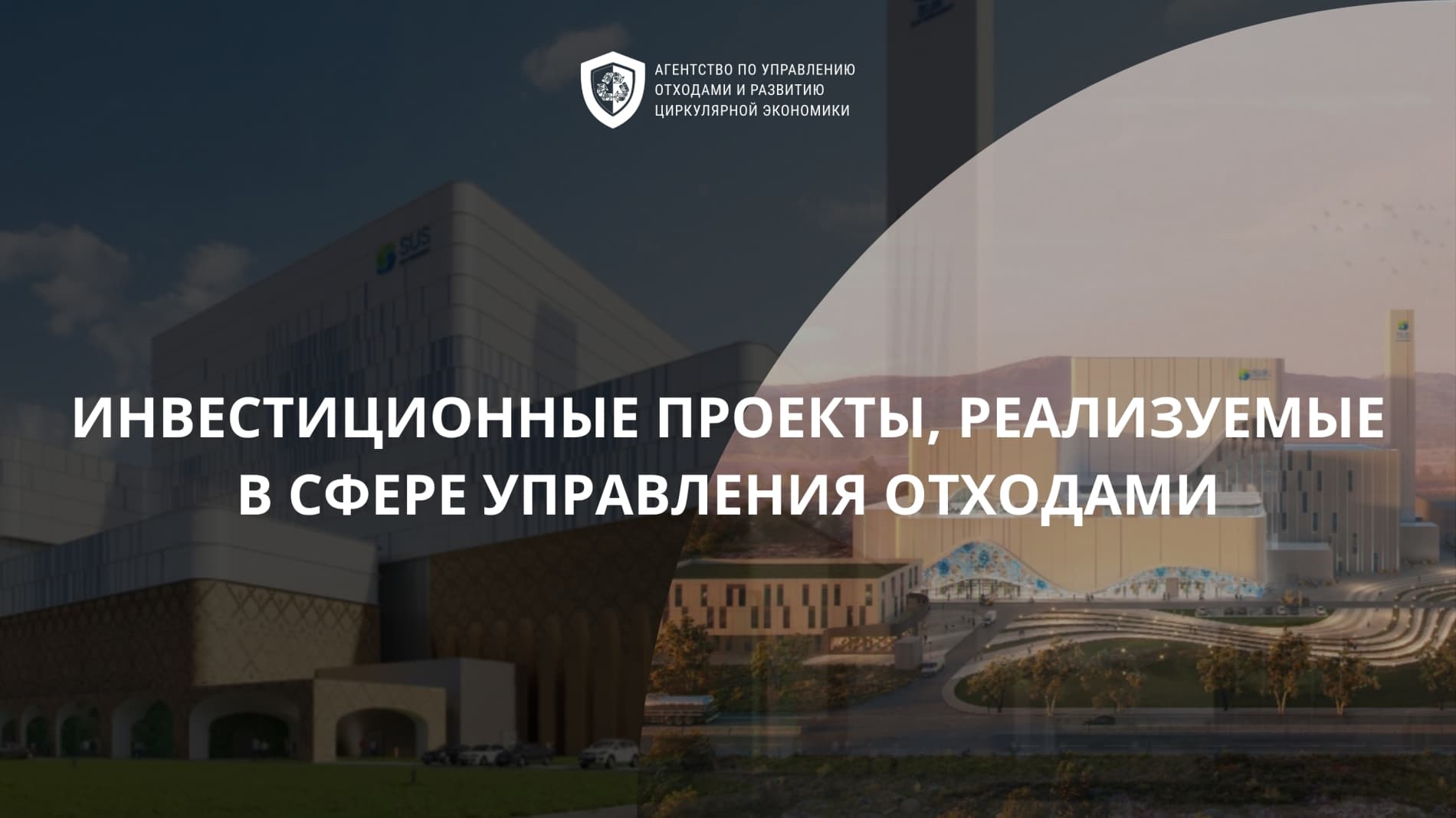
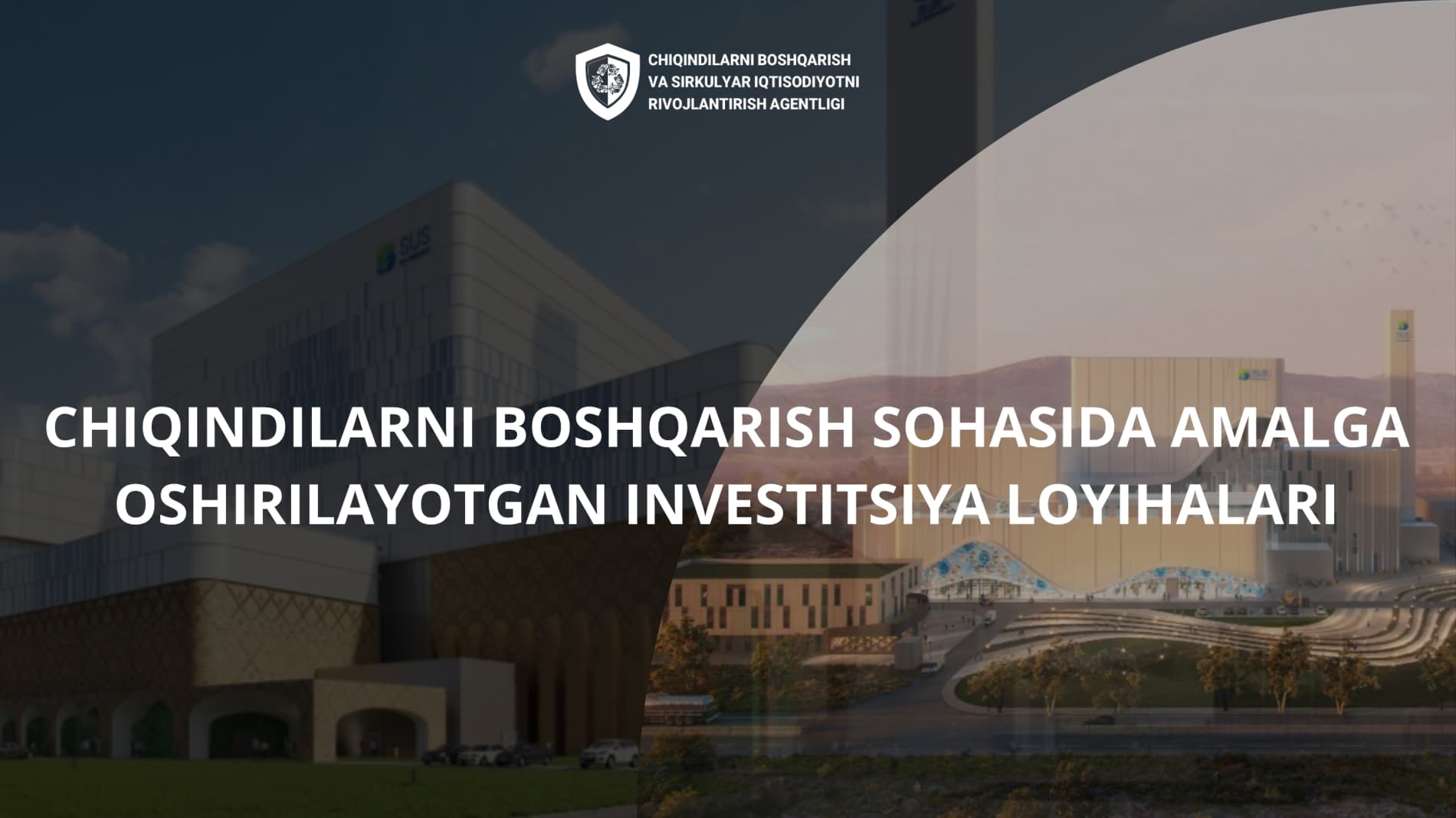
By the end of 2026, the waste-to-energy plants being built by Shanghai SUS Environment in Kashkadarya and Samarkand regions are expected to be commissioned, with construction progress at 70% and 60%, respectively. Currently, special equipment has been ordered, the foundations of the buildings have been fully completed, reinforcement frame installation and concrete pouring works are 60% complete, while construction and installation works are 40% complete.
To train qualified personnel for the sector, cooperation has been established with local higher education institutions such as Green University, Samarkand State University, and Karshi State University. A reserve of 150 specialists has been formed for each plant.
Starting from 2027, 3.6 million tons of solid household waste will be incinerated annually, 1.6 billion kWh of electricity will be generated, revenue will be earned from the trading of carbon units, and the “Zero Waste” principle will be achieved. As a result of these measures, local products and services are currently being procured, and 2,000 new jobs have been created during the construction works.