
History of Shahrixon District
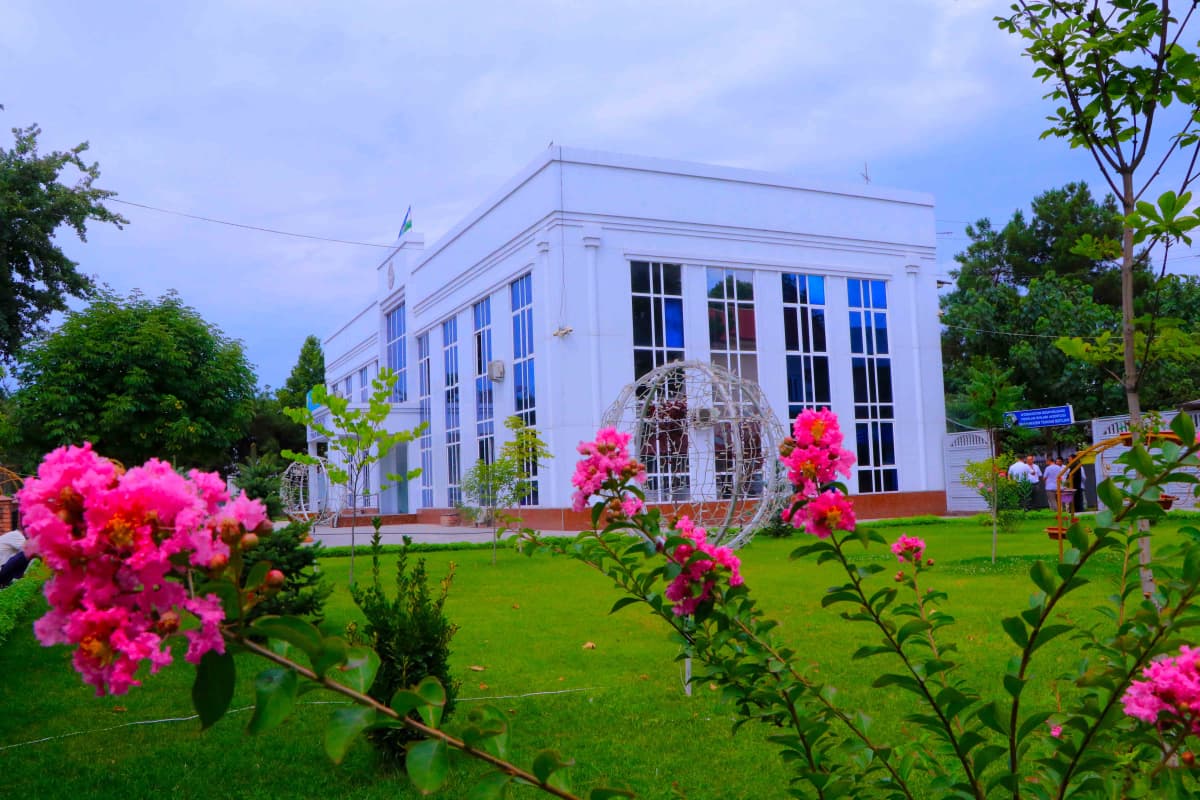
In the first quarter of the 19th century, during the reign of the Kokand Khan Amir Umar Khan (1809–1822), the Shahrixonsoy canal was dug, and the city of Shahrixon was established on its banks.
Some historical sources contain information about the establishment of Shahrixon city and the construction of the Shahrixonsoy canal. In his work “Tarixi Farg‘ona” (“History of Fergana”), Ishoqxon Junaydullo o‘g‘li Ibrat cites the following historical poem about the cities of Andijan, Margilan, and Shahrixon:
“Aral” – Andijan,
“Maral” – Margilan,
In Hijri history “G‘aral” – Shahrixon.
According to this poem, based on the old abjad numerical system, the word “G‘aral” indicates the founding date of the city — Hijri year 1230, corresponding to 1814–1815 CE.
In 1815, by the decree of Amir Umar Khan, Shahrixon was granted city status. Over the years, the city expanded and prospered. People from Kokand, Namangan, Chust, Margilan, and other regions were resettled in Shahrixon. Among them were craftsmen, artisans, merchants, and representatives of various professions. Amir Umar Khan’s main goal in establishing the new city was to develop trade and handicrafts, especially foreign trade. Merchants from Turkey, China, India, and Russia also came to Shahrixon for commerce.
In 1924, the Soviet authorities began implementing a policy of national-territorial delimitation in Turkestan without taking into account national traditions and regional characteristics. The newly established Uzbek SSR was divided into seven provinces, which in turn were subdivided into districts, volosts, and village councils.
This administrative division, carried out hastily and through command methods, created many difficulties and failed to ensure effective economic and socio-cultural development. Therefore, in September 1926, the Fifth Session of the Central Executive Committee of Soviets adopted a resolution on a new administrative-territorial division of the republic. According to this decision, ten districts (okrugs) were reorganized, while former uyezds and volosts were transformed into districts and village councils.
Based on this resolution, Shahrixon District was established on September 29, 1926, as part of Andijan Okrug. During the Soviet period, the names of the city and district were repeatedly and arbitrarily changed.
In January 1927, Shahrixon was renamed Stalin District. At that time, it included the present-day Bo‘z and Ulug‘nor districts, as well as part of Oltinko‘l District. Part of the current territory of Shahrixon District belonged to Quva and Asaka (Zelenskiy) districts.
On October 10, 1929, by the decision of the Central Executive Committee of the Uzbek SSR, Shahrixon District was renamed Stalin Rural District.
On March 7, 1933, Shahrixon city was renamed Stalino village.
From 1930 to 1961, the district was known as Stalin Rural District.
On June 29, 1951, by the decree of the Presidium of the Supreme Soviet of the Uzbek SSR, Stalino village (present-day Shahrixon) was transformed into an urban-type settlement named Stalino.
On November 28, 1961, the district was renamed Moscow District, and Stalino settlement became Moskovsk settlement.
Beginning from November 13, 1970, Moskovsk settlement was renamed Shahrixon and granted the status of a district-level city.
The district itself was called Moscow District from 1961 to 1970, and since 1993 it has again been known as Shahrixon District.
Shahrixon District borders:
- Bo‘z District to the west,
- Baliqchi and Oltinko‘l districts to the north,
- Asaka District to the east,
- and Quva District of Fergana Region to the south.
Nature and Climate
The district is located on the wide plain of the Shahrixonsoy canal, between the Quva-Andijan foothills and the Qoradaryo River. The average elevation ranges from 400 to 680 meters above sea level. The climate is continental, with mild winters and hot summers. The average January temperature ranges from -2.5°C to -3.2°C, while July temperatures average between 27°C and 29°C. Annual precipitation amounts to 300–350 mm.
The soils are gray soils, meadow-swamp soils, meadow-gray soils, and sandy soils in some areas. Wild vegetation includes couch grass, reeds, camelthorn, mint, horsetail, and other plants. Wildlife mainly consists of foxes and hares, while birds include sparrows, swallows, quails, crows, storks, magpies, and doves.
Crafts and Cultural Heritage
Handicrafts such as knife-making, cradle-making, embroidery of traditional skullcaps, and copper craftsmanship have long been developed in the district. Architectural monuments preserved in Shahrixon include the Gumbaz Madrasah (1825) and the Ponsod Mosque (1888).
Today, the district has:
- 2 technical colleges,
- 2 vocational schools,
- 1 vocational training center,
- 1 specialized school,
- 74 general education schools,
- 56 state preschool institutions,
- 20 public-private partnership preschool institutions,
- 286 family-based preschool organizations,
- “Barkamol Avlod” children’s school,
- sports schools,
- and specialized boarding schools for Olympic and national sports.
Famous People of Shahrixon
Shahrixon is renowned as the homeland of scholars, poets, and artists. Distinguished natives of Shahrixon include academicians Toshmuhammad Sarimsoqov, Akmal Qosimov, and Usta Yusufali Musaev, as well as nearly 150 Doctors and Candidates of Sciences.
The people of Shahrixon are also proud of notable cultural figures such as:
- Mukarrama Turg‘unboyeva,
- People’s Hafiz of Uzbekistan Jo‘ra Fason Yusupov and Ochilxon Otaxonov,
- People’s Artists of Uzbekistan Odinaxon G‘oziyeva, Ozodbek Nazarbekov, and Furqat Ashuraliev,
- Honored Artists Munojot Teshaboyeva and Hurriyat Isroilova,
- and Honored Cultural Worker Shirmonoy G‘oziyeva.
Prominent literary and academic figures such as Oraziy, Hayratiy, Hoshimjon Razzoqov, To‘xtasin Jalolov, Yoqubjon Is’hoqov, and Bahodir Sarimsoqov are also natives of Shahrixon.
During the years of independence, the honorary title “Hero of Uzbekistan” was awarded to Sodiqjon Abdurasulov, Komoldin G‘opirov, Tavakkal Topvoldiev, and Sodiqjon Turdiev.