The President visits modern medical facilities in Samarkand
2025-11-26 11:45:00 / News
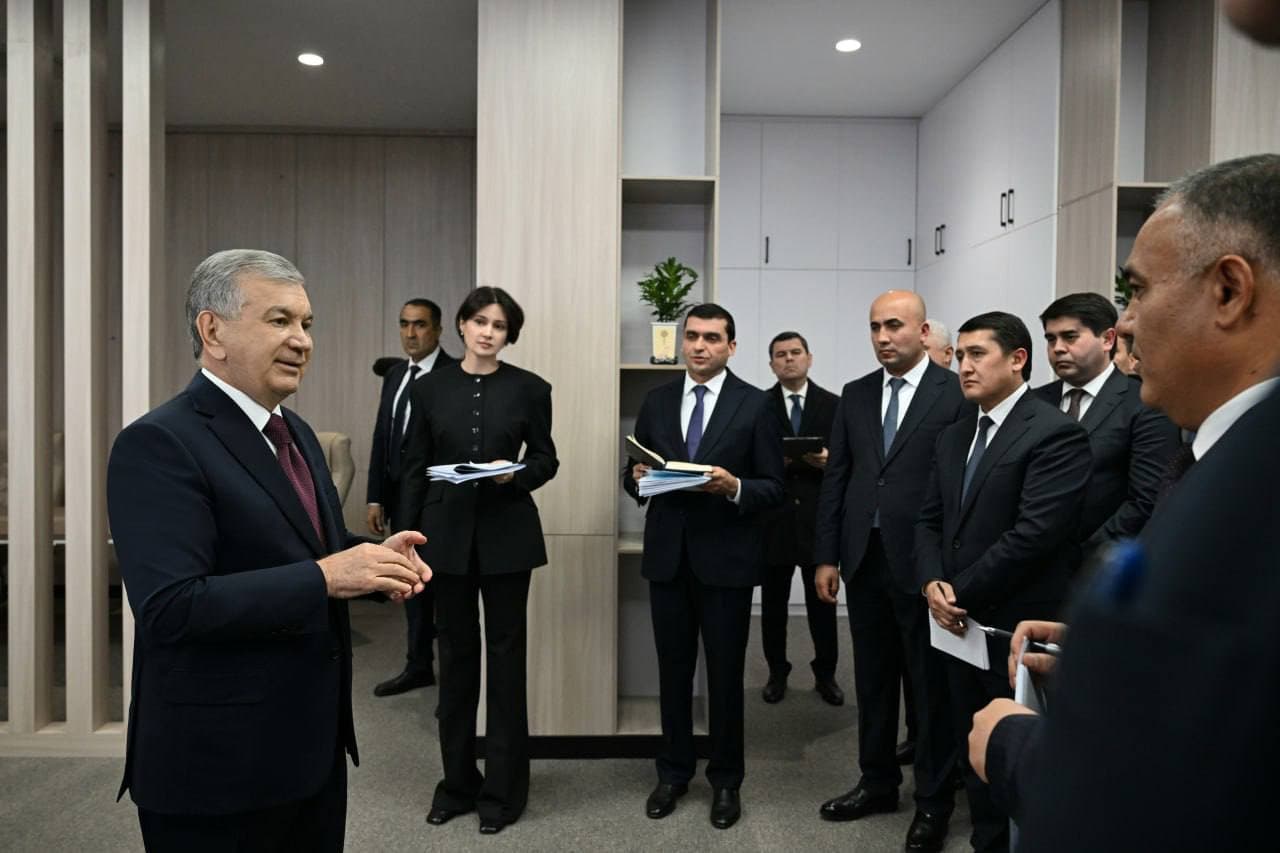
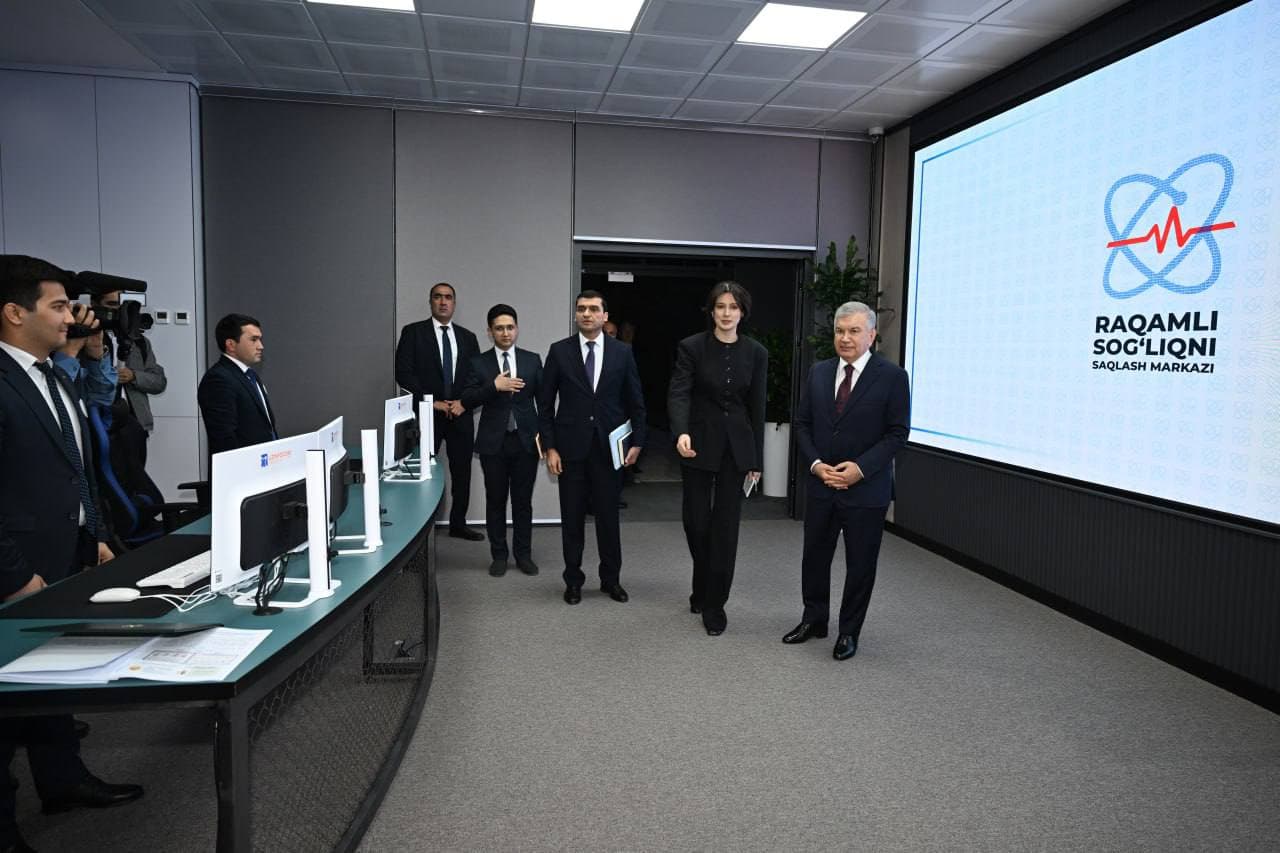
Over the past year, the country’s healthcare digitalization has reached a fundamentally new level. To systematically organize this work, the Center for Digital Healthcare was established within the Ministry of Health.
The President was presented with the work carried out at the Samarkand branch of this center. Detailed information was provided on the progress of digitalization in the region’s medical institutions, the software solutions and artificial intelligence technologies used to collect and process data on diseases, patients, and pharmaceuticals, and the practical results these technologies are delivering.
In particular, a unified electronic information platform, DMED, has been launched in the healthcare sector, containing medical data on more than 36 million citizens. Electronic management has been introduced in the emergency medical service, reducing ambulance response times.
In addition, the introduction of the Electronic Prescription system has reduced unjustified medication prescriptions by 40 percent and made the circulation of pharmaceuticals more transparent.
State medical institutions across the country have been equipped with modern information and communication technology, and a unified digital infrastructure has been established. More than three thousand medical institutions have been connected to local networks. Thousands of new computers have been purchased, significantly upgrading and strengthening the system’s technical capacity.
The President emphasized the importance of ensuring, through digitalization, government access to all healthcare-related analytical data, which serves as a crucial tool for identifying priority areas in the development of the medical sector, properly allocating funds and resources, regulating the circulation of pharmaceuticals, and eliminating corruption. Relevant officials were instructed to continue this work systematically.
The Head of State also noted that, with regular in-depth analysis of patient flows, disease patterns, and treatment quality, the overall efficiency of the system can be significantly improved.
Issues related to ensuring transparency and streamlining the distribution of pharmaceuticals, as well as simplifying licensing procedures, were also reviewed.
Particular attention in the country is given to the early detection of cardiovascular diseases and the expansion of high-tech medical services. As in all regions of the country, the Samarkand branch of the Scientific and Practical Center of Cardiology has been completely renovated and acquired a modern appearance.
A total of 52 billion UZS was allocated to the center’s development, and large-scale reconstruction was carried out. Today, the center has been transformed into a 100-bed medical facility and is equipped with 262 types of medical equipment.
To expand territorial coverage, a mobile diagnostics system was introduced, enabling nearly seven thousand patients to undergo coronary angiography. As part of the project, a modern intensive care unit, a situation center, and a waiting hall were also established.
The center also places great emphasis on training medical personnel in cooperation with Samarkand State Medical University. A clinical residency program in cardiac surgery has been opened, contributing to the professional development of local specialists.
Thanks to the new capabilities, the range of high-tech medical services has expanded significantly. In particular, the number of cardiovascular surgeries per year has increased from 383 to 590.
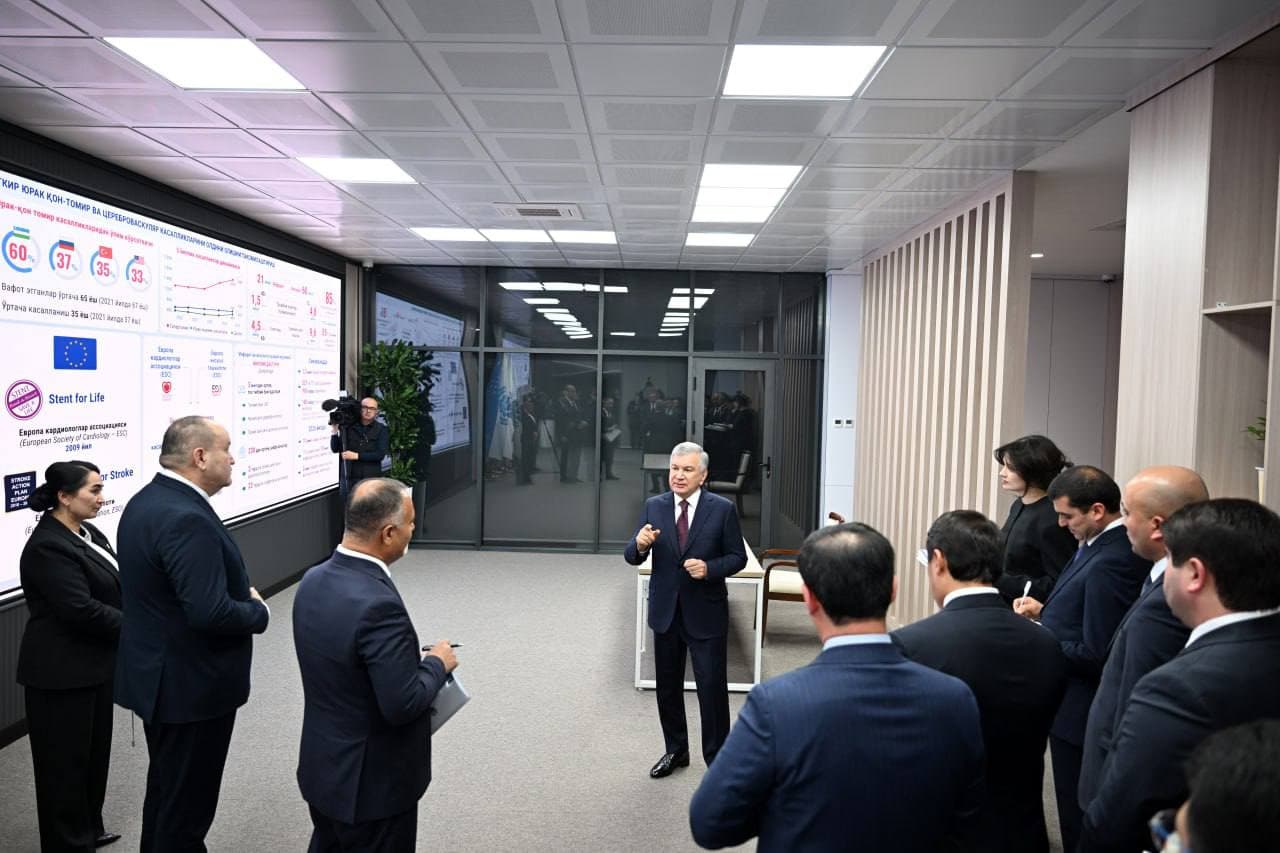
During the presentation of the national program “Combating Heart Attacks and Strokes”, information was provided on cardiovascular and cerebrovascular disease statistics, five-year trends in morbidity, national programs aligned with European standards, and the outcomes of the pilot project.
Information was also presented on the patient routing system developed for the early detection, prevention, and treatment of cardiovascular diseases and strokes.
The President emphasized that such centers play an essential role in improving the quality of medical care and enhancing public health, and that the experience established in Samarkand should be expanded to other regions as well.
Thereupon, the President’s visit to Samarkand region concluded, and Shavkat Mirziyoyev returned to Tashkent.