
Following the President’s Visit...
2026-10-14 10:55:00 / News
Imagine a region blessed with beautiful landscapes and warm, hospitable people. It has numerous historical landmarks and natural attractions worth visiting. Foreign investors are also eager to invest in the area and launch new projects. Yet there is one seemingly “small” problem: the local airport falls short of modern standards.
What happens in such circumstances? Let us consider a few straightforward examples.
Investors value every minute. If flights are delayed, service quality is poor, or the airport cannot accommodate larger aircraft, business operations become more complicated. As a result, investors may choose other regions where conditions are more favourable.
No matter how beautiful a destination may be, a long and exhausting journey can diminish the appeal of visiting it. If tourists have to travel considerable distances and then face inconvenience at an airport that does not meet modern standards, they may be less inclined to return. This can ultimately affect the revenues of hotels, cafés, restaurants and tour guides.
That is why experts do not view a modern, well-equipped airport merely as a place where aircraft take off and land. It is the face of a region, the heart of its economy and a gateway to development. The more accessible and efficient that gateway becomes, the greater the opportunities for investment, prosperity and economic growth.
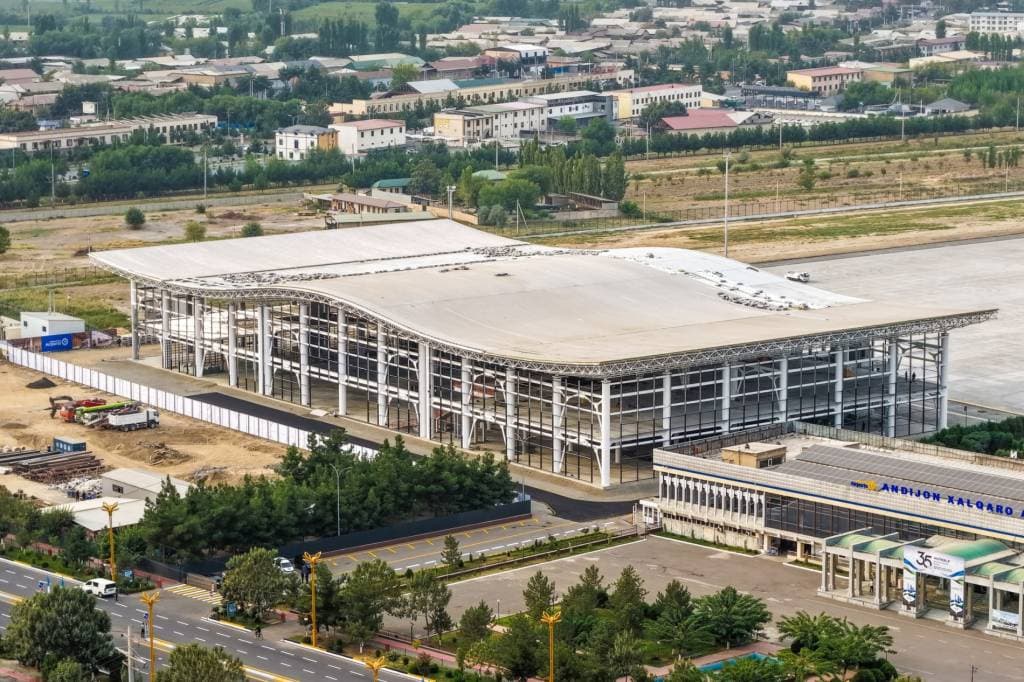
These reflections are not without reason. Today, we turn our attention to the sweeping transformation taking place at Andijan International Airport.
The airport was built in 1978 and received international status in 2013. Over time, however, circumstances changed. Its ageing infrastructure could no longer meet modern requirements, accommodate growing passenger traffic or adequately serve larger aircraft. Comprehensive reconstruction and modernisation therefore became essential.
Following instructions from President Shavkat Mirziyoyev and with his strong personal attention to the project, large-scale construction and development works began at the airport. The total cost of the aerodrome complex reconstruction project amounts to 1.1 trillion Uzbek soums. Given the scale of the work, the project can be described as virtually rebuilding the airport.
During the first phase, the runway was extended to 3.3 kilometres, with a width of 60 metres. It now meets the international 4E aerodrome reference code. In addition, aircraft parking stands and taxiways have been constructed, enabling the airport to accommodate up to 10 aircraft simultaneously.
Particular attention has been paid to the durability and reliability of the infrastructure. The runway has been surfaced with high-quality cement concrete designed to last for up to 50 years. High-precision lighting and signalling systems supplied from Germany have also been installed. These systems enable aircraft to be received safely at night and even in dense fog. The airport is being equipped to support safe aircraft landings when visibility falls to as low as 300 metres. Such capabilities once seemed beyond the reach of Andijan residents.
International experience demonstrates that modern airports with extensive capabilities can significantly transform regional economies. For example, the development of airport infrastructure in Antalya, Türkiye, and Sharjah, the United Arab Emirates, has helped expand tourism and service industries. Direct international flights play an important role in attracting visitors, encouraging investment and creating new opportunities for local businesses.
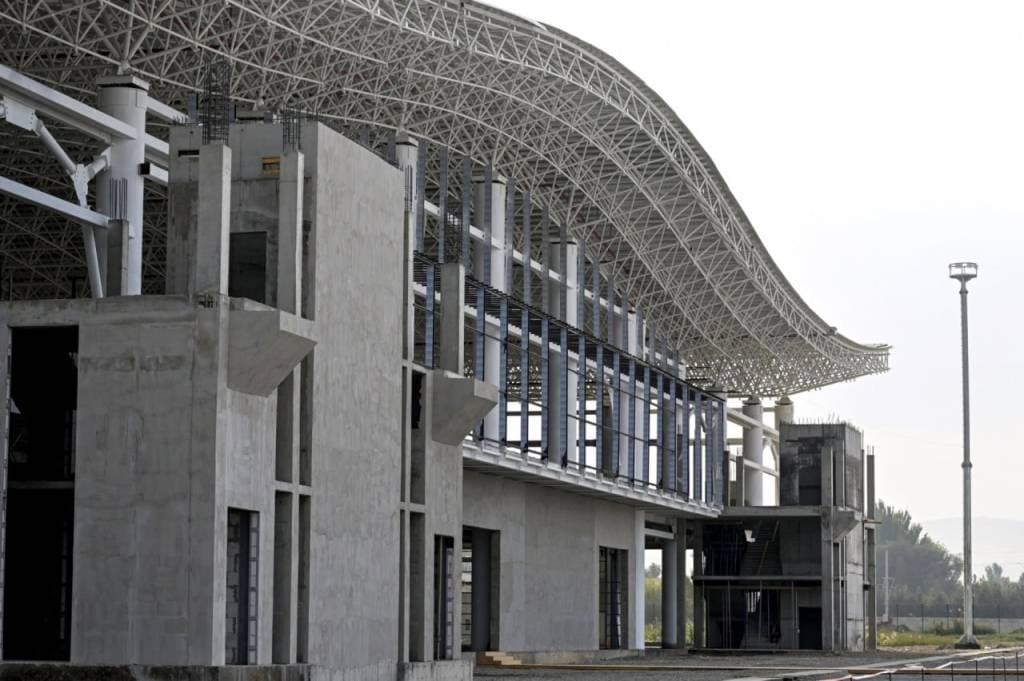
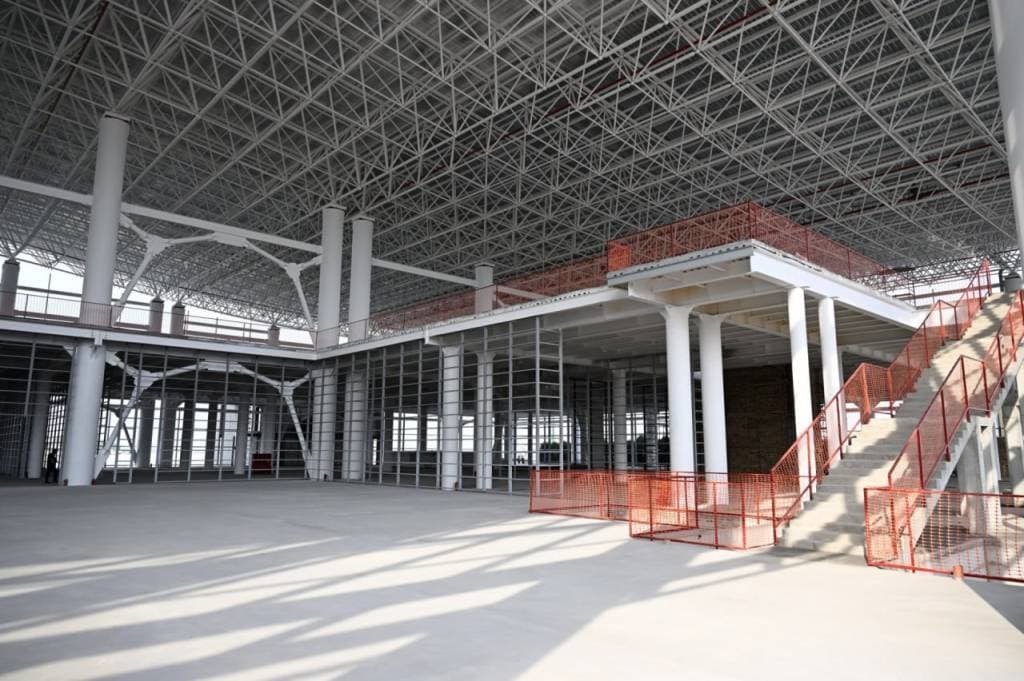
The second phase of reconstruction at Andijan Airport is also designed to achieve ambitious goals. Construction is currently under way on a modern two-storey terminal building with a total floor area of 19,600 square metres.
“The construction of this airport is also receiving the personal attention of our Head of State,” said Javlonbek Umarxodjayev, Chairman of the Management Board of Uzbekistan Airports JSC. “This is reflected in the fact that the President’s visit to Andijan Region in September began with an inspection of the construction and development work being carried out at this very site. Previously, the airport could serve only 200 passengers per hour. Once the new terminal becomes operational, this capacity will increase fivefold, reaching 1,000 passengers per hour. High-speed Wi-Fi and modern digital services will also be introduced throughout the airport. These improvements will save passengers time and provide a significantly more convenient travel experience.”
Currently, seven airlines operate regular domestic and international services through Andijan International Airport. The long-term plan is to increase the number of annual flights from 808 to 2,500. The airport’s annual passenger-handling capacity is expected to reach 3.5 million people.
So, what will these improvements mean for ordinary residents of Andijan, the regional economy and visitors?
First and foremost, residents of Andijan and neighbouring regions will find it easier to travel internationally and visit relatives living abroad. The need to travel to Tashkent or other regional airports to catch a flight will be reduced. The ability to accommodate large wide-body aircraft directly in Andijan could also help expand flight connections and improve the accessibility of air travel.
Tourism and business are also set to enter a new phase of development. The scenic landscapes of the Fergana Valley, its ancient pilgrimage sites and its rich craftsmanship traditions give the region considerable potential to attract international visitors. An increase in direct flights will help boost tourist arrivals and stimulate demand for local tourism services.
Another important benefit is the creation of new opportunities for the regional economy. Improved airport infrastructure can encourage the development of hotels, restaurants, logistics centres and other service facilities in the surrounding area. This, in turn, could create new jobs, stimulate entrepreneurial activity and increase household incomes. Opportunities to transport local products and agricultural goods to international markets quickly and on schedule will also expand.
At the beginning of this article, we referred to one seemingly “small” problem. In today’s world, time and convenience are among the key drivers of progress. Had this challenge remained unresolved, a substantial part of the region’s economic and tourism potential might have continued to go untapped.
The transformation of Andijan International Airport is therefore about much more than upgrading transport infrastructure. It represents an important step towards strengthening the region’s investment appeal, developing tourism, expanding business connections and improving the well-being of its people.
Ikrom Avvalboyev, O‘zA Commentator