About the Local Government
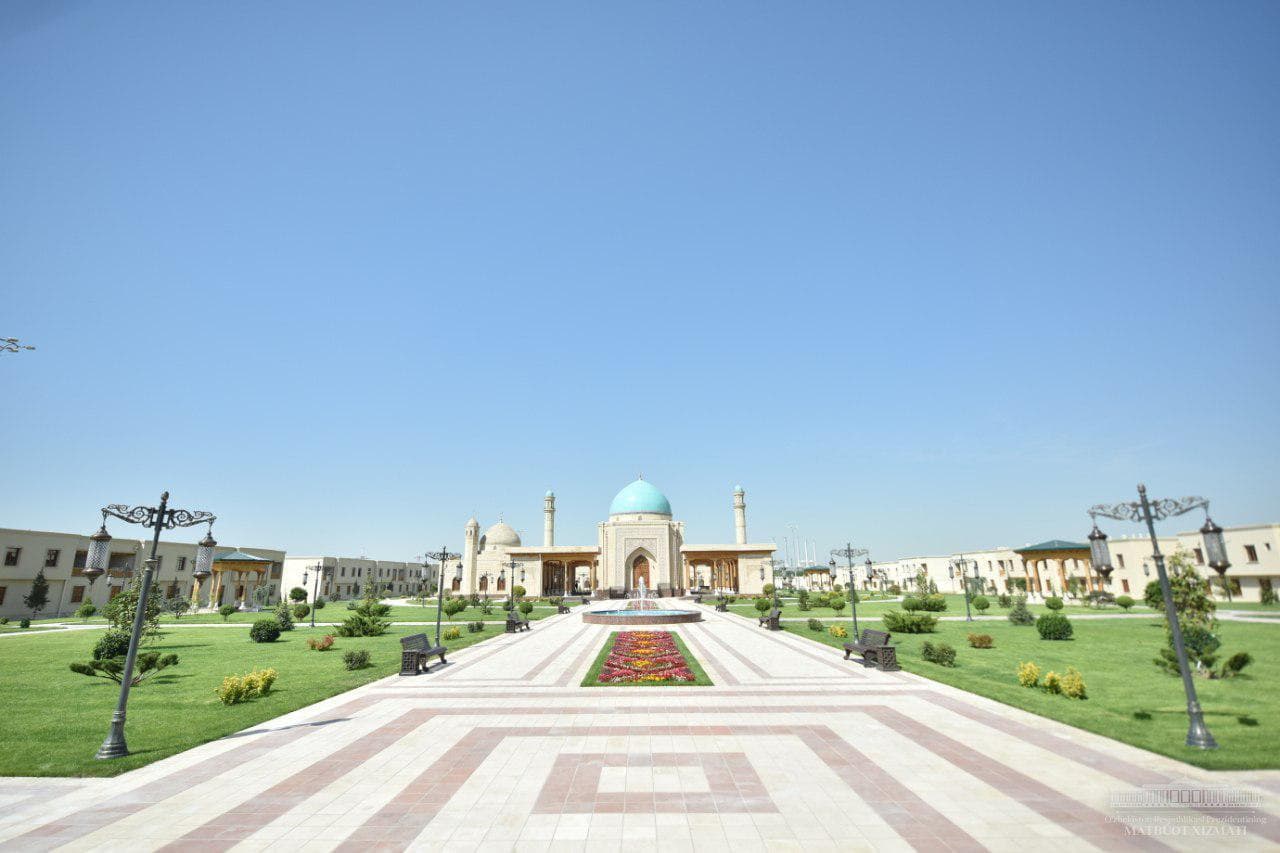
Shaykhontohur District is an administrative-territorial unit in Tashkent city. It was established in 1929 under the name Oktyabr District. In 1992 it was renamed Shaykhontohur District (after Shaykh Khavandi Tohur). Since 1978 it has had its current boundaries. The district borders Zangiota District in the northwest, Olmazor District (formerly Sobir Rahimov) in the north, Yunusobod District in the northeast and east, Chilonzor and Yakkasaroy districts in the south, and Uchtepa District (formerly Akmal Ikromov) in the west. The area of the district is 2.73 thousand hectares, including 0.832 thousand hectares of green spaces. The population is 360.5 thousand people (2023). There are 622 streets. Main highways include Abdulla Qodiriy, Navoi, Uzbekistan and Beruniy avenues, as well as Furqat, Uyghur and Samarqand Darvoza streets. The district has Khalklar Dostligi, Khadra, Chorsu and Oktepa squares and 48 mahallas.
About 3,379 enterprises and organizations operate in the district. There are 9 industrial enterprises, including the artistic association “Sharq Guli,” Tashkent Garment Factory, “Orzu” production association, Tashkent Printing Combine, a leather and fur plant, and others. Around 3,069 small and medium business entities are registered. The district hosts 18 ministries, state committees and major agencies, the Main Department of Architecture and Urban Planning, 11 design institutes, the Alisher Navoi Literature Museum of the Academy of Sciences of Uzbekistan, the Institutes of Seismology, Polymer Chemistry and Physics, and Microbiology, Webster University, Tashkent Chemical-Technological Institute, 16 secondary specialized educational institutions, 42 general education schools, and other institutions. Healthcare services are provided by 10 family and dental clinics, 18 polyclinics and outpatient clinics, and 8 hospitals.
During the years of independence, the Uzbekistan Conservatory, the Islamic University, and an academic lyceum under the University of World Economy and Diplomacy were built in the district; the Uzbek National Academic Drama Theatre, Chorsu Shopping Center and Eski Juva Market were reconstructed.
Major guzars (public centers) include “Gulzor,” “Ipakchi,” “Kokcha,” and “Islomobod.” Large sports fields are located in the “Yangi Kamolon,” “Huvaydo,” “Bogko‘cha,” “Choponota,” and “Ipakchi” mahallas. The district has 562 food stores, 346 industrial goods stores, 174 service centers, and the Chorsu shopping complex.
The district hosts the Uzbek National Academic Drama Theatre, the Abror Hidoyatov State Drama Theatre, the Satire Theatre, the Russian Theatre for Young Spectators, a circus, the Palace of Arts, the Uzexpocentre complex, 9 cultural centers and institutions, the House of Cinema, 22 public libraries, 4 cinemas, the Pakhtakor Stadium, the JAR Sports Complex, and the “Sharq,” “Khadra,” “Yoshlar Uyi,” and “Sun Shine Tyron” hotels. Architectural monuments preserved in the district include the Kokaldosh Madrasa (16th century), the Yunuskhan Mausoleum (15th century), and the Shaykh Zayniddin Bobo Mausoleum (13th–14th centuries).
Legend of Shaykh Khavandi Tohur
Shaykh Khavandi Tohur was the son of Shaykh Umar Bagistani. According to legend, Umar Bagistani had no children and once came with his wife to the mausoleum of Shaykh Zayniddin to pray to Allah for a child. Soon they had a son, and Shaykh Umar brought him to the mausoleum of Shaykh Zayniddin. There, doves, seeing the baby, began to chirp “at-tahur, at-tahur.” Shaykh Umar considered this a good omen and named his son Khavandi Tohur (“the pure shaykh”).
Shaykh Khavandi at-Tahur received his first lessons in theology and Sufism from his father. According to his maternal grandfather, Mawlana Tajiddin Dargami, in the work “Rashahat Ayn al-Hayat,” Shaykh Khavandi at-Tahur was one of the prominent representatives of Islamic theology and Sufism, reaching a high spiritual level. He studied the Sufi path of the Yassavi order, mastered both outward and inward religious knowledge, and attained a high spiritual rank among shaykhs. The name Khavandi at-Tahur means “extremely pure servant.” He explained the doctrine of monotheism and Sufi concepts and was also engaged in poetry.