A project to enhance urban resilience is being implemented in 5 Central Asian countries
2024-12-13 09:50:00 / News


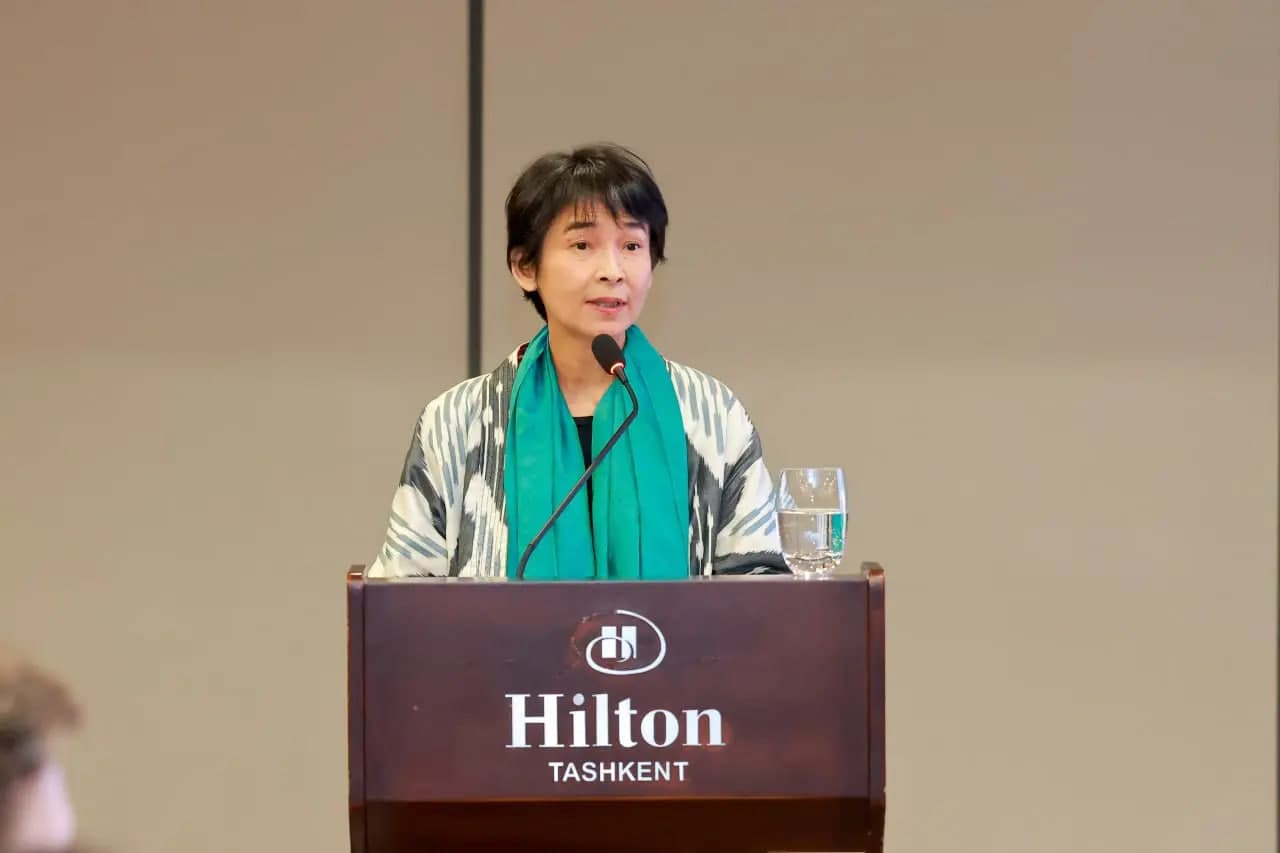
In Uzbekistan, the project will be implemented in cooperation with the Ministry of Ecology, Environmental Protection, and Climate Change.
The seminar was attended by Minister of Ecology, Environmental Protection, and Climate Change Aziz Abdukhakimov, Ambassador Extraordinary and Plenipotentiary of Japan to Uzbekistan Hatori Takashi, and the Lead of Regional Cluster on Climate Change and Disaster Resilience, Stanislav Kim, UNDP Permanent Representative in Uzbekistan Akiko Fujii, Deputy Chairman of the Chamber of Commerce and Industry of the Republic of Tajikistan Haydar Rajabov, Deputy Director of the State Agency for Civil Service and Local Government Affairs under the Cabinet of Ministers of the Kyrgyz Republic Maksatbek Sargazakov, representative of the State Committee for Water Management of Turkmenistan Saparmurat Choriyev, specialist of the Department of Climate Policy of the Ministry of Ecology and Natural Resources of the Republic of Kazakhstan Ayjan Mammadalieva and others.
Aziz Abdukhakimov, who spoke at the founding meeting, noted the importance of the regional project in the context of global climate change: "Scientific research indicates that by the end of the century, the average temperature in Central Asia may increase by 3-5 °C. This will lead to a reduction in snow cover, a change in the hydrological cycle, and an increased risk of extreme weather events such as floods, dust storms, and droughts, which will increase the burden on ecosystems and the economy of the region. We have a long way to go in overcoming the above-mentioned problems. But it is encouraging to note that such projects aimed at strengthening regional interconnectedness in Central Asia, with the consolidation of efforts, can lead to the achievement of sustainable development in harmony with nature".
The project aims to create a solid foundation for improving the sustainability of cities in Central Asia through the use of regional cooperation and national action plans. This targeted approach is designed to meet the urgent need to adapt the urban environment to climate risks while contributing to sustainable development. The goals are aimed at achieving comprehensive changes in urban planning and strategies to increase resilience to external influences in Kazakhstan, Kyrgyzstan, Tajikistan, Turkmenistan, and Uzbekistan. The total budget of the project is more than 5 million US dollars, and its implementation is planned for the period 2024-2027.
"Japan, a country with a rich history of disaster management (earthquakes, typhoons, and floods), brings advanced knowledge and technology in disaster risk reduction to the project, and the purpose of this meeting is to bring together relevant partners to share experiences, discuss challenges, explore potential areas of cooperation, and strengthen partnerships", said Hatori Takashi at the opening of the seminar.
In her speech, Akiko Fujii stressed the relevance of measures to combat climate change: "Climate change poses a serious threat to the environment, ecological balance, and socio-economic systems of Central Asia. Rapid urbanization in the region reinforces the need for urban infrastructure and planning to include climate resilience strategies to ensure sustainable development in the face of climate change. As part of this project, we are striving to develop a unified regional approach to solving these problems".
It is worth noting that Central Asia is among the regions of the world most vulnerable to natural disasters and problems caused by climate change, including earthquakes, floods, droughts, avalanches, and landslides. According to the World Bank, the urban population of the largest cities in Central Asia has increased by an average of 48% over the past two decades, occupying 538 square kilometers of land. This rapid urban expansion has increased the burden on critical infrastructure such as electricity, water, transportation, health, and food supply systems, increasing their vulnerability to climate impacts.
The shared history and interconnected ecosystems of Central Asia underline the importance of regional cooperation. This initiative will use existing coordination platforms to address issues of urban development, water management, transport, and energy.